If I forget you, O Palestine...
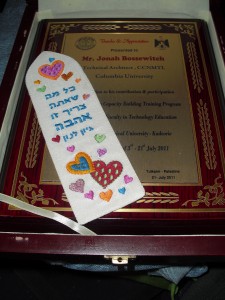 I just returned from the eduventure of a lifetime in Palestine and Israel. I travelled to the Palestine Technical University of Kadoorie to consult on a World Bank funded project to help enhance technology education. The details of this project are inspiring and provocative, but before discussing educational technology, media literacy, and capacity building I need to talk about my direct experience of The Occupation.
As I anticipated before the trip, my understanding of the Israeli-Palestinian conflict was transformed by my first-person experience of the occupation. Within an hour crossing the Kalandia checkpoint into Ramallah, I began to experience a harshness that is almost impossible to capture in a snapshot. Superficially, life in Palestine seems almost normal. Everyone we met was warm and friendly, and I did not encounter extreme third-world poverty. However, during my visit I learned how virtually every aspect of ordinary Palestinian life is occupied. Electricity, fuel, mobility, connectivity, information, and water are all tightly rationed and controlled by Israel.
Before the trip I had heard about the checkpoints, but it is difficult to capture the feelings of intimidation and harassment until you are stuck in checkpoint-traffic watching a Palestinian adolescent being handcuffed and manhandled on the side of the road. I began to feel the harsh gaze of the guard towers, and the spit-in-the-face of the Israeli flags, waving arrogantly.
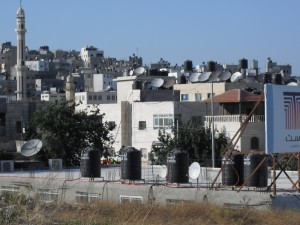
The most shocking reality I learned about is the Palestinian water situation. Many Palestinians only have running water a few days a week. One quick way to tell the Arab homes apart from the settler’s homes is that the Arab homes have big black water tanks on their roofs to capture water while it is running. In contrast, the settlers homes have water 24x7, and many have swimming pools and lush lawns.
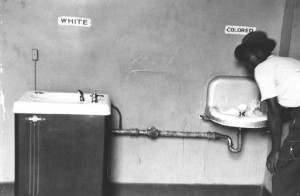
I kept thinking of this iconic image:
I just returned from the eduventure of a lifetime in Palestine and Israel. I travelled to the Palestine Technical University of Kadoorie to consult on a World Bank funded project to help enhance technology education. The details of this project are inspiring and provocative, but before discussing educational technology, media literacy, and capacity building I need to talk about my direct experience of The Occupation.
As I anticipated before the trip, my understanding of the Israeli-Palestinian conflict was transformed by my first-person experience of the occupation. Within an hour crossing the Kalandia checkpoint into Ramallah, I began to experience a harshness that is almost impossible to capture in a snapshot. Superficially, life in Palestine seems almost normal. Everyone we met was warm and friendly, and I did not encounter extreme third-world poverty. However, during my visit I learned how virtually every aspect of ordinary Palestinian life is occupied. Electricity, fuel, mobility, connectivity, information, and water are all tightly rationed and controlled by Israel.
Before the trip I had heard about the checkpoints, but it is difficult to capture the feelings of intimidation and harassment until you are stuck in checkpoint-traffic watching a Palestinian adolescent being handcuffed and manhandled on the side of the road. I began to feel the harsh gaze of the guard towers, and the spit-in-the-face of the Israeli flags, waving arrogantly.
The most shocking reality I learned about is the Palestinian water situation. Many Palestinians only have running water a few days a week. One quick way to tell the Arab homes apart from the settler’s homes is that the Arab homes have big black water tanks on their roofs to capture water while it is running. In contrast, the settlers homes have water 24x7, and many have swimming pools and lush lawns.
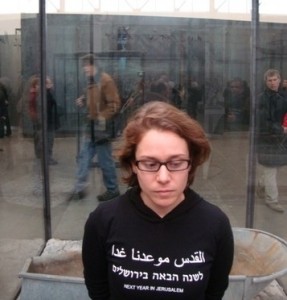
I kept thinking of this iconic image:
 and its visually gripping corollaries:
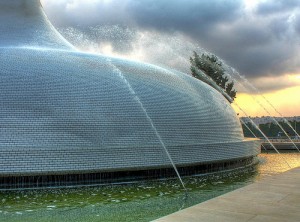
 Comparisons between the occupation and South African apartheid are common, but on this trip I began to relate the struggle to Jim Crow, the civil rights movement, and racial profiling and injustice that continue to oppress US minorities.
I also learned about the regulation of information flows. On an Egged bus in Israel, I had a better connection over free wifi than anywhere in Palestine, including the universities. Palestinian telcom companies are currently forbidden from rolling out 3G networks, building new communication lines between cities is notoriously difficult, someone I met was not allowed to import routers, and Palestine cannot connect directly to the Mediterranean backbone. [Incidentally, a local group of activists is trying to set up free wifi in Ramallah, but they are being thwarted by Palestinian telcoms!] Like their physical borders, all Internet traffic into and out of Palestine must cross through Israel first.
Serendipitously, Richard Stallman was visiting Palestine while I was there! Unfortunately, I missed his lectures, but I met up with a few people who saw him speak, and they reported that his message of freedom and liberation resonated strongly with his audience. I also connected with ma3bar.org - a society for Arab free and open source software, and ArabEyes – an Arabic-FLOSS translation project . I developed fresh insights into the role of free software in resistance and activism – especially as I appreciated the strength of the human networks that power free software, and the relative safety of engaging in this kind of organising (as opposed to being tagged by the authorities as an peace activist). More about this in future posts.
Scholarship such as Eyal Wiezman’s Hollow Land and Helga Souri’s work attempt to describe the Palestinian experience of the occupation, but the situation is so complex and hyper-mediated I recommend that anyone who wants to learn more should visit the West Bank themselves (special thanks to Dalia Otham for the conversations and introducing me to this work). Anyone with the smallest compassionate bone in their body will undoubtedly sympathize with with the Palestinian cause.
There is so much more to write. The specifics of our educational technology workshops, travelling and working with my advisor and a fabulous team from TC , the hospitality of our hosts at PTUK, the amazing sweet deserts, my tour of the graffiti on the Palestinian side of the wall, the culture shock of leaving the West Bank and visiting my sister (and my four amazing nephews and brother-in-law) on a zionist kibbutz, the Israeli friends and family I connected with across the ideological spectrum, my visit to Sheva Chaya’s mystical glass blowing studio/gallery, diving an underwater museum in Caesarea, whitewater rafting down the Jordan with my nephews, and Mushon’s personal guided tour (complete with analysis!) of the incredible housing protests erupting across Israel.
To be continued…
Comparisons between the occupation and South African apartheid are common, but on this trip I began to relate the struggle to Jim Crow, the civil rights movement, and racial profiling and injustice that continue to oppress US minorities.
I also learned about the regulation of information flows. On an Egged bus in Israel, I had a better connection over free wifi than anywhere in Palestine, including the universities. Palestinian telcom companies are currently forbidden from rolling out 3G networks, building new communication lines between cities is notoriously difficult, someone I met was not allowed to import routers, and Palestine cannot connect directly to the Mediterranean backbone. [Incidentally, a local group of activists is trying to set up free wifi in Ramallah, but they are being thwarted by Palestinian telcoms!] Like their physical borders, all Internet traffic into and out of Palestine must cross through Israel first.
Serendipitously, Richard Stallman was visiting Palestine while I was there! Unfortunately, I missed his lectures, but I met up with a few people who saw him speak, and they reported that his message of freedom and liberation resonated strongly with his audience. I also connected with ma3bar.org - a society for Arab free and open source software, and ArabEyes – an Arabic-FLOSS translation project . I developed fresh insights into the role of free software in resistance and activism – especially as I appreciated the strength of the human networks that power free software, and the relative safety of engaging in this kind of organising (as opposed to being tagged by the authorities as an peace activist). More about this in future posts.
Scholarship such as Eyal Wiezman’s Hollow Land and Helga Souri’s work attempt to describe the Palestinian experience of the occupation, but the situation is so complex and hyper-mediated I recommend that anyone who wants to learn more should visit the West Bank themselves (special thanks to Dalia Otham for the conversations and introducing me to this work). Anyone with the smallest compassionate bone in their body will undoubtedly sympathize with with the Palestinian cause.
There is so much more to write. The specifics of our educational technology workshops, travelling and working with my advisor and a fabulous team from TC , the hospitality of our hosts at PTUK, the amazing sweet deserts, my tour of the graffiti on the Palestinian side of the wall, the culture shock of leaving the West Bank and visiting my sister (and my four amazing nephews and brother-in-law) on a zionist kibbutz, the Israeli friends and family I connected with across the ideological spectrum, my visit to Sheva Chaya’s mystical glass blowing studio/gallery, diving an underwater museum in Caesarea, whitewater rafting down the Jordan with my nephews, and Mushon’s personal guided tour (complete with analysis!) of the incredible housing protests erupting across Israel.
To be continued…





 The
The 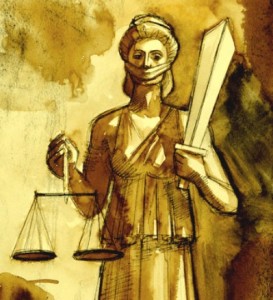 I recently learned about a fascinating trend in litigation that is quietly transforming courtroom testimony, and is spreading fast and far - video depositions.
I talked with a consultant who helps attorneys process video depositions. In the courtroom, attorneys are juxtaposing live testimony with segments from depositions. Video clips of witnesses reinforcing (or contradicting) themselves are far more powerful than merely reading back the transcript. The courtroom has always been about performance, but these videos have taken this to a new level, as savvy lawyers manipulate appearances and emotions. Increasingly all depositions are being recorded, just as they are transcribed.
Apart from the ways that courtroom proceedings are being transformed, I am also intrigued by the software that is undoubtedly in development to support these operations. In addition to conventional A/V support, working effectively with hundreds of hours of video involves archiving, indexing, distributing, editing, and clipping. At about a day or two of testimony per witness, and dozens of witnesses per trial, the numbers add up pretty quickly.
As cases accumulate, and multiple associates begin working with and analyzing video, law firms will quickly recognize the desirability of networked, collaborative, video annotation environments. Some large firms (and their vendors) may have already begun developing solutions. However, the consultant that I spoke with was storing video locally on a laptop hardrive and tracking it with an Access database, so opportunities are knocking. Without a doubt many of the tools that will be highlighted at the upcoming
I recently learned about a fascinating trend in litigation that is quietly transforming courtroom testimony, and is spreading fast and far - video depositions.
I talked with a consultant who helps attorneys process video depositions. In the courtroom, attorneys are juxtaposing live testimony with segments from depositions. Video clips of witnesses reinforcing (or contradicting) themselves are far more powerful than merely reading back the transcript. The courtroom has always been about performance, but these videos have taken this to a new level, as savvy lawyers manipulate appearances and emotions. Increasingly all depositions are being recorded, just as they are transcribed.
Apart from the ways that courtroom proceedings are being transformed, I am also intrigued by the software that is undoubtedly in development to support these operations. In addition to conventional A/V support, working effectively with hundreds of hours of video involves archiving, indexing, distributing, editing, and clipping. At about a day or two of testimony per witness, and dozens of witnesses per trial, the numbers add up pretty quickly.
As cases accumulate, and multiple associates begin working with and analyzing video, law firms will quickly recognize the desirability of networked, collaborative, video annotation environments. Some large firms (and their vendors) may have already begun developing solutions. However, the consultant that I spoke with was storing video locally on a laptop hardrive and tracking it with an Access database, so opportunities are knocking. Without a doubt many of the tools that will be highlighted at the upcoming