
Plone University

Originally published on theploneblog.org Open source software as pedagogical scaffolding, and F/OSS ecologies as a dialogical knowledge communities. This is a fun post recognizing the role of open source software and breaking routines in learning new programming patterns and paradigms. 7 Reasons I switched back to PHP after 2 years on Rails

Rails was an amazing teacher. I loved it’s “do exactly as I say” paint-by-numbers framework that taught me some great guidelines. I love Ruby for making me really understand OOP. God, Ruby is so beautiful. I love you, Ruby. But the main reason that any programmer learning any new language thinks the new language is SO much better than the old one is because he’s a better programmer now!

Creep-Ola

classic_jukebox.jpgLast Saturday night I was at a bar downtown for a friend’s birthday. I decided to pick out a few songs (no, I didn’t use the obnoxious “play now” feature). After selecting my songs, the Rock-Ola internet jukebox asked me if I wanted to take a quiz. It asked me for my gender and age bracket, and then asked me what issue I thought was the most important one in the 2008 presidential elections (I think the choices were the environment, ending the Iraq war, health care, social security, & What Election?). I was mildly surprised that this machine was collecting this kind of data, until I realized that they must be attempting to correlate musical taste with political leanings (they knew the songs I chose). This could come in quite handy when trying to directly target political advertising, or even redistricting. I couldn’t easily figure out who owns Rock-Ola, or where this information is going, but I hope to figure it out soon. The “right” playlist might one day qualify you for suspicious behavior?

Promiscuous Laptops

escher_hands.jpgSo, I published another post on OLPCNews today: Sharing and Not-Sharing Alike User Generated Content I am trying to figure out the best way to aggregate my own work, and am a little stumped. On the one hand, I don’t want to duplicate content, but on the other, I am skeptical of the long term prospects of some of the sites I have contributed to. Guess that’s what happens when you don’t own your own data. Anyway, I am starting to at least keep a running list of links to this kind of stuff. I know these aren’t all traditional “publications”, but it is important that people start regarding some of these kinds of contributions along these lines.

Parasitic Conditions

petscan

Analyzing humor is like dissecting a frog. Few people are interested and the frog dies of it. – E.B. White

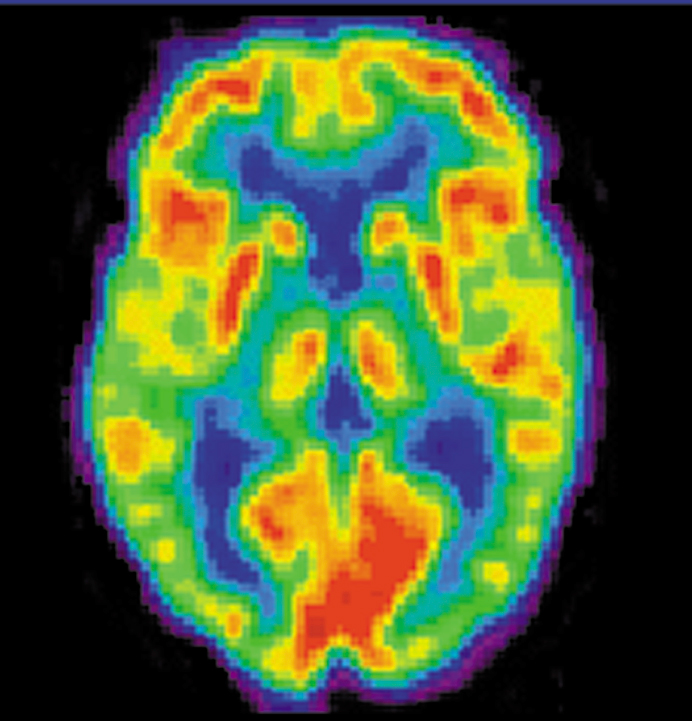
I don’t want to spoil the punchline of this Onion story, Woman Overjoyed By Giant Uterine Parasite, but let’s just say that there is nothing like the power of irony to drive a stake through the distinction between empirical observations and value judgements. This is really the best argument I have come across to explain what’s wrong with the psychiatric medical model. It’s not that mental conditions aren’t correlated with changes in biochemistry or neural brain state. Its the value judgment that is implied in labeling the phenomena an illness. And this little Onion article does a great job of conveying that. It’s got me wondering what other naturally occurring conditions can be explained/judged in more than one way?

The long-tail wagging the drugged out pooch?

Drugged out dogA few months ago the giant pharmaceutical company Pfiezer laid off 10,000 people, or about a tenth of its global workforce. There are many factors that are draining the industry of profits including the fact that patents eventually expire allowing generics to compete, it is extremely costly to develop new drugs, and the industry is caught in a vicious advertising/marketing arms race that is diverting significant percentages of development costs (in similar proportions to the marketing of a big budget Hollywood movie). There is plenty to chew on here in terms of how intellectual property laws are impacting human rights (keeping lifesaving drugs out of many patient’s reach) and the notion that as “mission critical” drugs come out of patent, drug companies are busy inventing new “lifestyle illnesses” for which they conveniently sell the cure. The concept of illness has become a major US export, as the documentary Does Your Soul Have a Cold? begins to explore. But what really caught my attention in this story is the idea that the pharmaceutical industry is witnessing a phenomena that is becoming familiar to the media/entertainment industry - the death of “hits” or the multi-billion dollar blockbuster.

Emergent Intentionality

fractal.gifOr, My Fancy Rationale for Indulging in Conspiracy Theories. New Scientist just ran a story on The Lure of Conspiracy Theory. They claim that:

Conspiracy theories can have a valuable role in society. We need people to think “outside the box”, even if there is usually more sense to be found inside the box. The close scrutiny of evidence and the dogged pursuit of alternative explanations are key features of investigative journalism and critical scientific thinking. Conspiracy theorists can sometimes be the little guys who bring the big guys to account - including multinational companies and governments.

Treating customers like cavepeople

caveman.gifThe state of health coverage in the U.S. is absolutely appalling. Consider the recent incident involving Blue Cross/Blue Sheild that my friend at Interprete has had to endure, at great expense of her time and patience - Blue Cross, Blue Shield Chronicles. The notion that a latent condition is a preexisting one is preposterous - it’s like saying you were fated to have this condition, so it was pre-existing. The citizen journalism angle to this story is interesting too. It is quite remarkable how powerful google alerts can be in the hands of a PR rep or an investigative journalist, and how a mouse can roar in a way that demands a response (let’s hope that we can help insure a positive one). Subversive tactics which emply tools like Google alerts and ad-words style targeted advertising potentially refute Sunstein’s argument in republic.com about disjoint sets of users in cyberspace. His argument basically discounts the ability to spam for your cause and the value in tracking all communications around a particular issue or theme and confronting opposing viewpoints where they occur.

We are all dying, sick, and crazy

looney_tunes.jpgMy visits to the Informedia lab have consistently generated futuristic ideas (and corresponding posts), and my trip this spring was no exception. This time I was thinking alot about what kinds of schemas will be employed after their prototype moves beyond watching grandma? When this kind of a system is inevitably rigged up to a school or a prison, or fed raw streams from live surveillance cameras? My money is on the Diagnostic Statistical Manual of Mental Disorders, an instrument that is arguably becoming the de-facto catalog for the full range of human behavior and experience. In some respects, this progression parallels the notion that nobody dies of old age anymore - they die of heart failure, cancer, or other diseases. And, as the title of this post cheerily states, we are all dying, we are all sick, and we are all crazy. As crazy as it sounds, the DSM is poised to become the lens through which we interpret all of human behavior. Given its breadth of coverage, I challenge anyone to find me a normal, healthy individual. It’s ambition reminds me of William James’ Varieties of Religious Experience, except in our generation, the full range of human experience has been radically pathologized. BTW - the folks who brought us Sexual Orientation Disorder are hard at work on V 5.0 of this catalog - and there is a call out for diagnosis suggestions.

Can you keep a dark secret?

caduceus.jpgThe Alchemist in me feels compelled to respond to the excellent documentary that aired on PBS the other week entitled Newton’s Dark Secret. The film profiled Sir Issac Newton’s fascination with the ancient art/science/craft of Alchemy. Many of the experts interviewed regarded Newton’s Alchemical experiments to be shameful, perhaps reflecting more on our modern epistemic prejudices than on Newton. Contemporary experts seem threatened by the prospect than anybody in historical times understood things about the world that we don’t. Beyond the shame of taking Alchemy seriously, they also considered Newton’s alchemy to be his greatest failure. Failure?!? During the period Newton was practicing alchemy he wrote the Principica Mathematica, and also catapulted his way into the power elite - he became knighted, was appointed the head of the Royal Society, and earned power, prestige and wealth beyond his wildest dreams. To this day one of the most respected chairs in physics still bears his name. From this perspective, his alchemical pursuits seem quite successful. Smashingly successful if you consider this blogs tagline “Aurum nostrum non est aurum vulgi” - Our gold is not ordinary gold. The Alchemists understood metaphor, and it was essential to their theory and practice. Why do most modern thinkers insist upon interpreting the craft so literally? My girlfriend shared a Bahá’í quote on a related subject.