Air

Neither Rain Nor Time

Neither Rain Nor Time

[Editor’s Note: This post has been sitting in my drafts folder since August 2021. I have preserved the original datestamp, though it was first published almost five years later. Or, maybe this draft mysteriously showed up in today’s mail…]

A few weeks ago I was reminded of the oversized importance of the US Post Office to our democracy. As a student of Prof. Richard John, I am keenly aware of How the Post Office Made America. Many have recognized the Post Office’s role in the American Revolution - the special flat rates for political pamphlets and newspapers enabled their distribution - the bloggers and tweeters of their day, safe from the prying eyes of the British mail carriers.

Silencing the infernal internal combustion engine

Silencing the infernal internal combustion engine

A few years ago I visited my family in Florida for the holiday season. My sister and her family also flew in, and to their credit, her children were more interested in a family vacation to see the marine hospital in Clearwater than they were in Disney World (this is the home of Winter and Hope, the real life dolphins with prosthetic tails who starred in Dolphin Tale). While I was there I took my first ride ever on a Wave Runner (Yamaha’s Jet Ski) and had a revelation. The ride was exhilarating. I did 54 mph in the bay. Apart from a gorgeous co-pilot, the only thing that would have improved the experience would be to eliminate the roar of the internal combustion engine. Silent jet skis. I’ve sailed a few times and the experience is divine. It feels like flying, even though motorboats travel much faster. Technically, the sail’s propulsion operates on the same principle as a wing. But what I remember most was the quiet. Quiet enough to play music, have a conversation and hear the waves. That same trip I also test drove a Tesla Model S for the first time. Pure power. You could be stopped at red light, in the left-most lane of a five lane road, and still make a right turn. You would be two car lengths ahead of all the other cars before they even start moving. Driving a Tesla feels like playing a game of tetris - the car is so powerful and the handling so accurate that I could put myself anywhere on the road. I began to dream of an electric jet ski. The thing about an electric jet ski is that it need not merely be a toy for the rich. It could also be the center of a campaign to catalyze adoption of electric vehicles. Consider for a moment - Who are Tesla’s main competitors? It’s not the Prius, or the BMW i models, or the Volt… it’s the internal combustion engine! And, with decades of marketing creating Pavlovian conditioning between the hum and the thrum of an internal combustion engine and sex and power, it’s going to be a tough nut to crack. How does the middle class learn what’s trending with power elite?  Through the media, to be sure.  And, on vacation ???????????? Picture the scene. Vacationers arrive at the docks greeted by solar panels charging a new line of electric jet skis. They will be skeptical about their safety, power and sex appeal. Electric batteries in the water? We’ve been powering electric boats and submarines for over a century. Plus, how did we ever become convinced that detonating a bomb between our legs a few hundred times a minute while sitting on top of gallons of flammable fluid was safe? If the electric jet ski is anything like the Tesla Model S, power and sex appeal will speak for themselves. One short ride and they will be signing up to purchase an electric vehicle as soon as they return home from vacation. Doubtful I’m going to get to this idea in this lifetime, but I would love to see it happen.

The case of the missing Barnes paintings

The case of the missing Barnes paintings

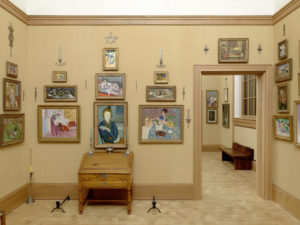
Dr. Albert Barnes was a chemist who made a fortune at the turn of the 20th century developing a treatment for infant blindness. He became interested in art and befriended the painter William Glackens. The two began collecting modern paintings in Paris in 1911, and Barnes eventually developed a private collection of paintings that today is valued at $50-60 Billion. Amazingly, he collected the works of the masters before they were masters, almost the equivalent of buying the Mona Lisa off Da Vinci in a dark Venice alley for twenty bucks. While he never got his hands on Mona, he amassed a world class collection of Renoirs, Picassos, Matisses, Modiglianis, Van Googhs, and more. Barnes was a quirky character. He hated the establishment, and couldn’t stand museums, high society or the 1%. He had this crazy idea that art was best appreciated by living with it, as opposed to viewing it in crowds for three second doses. He kept his collection of paintings in his home in the Philadelphia suburbs, and opened a school where people could learn about art while surrounded by it. He hung his paintings thematically, and each wall was a unique montage, what came to be known as an ensemble. He was constantly rearranging these works, and he rooms were often developed as a part of a curriculum – there were rooms featuring colorwork, brushwork, nudes – and, since he owned them, I imagine he occasional pulled down a Van Gough from the wall and let his students feel it to teach them about brushwork. He had an idiosyncratic sense of humor, and would often position large wooden chairs beneath paintings of big-bottomed subjects. Barnes was quite cantankerous, and he was picky about who he admitted to see the collection. He once rejected someone from seeing the collection and signed the letter as his dog. He was also close friends with John Dewey, and invited Bertrand Russel to teach at his foundation. A few biographies have been penned about him, and The Devil and Dr. Barnes recounts many of the battles he engaged in during his life. He was married for decades, but (spoiler alert) he died childless in 1951. During his lifetime he created the Barnes Foundation, and his will left crystal clear instructions that his collection was bequeathed to the foundation and should never leave his home. The documentary film The Art of the Steal tells the story of the greatest heist of the 20th century. According to the filmmakers, the City of Philadelphia and private foundations conspired to effectively eminent domain the collection. It took them a few decades, but they were eventually able to make the case that the environmental conditions of the Barnes home were jeopardizing the paintings. The proposed creating a brand new building in the middle of downtown Philly modeled after the wing of the Barnes estate that held his collections. They promised to preserve the unique curatorial layout of his rooms, recreating them within the new building. In 2012 the Barnes collection was moved to it’s new home in downtown Philly. The website describes the collection as:

Audio experiments and the rise of Scuttlebutt

Audio experiments and the rise of Scuttlebutt

by Jonah Bossewitch and Rob Garfield

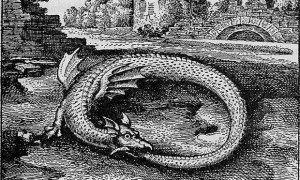
ouroboros_Michael_Maier_Atalanta_Fugiens_Emblem_14While chipping away at my dissertation this summer I found myself faced with the daunting task of transcribing about a dozen hours of video. I desperately wanted to believe that, in 2014, transcription was a machine’s task, so I took a minor detour through the state of the (consumer) art in voice recognition.  One of my computers runs OSX which includes Dictation (since Mavericks), the same voice recognition software that powers Siri. Following these instructions I used the Soundflower kernel extensions to send the audio output from Audacity into Dictation’s input. Dictation did such an awful job understanding my video that I actually found it easier to transcribe the videos manually rather than edit Dictation’s vomit. I found some decent software called ExpressScribe to assist in the manual transcription.  ExpressScribe makes it easy to control the playback speed, and can be configured to play a segment, automatically pause, and then rewind the video to moments before it paused.  The pro version can be rigged up to foot petal controls, but I was able to do my transcription using the crippleware. This summer I visited my friend Rob’s country house, affectionately dubbed Snowbound and located on the transcendental Baptist Pond, NH. Rob was gracious enough to invite me up for a writing retreat, though we managed to fit in some canoeing, hiking, cooking and drinking. We also gave birth to one of the most creative constructive procrastinations of my dissertation*—Scuttlebutt. After all that time playing with transcription tools we began to wonder if OSX could understand itself.  For years, OSX has been able to turn text to speech, and even ships with dozens of voices, with names like Vicky and Alex.  What would happen if we fed OSX’s text-to-speech into it’s own Dictation software? Dealing-with-Workplace-Gossip6Originally we thought Scuttlebutt might analogize and highlight the way that we humans misunderstand, mishear and misremember, in particular, the lightning quick messages that we receive on a daily basis through personal interaction, social media and email—*often deeply changing the message, generalizing it, and recontextualizing it.  Although voice recognition software begs us to “train” it, we thought we might have better results interacting with its infant state. We needed a reliable benchmark and settled on the first chapter of Genesis. We were curious if the voice recognition software would improve, with successive iterations of feeding it it’s own output back to itself using text-to-voice. There was one way to find out.

peddling platforms

peddling platforms

7175132773_dc83a2d1f2_bNew York City’s bike share program is flourishing, and I recently signed up for a membership even though I live outside the range of any Citibike stations. I find it convenient and fun to use the bikes to cross town, as well as zip from place to place when I am downtown. Since my first ride on the Parisian Vélib’, I’ve become a huge fan of bike shares, and have enjoyed rides in Paris, DC, Denver, Miami, and Toronto. The other month I had a great conversation with a local bike shop owner about the new program, and he conveyed the anxiety that many bike shops are feeling around Citibike. Understandably, many are concerned that the bike share will cut into their rental and retail sales, although I think it is likely that an increase in  biking will generate more interest and awareness, and generally increase the demand for bikes and bike services. Our discussion helped me recognize was how the city bike shares can be viewed as a platform for innovation, in the same sense that the iPod/iPhone is platform. And, just as the iphone-as-platform enabled a large ecology third-party  hardware and software businesses, bike shares present an analogous opportunity to creative entrepreneurs. Platforms can support entire ecosystem, and city bike shares provide an opportunity to build a new ecosystem around them. Cases and Chargers Let’s start with the hardware. I don’t need an MBA to understand that the real money in retail is made by selling accessories. For the iPhone this includes cases, cables, and a range of other devices, but retailers like Amazon and Best Buy have invested in incredibly complex systems to track the relations between products and their compatible accessories. Consider this. What New Yorker wants to be mistaken for a tourist while riding their Citibike? What they need is a way to (fashionably) express themselves, and make the generic bike their own. Starting with an appropriate pannier bag, Citibikers need an easy way to transport their helmet, gloves, music, and personal belongings. Bike shops currently have entire walls devoted to these kinds of accessories. With some focused curation bike shops can begin assembling “MyCitiBike” kits that are segmented and suitable for the demographics of their customers, no custom manufacturing required. Bags and accessories are just the start. Helmets should be as ubiquitous as umbrellas—inexpensive ones sold by street vendors, and maybe more durable ones available in vending machines, for a refundable deposit. You would just need to bring your own liner, which you could conveniently stash in your pannier bag. Turn on the lights Consider the explosive proliferation of bike lights that are poised to transform New York City into Black Rock City. Bike lights are being sold in  increasingly dizzying arrays of frequencies and patterns, but the arms race for visibility and attention may soon devolve into visual noise and distraction as the density of bikers grows. Imagine you are a biker who wants to communicate your intentions to a motor vehicle. During the day, there is a system of hand signals for signaling your intent. But currently are are’t any well established  standards for bike lights, other than white in the front and red in the back. Some of the standards that could help are obvious—more red when I’m braking, and left and right blinkers when I’m turning.  Others, like wireless control of helmet mounted lights, still need to be worked out. Some European bike manufacturers have begun introducing signaling innovations, but without standards these efforts will likely stall. Standards can emerge from the top-down, by mandate or regulation, or the bottom-up, by convention and adoption. I believe that bike share fleets present a powerful opportunity to innovate on bike safety and standards in a way that could lead the rest of the market.  Admittedly, it would be difficult to convince municipalities to devote the resources to underwrite these features. However, I dream of a day when stakeholders such as Transportation Alternatives and Critical Mass work with the Mayor’s office to hold Citibank’s feet to the fire. Instead of just a marketing campaign designed to whitewash their reputation, the Citibike program could be used to spearhead safety initiatives, such as lighting standards and open APIs, that could eventually make their way across the rest of the biking industry. Computational Cycles The iPhone has the app store, and bikeshare apps could be just as expansive. From quantifying yourself for fitness and health, to turning the city into one big arcade game, the possibilities are really wide open. It’s easy to imagine apps which bring traditional “pedal-for-charity” campaigns into 21st century, as well as casual team games like capture the flag or even frogger.  Some of these games could be powered by apps that run on smartphones, or fitness trackers (e.g. fitbit),  but once again, the bike-share platform offers an opportunity to standardize data formats and open apis for ride tracking. RiderState is an early example of a competitive social game for bikers, but more will surely follow.

Makers, Burners and Pedagogy Transformers

Last Thursday, I managed to further integrate my personal/professional/hobbiest identitites, and me and two of my esteemed colleagues (Therese and Jon) presented Burning Man and Hacker/Maker Spaces at the weekly CCNMTL staff meeting.

The rosetta stone for our talk was Fred Turner’s seminal paper Burning Man at Google: a cultural infrastructure for new media production (published by New Media and Society, the same journal that published my and Aram’s paper on The End of Forgetting (preprint)), which Turner also presented at Google, where his talk was recorded. We tried to connect Burning Man to a central question in education – the question of transference.  Do skills learned under simulated conditions transfer over to real world settings? We started out with the grand question, “What Educates?”, and tried to narrow that down to the question of how we can view commons-based peer-production in an educational context?  What can Burning Man, and crucially, the Maker Spaces that make Burning Man possible, teach educators about teaching and learning?

Dear Frank,

I remember the first time we met. It was my third and final interview for my current job at CCNMTL back in Spring ‘04. I was initially anxious, but you immediately made be feel welcome and comfortable. [Over the years I came to appreciate your gift for authentically connecting with just about anyone, often within 30 seconds of meeting them. You dispatched with superficial niceties and blazed trails directly to people’s souls. You bridged intellect and emotion, without a hint of pomp or circumstance, projecting sensitivity and respect to everyone you encountered. Age, class, race, gender - not so much that these dimensions were irrelevant, but you always managed to connect with the individual. You actually listened. And learned.] During that interview I remember walking into your office, encircled floor to ceiling with books. You asked me about my undergraduate senior thesis, a topic I hadn’t revisited in almost a decade, and then proceeded to pull Julian Jaynes off the shelf. You showed me your photo with Allen Ginsberg, and then asked me if I recognized the person in another grainy b/w photo. When I correctly identified Wittgenstein I was pretty confident I had landed the job. But, more importantly, I had found a new mentor. We didn’t interact very often my first summer at CCNMTL. I worked in Butler library, under Maurice’s supervision, and you were keeping summer hours, at your office in Lewisohn. When Fall rolled around I was eager to enroll in classes, and begin my graduate journeys, but I was nervous about signing up for a course with my boss. You never made me feel like a subordinate, but I was scarred from my relationship with management at previous jobs, and wasn’t sure what it would be like for us to enter into a student-teacher relationship. I hadn’t quite figured out that that was the only kind of relationship that you knew how to cultivate, although our roles were constantly revolving and inverting, as you shared your wisdom, and facilitated growth in every exchange. You brought out the best in everyone around you, rarely content to talk about people or events - always rushing or passing your way into the realm of the Forms. As I reflected when Robbie retired, I chose to enroll in your legendary Readings seminar after one of your students (I think it was Joost van Dreunen) made the case that your syllabus was your text on social/cultural/critical/communications/media theory. That year was invigorating. I remember rediscovering the joys of school, as I learned to reclaim spaces of intellectual exploration and play, and translate them into action. On the surface, our seminars resembled office meetings, but the luxury of non-directed (not to be confused with non-purposeful) conversation, which was a privilege I needed to readjust to. Together we figured out ways to weave together disparate threads of my life - work, hobbies, play, passions - somehow, I learned to integrate these (often inconsistent) vectors into a unified construct. A self, I suppose. But, it was my self, not one you imposed on me. It never felt like you pushed your agendas or ideologies on me - rather, you always wanted to help me discover what I really want to think about and work on. And I know that I’m not the only one that believes this - this was your way. I often wish you had written more, although your autobiographical text is a multi-volume, multi-dimentional, multimedia masterpiece. Sometimes I wonder how seriously you took Socrates’ critique of writing, along with his commitment to be a midwife for ideas. Did you lose count of the number of dissertations you helped deliver? One under-studied paper that you published, “Who controls the canon? A classicist in conversation with cultural conservatives,” (Moretti (1993), Teachers College Record, 95, pp. 113-126) captures many of the paradoxes you embodied and worked through. A radical classicist, a skeptical optimist, a scientific artist, a philosophical craftsman, an institutional revolutionary. Somehow, you integrated these roles with a career trajectory that not even the most advanced detectors in the Large Hadron Collider could trace. I watched you start countless conversations with a Greek or Latin etymology, charming the academics, administrators, and funders alike in a display of the continuing power of the Western cannon. You constantly reminded us of the classical education that many of our favorite thinkers received, and insisted we read them against that backdrop. But, more importantly, a reminder of how radical these thinkers all were in their own time, and how likely they themselves would be protesting the ossification of the cannon, if they were around today. These lessons will live on through one of the last projects you initiated, Decolonizing the Cannon, which a number of us are committed to follow through with. After 25+ years of reading Homer every fall, it will take us a lifetime to reconstruct the lesson plans you left behind. In the 9 years that I’ve known you we’ve been to hell and back. We’ve studied together, traveled together, worked together, gotten sick and healed together, but all the while kept our senses of humor. I’ve read many beautiful eulogies about you, but in this letter I want to emphasize your enduring sense of humor. You were a funny man. LMAO funny. Slapstick funny. Dada surrealist funny. Hashish funny. Plenty of the humor was dark, and perhaps, as your student Ruthie suggested to me recently, your humor helped shield you from the brutal injustices that you perceived and experienced all around us. But you were also sometimes a klutz, in an absentminded-professor sense, and a disorganized mess. A creative mess, but a mess. But, I have to say, that even when you were operating on scripted autopilot, you were way better than most people at their best. There wasn’t much you enjoyed more than being called out for your lapses in attention, and my glimpses of your inner monologue were often hysterical. I think that your analysis of power led you to conclude the the world was simply absurd. We all witnessed you acting on this with gravitas and determination, but in the minutia of our micro-interactions, there was always a wide smile and a belly laugh. I don’t think any of us will ever forget the sound of your laugh. (Or, your bark. Man, did you love to throw down and argue. But, that’s another post.) After I started taking classes with you, it didn’t take me long to realize that that the secret to understanding what you were talking about was knowing what you were reading that week. You would basically have one conversation all week long, no matter who you were talking to. I imagine it was bewildering to many of my coworkers when you brought up false-needs, or commodification at our weekly staff meetings, but if people paid close attention, they could almost observe the wheels spinning all week long, as you lived the theorists you were teaching through the practice of our projects. I often explained to people the incestuous nature of my work/school commitments by comparing my situation to a graduate student in the natural sciences. They might spend 40-60 hours a week in a lab, and working for you was about as close as I could imagine to working in a communications lab. I often wondered how many of my cohorts managed to keep up on developments in new media (and many of them certainly did) without the ambient immersion in a practice that exercised and embodied the theories we were reading. When summer vacation rolled around, you never quit.  I remember how you used to talk about the stretch of time between Sept-May as one long sprint (as long as I’ve known you, you’ve taught at least 2-2 + advising phd students + multiple committees at TC and the J-School, on top of your administrative responsibilities as executive director at CCNMTL and a senior officer in the libraries) , but you didn’t exactly slow down in the summer either. Or, perhaps I should say that you did slow down, but you never stopped teaching and learning.  For at least 3 or 4 summers I participated in “slow reading groups” with you and a few of your dedicated students. We didn’t get any credit for these sessions, and you didn’t get paid. We would sit in your office, and go around the table reading a book out loud, pausing whenever we needed clarification.  And, we often needed clarification. You were convinced that no one was reading anything closely anymore, and that the hundreds of pages that were assigned in courses each week were flying by without students or teachers taking the time to slow down and absorb them.  The second summer we tried this we read Latour’s Politics of Nature, a text we all internalized and will never forget. You had such a funny relationship with technology. You loved gadgets, but were constantly thwarted and befuddled by them. I wonder how many laptops and phones you lost or broke in the years we have known each other. You never stopped learning, but were suspicious of every new tool that showed up, and the more hype around the tool, the more you growled defensively at it. But often, after months of critiquing and berating something, you would come around and start appreciating it. While some of my coworkers/cohorts seem to have chips on their shoulders about the ineffectual futility of technological interventions, you had an optimistic will that allowed you to wield technology like you wielded the classics. Opportunistically, and instrumentally, in the service of social justice. That was your gig. Relentlessly. Sometimes I wonder if you felt like you had painted yourself into a corner with all of your critiques – like when you whispered quietly to me that you wanted to learn how to use Second Life, without blowing your critical cover. Last week I ran into an ex-girlfriend that I hadn’t seen in over 10 years. It was nice to reconnect, and in the course of our conversation I realized that we hadn’t spoken since I had started working and studying at Columbia. I was an entirely different person back then, one I barely recognized. Perhaps people return to graduate school in order to change, but true transformations require a relinquishing of your old identity and ego, without a clear idea of what might emerge on the other end. The Judaic tradition has a teaching that anyone who teaches you the alphabet is considered a parent. You literally taught me the alphabet, as we revisited the alphabet as a revolutionary communications technology (via Eric Havelock), and you taught me many other alphabets and languages that gave me access to entire new worlds.  You also invited me into your home, and made me feel like I was part of your family. Most of all, you modeled and embodied an honesty, integrity, and sheer force of will that I am blessed to have intersected. Safe travels, Frank, and enjoy your vacation. Love, /J
Yottabytes, wormcams and whistleblowers

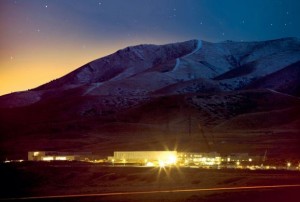
If you haven’t yet heard about the  details of the NSA’s spying program, catch yourself up with the timeline so this post doesn’t sound entirely bonkers. For years I’ve been pondering the scope and implications of what Aram Sinnreich and I call The End of Forgetting, and even prior to Edward Snowden’s revelations, I have recently noticed a few dramatic activations of massive distributed memory banks. In recent months, there have been a few instances where we have literally peered back in time, reconstructing the past based on comprehensive (relevant) records. In the sciences, the collection of records prior to having a specific question is sometimes called “triple-blind”. And, as we know, the dragnet-style collection of records has extended far beyond the lab. If software does one thing well its the collection/storage/retrieval of records; And, software is everywhere. This story about the reconstruction of February’s meteor path based on dashboard-cam footage reassembled inside Google Earth was pretty stunning:

Pyramid Schemes

A few months back I visited Cairo and cracked the mysteries of the Pyramids. Or, more accurately, cracked open some exciting new lines of inquiry. I was visiting Egypt for work, but had some time for sight-seeing along the way. I had visited Egypt about 20 years ago (!) but had largely skipped Cairo, and we’ve both changed a bit since then. The day after we arrived in Cairo we visited the Egyptian Museum. When Frank and I visited Israel we discussed how national museums are often used to assert a national ideology by anchoring it within a particular historical narrative.  Striking insight, especially since Mubarak had recently commissioned his son to begin construction of a new national museum that was in progress when we visited (mid-revolution). The current national museum dates back to British colonial times, and feels like a warehouse. It is filled with countless riches, but it’s really almost impossible to navigate without a guide. I thought it was notable that the museum makes no mention of the Bible or the Exodus, even if it is to point out that there is no historical record of the events described (except for one possible mention of the Israelites, but even that is downplayed). We had a wonderful tour guide taking us through the museum, and as we travelled through history I couldn’t shake the feeling that we were missing something important in our interpretation of these artifacts. The patron saint of my PhD program, James Carey, draws an important analytic distinction between communication as ritual, and communication as transmission. While there is no sharp line between these two modalities of communication, it is often helpful to distinguish between the two. So, for example, many of us read the paper ever day as a ritual, more like taking a bath than receiving information. When we reached Tutankhamun’s treasures it hit me like a ton of limestone bricks. Through their burial rituals, the Egyptians were trying to transmit information, but we were largely interpreting their rites and artifacts as ritual. Having read works like Serpent in the Sky, I have an inkling as to how structures like the Temple of Luxor (and Solomon’s temple, for that matter) were attempts to represent their society’s entire cosmology. What if the Egyptian burial rituals were an attempt to transmit the state of the art of Egyptian knowledge? All of it—astronomy, mathematics, medicine, and philosophy/religion/metaphysics? The first obvious question is the identity of the senders and receivers. If we take their myths at face value, the soul of the king would soon return to the his mummy.  Perhaps he might need a refresher course in Egyptian cosmology after the journey?  Cliff notes, at least? Or, perhaps these burial chambers were intended as time capsules. Messages intended for future generations? Future civilizations? Or, maybe just future generations of Egyptians (their civilization lasted thousands of years). Perhaps these attempts to capture the totality of Egyptian knowledge were like pissing contests between the priests.  How succinctly and elegantly could they represent Egyptian knowledge? This was my frame of mind during my stay in Cairo and the questions I was mulling over as we visited the pyramids of Giza later that week. Co(s)mic Interlude Did you ever hear the one about the pyramids as time machines? It goes something like this: The pyramids are constructed out of tons of limestone bricks. The molecule that makes up Limestone has two energy states. It’s lower energy state is its equilibrium. However, the molecule can also be excited into its higher energy state. Supposedly, this state could be induced by an acoustic wave at the correct resonant frequency. In the pyramids, this was achieved by a chorus of priests chanting at the appropriate frequencies. During initiation rites, an initiate stood in the burial chamber of the pyramid while the priests chanted. This excited the limestone molecules. At a precise moment, the priests all stopped chanting, allowing the limestone molecules to collapse back into their lower energy state. This produced a wave of energy, all focused on the burial chamber. The initiate fell into a trance, whereupon they dreamed they travelled to the future.  They remained in this trance indefinitely… that is, until they heard this story! Ha. Get it? Space-Time Bouys The pyramids are massive. Beyond human scale. They made me wonder… For a while I’ve believed that time travel really must have really picked up on this planet around the invention of photography. For a fairly mundane reason. Your calibrations need to be flippin’ pinpoint. Time traveling can be though of as tele-transporting, through space-time. So, you need to be able to safely and reliably target your destination coordinates.The last thing you want to do when teleporting is materialize in the middle of a rock or a tree or worse. Photographs, when combined with the exact date and time of their exposure, provide such coordinates to future chrono-naughts looking for a safe journey. In the presence of the pyramids it dawned on me that there is another solution to this safety equation: Hold your spatial coordinates fixed!  This would work best if you could build a structure that would be around for thousands of years, so you could be sure your point of arrival/departure would be around on both ends of your trip. The pyramid’s burial chambers pretty much fit this bill (modulo the irregularities of the earth’s orbit, the motion of our galaxy, etc. Quantum entanglement to the rescue?). Could the pyramids satisfy these constraints? Maybe. This hypothesis could go a long way towards explaining the “curse of the mummies”. Could King Tut’s burial chamber be one of the last operational teleportation chambers? 3D printers designed to reconstruct information beamed from somewhen else (after all, the necessary atoms are sure to be in place for the reconstruction)?  Or, would the Egyptian pyramids merely decorative cribs of the original Atlantean devices, and were never fully operational? All this suggests that Moses was a sleeper agent who infiltrated the Egyptian priesthood to liberate their most well-guarded secrets. Of course, the evidence of his handiwork is mapped out clearly in the blueprints of the tabernacle. In Dec 2012 our sun will align with the black hole at the center of the milky way (or, will it?). A pretty good spatial-temporal landmark, if I were navigating. Whenever.

Forthcoming: The End of Forgetting

In Spring ‘05 I took a class with Eben Moglen on the privacy, anonymity, and surveillance beat. The experience changed my life and with tons of support from my teachers and cohorts, I have been working on these ideas ever since. A few years ago I joined forces with Prof. Aram Sinnreich, after a great conversation at a free culture salon. Together we reframed and refined the work, and co-presented it at Media in Transition 6 in Spring ‘09. We rinsed, lathered, and repeated our revisions, and just learned that our paper, The end of forgetting: Strategic agency beyond the Panopticon will be published in an upcoming issue of New Media & Society. Damn. Scholarly communication is slow, but occasionally fulfilling. Aram will also be presenting our work at this year’s International Communications Association conference.  Sadly, I can’t make it, but if you are near Phoenix this weekend, stop by Camelback A at noon on Sunday!