Surveillance

Zyprexa Memos Released Using Tor

Freeculturenyu.org is covering an unfolding story laced with greed and deciept in the pharmaceutical industry. The freeculture angle here is that Lilly will predictably try to control this information by abusing copyright laws. However, there is another important angle to this story relating to the relationship between anonymity and free speech, especially in a world of omniscient surveillance. Tor users must remember to install both Tor and Privoxy (instructions). There is also a firefox plugin, torbutton, which makes using Tor a bit easier. From freenetproject.org’s philosophy section
Permanent Records

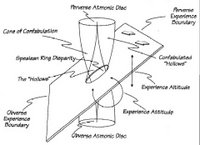
Sonnabend DiagramToday I presented last year’s bioport Part II paper to the 2nd annual Cultural Studies conference at Teachers College. Permanent Records: Personal, Cultural, and Social Implications of Pervasive Omniscient Surveillance I think the distilled version of this model if far more digestible and accessible than the papers. One of my co-panelists is doing some really interesting work with urban youth in the bronx, and gathering incredible interview materials about the perceptions of surveillance by these youth, and their forms of resistance. These stories might help convey the violence of a surveillance society. The conference format was a bit disappointing. I can barely believe academics still read their papers to each other at conferences - there are so many things that Open Source does right, including, knowing how to throw a great conference. Even the variety of presentation formats is an idea that needs to spread - BOFs, lighting talks, presentations and posters all create different spaces and dynamics for interactions between participants. The traditional model is so intimidating that it seems like many people are discouraged from participating. More importantly, the social justice issues and governance models that are being explored by F/OSS projects are really important for the Cultural/Critical studies folks to be considering. It is also shocking how disconnected they are from the freeculture movement, and its theoretical roots. Arguably, the freeculture movement is a shadow struggle, mirroring the struggles for sustainability, and against globalization and the logic of capitalism being conducted in the physical world. But, it may also represent the actual ground on which that struggle is being conducted.

Is anyone watching grandma?

kino eyeOn Friday I had a chance to meet with a group of Artificial Intelligence researchers at Carnegie-Melon university. They demonstrated a working technology, Informedia, which I would have guessed was at least 3-5 years off. What was most incredible about this demonstration was the vivid observation of the trenches in which the information war is being waged. Like any power, technology can bend towards good or evil, and as this post points out, Social Software can be understood as the purposeful use of technology for the public good. The surveillance possibilities that machine based processing of video and film affords is mind-boggling and horrifying (for more on this angle, see my bioport papers or the Permanent Records presentation). At the same time, the kinds of research, machine based assistance, and even the ways in which this kind of technology would change journalism, could all be harnessed for the public good. Is transparency, openness, and free culture our best bet for steering and harnessing these powers productively?