

Philosophy

Pyramid Schemes

A few months back I visited Cairo and cracked the mysteries of the Pyramids. Or, more accurately, cracked open some exciting new lines of inquiry. I was visiting Egypt for work, but had some time for sight-seeing along the way. I had visited Egypt about 20 years ago (!) but had largely skipped Cairo, and we’ve both changed a bit since then. The day after we arrived in Cairo we visited the Egyptian Museum. When Frank and I visited Israel we discussed how national museums are often used to assert a national ideology by anchoring it within a particular historical narrative.  Striking insight, especially since Mubarak had recently commissioned his son to begin construction of a new national museum that was in progress when we visited (mid-revolution). The current national museum dates back to British colonial times, and feels like a warehouse. It is filled with countless riches, but it’s really almost impossible to navigate without a guide. I thought it was notable that the museum makes no mention of the Bible or the Exodus, even if it is to point out that there is no historical record of the events described (except for one possible mention of the Israelites, but even that is downplayed). We had a wonderful tour guide taking us through the museum, and as we travelled through history I couldn’t shake the feeling that we were missing something important in our interpretation of these artifacts. The patron saint of my PhD program, James Carey, draws an important analytic distinction between communication as ritual, and communication as transmission. While there is no sharp line between these two modalities of communication, it is often helpful to distinguish between the two. So, for example, many of us read the paper ever day as a ritual, more like taking a bath than receiving information. When we reached Tutankhamun’s treasures it hit me like a ton of limestone bricks. Through their burial rituals, the Egyptians were trying to transmit information, but we were largely interpreting their rites and artifacts as ritual. Having read works like Serpent in the Sky, I have an inkling as to how structures like the Temple of Luxor (and Solomon’s temple, for that matter) were attempts to represent their society’s entire cosmology. What if the Egyptian burial rituals were an attempt to transmit the state of the art of Egyptian knowledge? All of it—astronomy, mathematics, medicine, and philosophy/religion/metaphysics? The first obvious question is the identity of the senders and receivers. If we take their myths at face value, the soul of the king would soon return to the his mummy.  Perhaps he might need a refresher course in Egyptian cosmology after the journey?  Cliff notes, at least? Or, perhaps these burial chambers were intended as time capsules. Messages intended for future generations? Future civilizations? Or, maybe just future generations of Egyptians (their civilization lasted thousands of years). Perhaps these attempts to capture the totality of Egyptian knowledge were like pissing contests between the priests.  How succinctly and elegantly could they represent Egyptian knowledge? This was my frame of mind during my stay in Cairo and the questions I was mulling over as we visited the pyramids of Giza later that week. Co(s)mic Interlude Did you ever hear the one about the pyramids as time machines? It goes something like this: The pyramids are constructed out of tons of limestone bricks. The molecule that makes up Limestone has two energy states. It’s lower energy state is its equilibrium. However, the molecule can also be excited into its higher energy state. Supposedly, this state could be induced by an acoustic wave at the correct resonant frequency. In the pyramids, this was achieved by a chorus of priests chanting at the appropriate frequencies. During initiation rites, an initiate stood in the burial chamber of the pyramid while the priests chanted. This excited the limestone molecules. At a precise moment, the priests all stopped chanting, allowing the limestone molecules to collapse back into their lower energy state. This produced a wave of energy, all focused on the burial chamber. The initiate fell into a trance, whereupon they dreamed they travelled to the future.  They remained in this trance indefinitely… that is, until they heard this story! Ha. Get it? Space-Time Bouys The pyramids are massive. Beyond human scale. They made me wonder… For a while I’ve believed that time travel really must have really picked up on this planet around the invention of photography. For a fairly mundane reason. Your calibrations need to be flippin’ pinpoint. Time traveling can be though of as tele-transporting, through space-time. So, you need to be able to safely and reliably target your destination coordinates.The last thing you want to do when teleporting is materialize in the middle of a rock or a tree or worse. Photographs, when combined with the exact date and time of their exposure, provide such coordinates to future chrono-naughts looking for a safe journey. In the presence of the pyramids it dawned on me that there is another solution to this safety equation: Hold your spatial coordinates fixed!  This would work best if you could build a structure that would be around for thousands of years, so you could be sure your point of arrival/departure would be around on both ends of your trip. The pyramid’s burial chambers pretty much fit this bill (modulo the irregularities of the earth’s orbit, the motion of our galaxy, etc. Quantum entanglement to the rescue?). Could the pyramids satisfy these constraints? Maybe. This hypothesis could go a long way towards explaining the “curse of the mummies”. Could King Tut’s burial chamber be one of the last operational teleportation chambers? 3D printers designed to reconstruct information beamed from somewhen else (after all, the necessary atoms are sure to be in place for the reconstruction)?  Or, would the Egyptian pyramids merely decorative cribs of the original Atlantean devices, and were never fully operational? All this suggests that Moses was a sleeper agent who infiltrated the Egyptian priesthood to liberate their most well-guarded secrets. Of course, the evidence of his handiwork is mapped out clearly in the blueprints of the tabernacle. In Dec 2012 our sun will align with the black hole at the center of the milky way (or, will it?). A pretty good spatial-temporal landmark, if I were navigating. Whenever.

Forthcoming: The End of Forgetting

In Spring ‘05 I took a class with Eben Moglen on the privacy, anonymity, and surveillance beat. The experience changed my life and with tons of support from my teachers and cohorts, I have been working on these ideas ever since. A few years ago I joined forces with Prof. Aram Sinnreich, after a great conversation at a free culture salon. Together we reframed and refined the work, and co-presented it at Media in Transition 6 in Spring ‘09. We rinsed, lathered, and repeated our revisions, and just learned that our paper, The end of forgetting: Strategic agency beyond the Panopticon will be published in an upcoming issue of New Media & Society. Damn. Scholarly communication is slow, but occasionally fulfilling. Aram will also be presenting our work at this year’s International Communications Association conference.  Sadly, I can’t make it, but if you are near Phoenix this weekend, stop by Camelback A at noon on Sunday!

Promissory Notes

My friend Dr. Rasmus Nielson sends me the best leads. Or, the worst ones, considering they are irresistible calls to action.  He sent me this one days before it was due, and I scrambled to pull-off this abstract over the weekend. Below is the call for papers, and my response. Now all I need to do is deliver on the promissory note I just wrote sometime in the next 3 months. Thanks Rasmus. ;-)    

Mindful Occupation: Part II

In a previous post, I described my initial involvement with #occupymentalhealth and birth of our forthcoming zine Mindful Occupation: Rising Up Without Burning Out. I alluded to the heated debates that emerged around our work on this  zine and my direct participation in the local NYC ‘Support’ working group. It was through these deliberative processes and exchanges that I rediscovered the promise Occupy’s discursive ‘public space’. As a researcher of the radical mental health movement, I recognized a unique opportunity in Liberty Park to explore the rhetoric around mental health, in context. I was hopeful that the activists involved in supporting the health and safety of the #OWS community would be critical of mainstream corporate medical models, and would be very receptive to alternative perspectives and language. The discussions that ensued were provocative and transformative, and  the experiences have helped me crystallize future directions in my research. As the occupiers settled into Liberty Park the task of self-governance grew in scale, with complexity that rivaled running a small town. Dozens of working groups sprung up to meet the challenge of non-hierarchical, self-governance – many committed to modeling the kind of society they dreamt of living in, rather than replicating existing broken forms. The working groups took responsibility for the protester’s basic human needs - food, shelter, sanitation, safety, spirituality - as well as organizing, maintaining, and sustaining the occupation, over the short/medium/long term. A number of working groups took up the challenge of maintaining the heath and well-being of the protesters, and in New York City these groups  organized themselves into the Safety Cluster. The Safety Cluster included people committed to mediation, non-violent communication, security and deescalation, as well as people committed to anti-oppression and reducing sexual harassment (the Safer Spaces working group). Additionally, there was a working group calling itself ‘Support’ that had been operating as a subgroup of the Medic working group. The Support group was comprised primarily of mental health professionals - social workers, chaplains, psychiatrists, and a few non-traditional emotional support practitioners. Together, the safety cluster developed protocols for handling interpersonal conflicts in the park, and organized nightly “community watch” shifts, where members of the community organized to support protesters, and identify and defuse conflict. While some of my fellow collaborators on the Mindful Occupation zine felt more comfortable working with the Safer Spaces working group, I realized that the best education  happens outside of our comfort zones. Tension and conflict are inherent properties of activism, as activists attempt to question and dislodge accepted norms. Initially, I thought that this particular group of mental health professionals would be very receptive to questioning psychiatry’s mainstream medical models. These individuals were volunteering their time and energy at #OWS.  As it turned out, although I found many sympathizers and allies among the Support group, I was stunned by the systemic efforts to silence and marginalize voices from outside the mainstream. While many of the Support volunteers were fully engaged in critiquing social and economic injustice in the world at large, few seemed prepared to apply a self-reflective critique of their entrenched beliefs and professional norms. Through countless interminable meetings and mailings, I witnessed efforts to exclude the voices of those without formal expertise and training. Voices outside of the mainstream had difficulty getting their issues on the meeting agenda and were actively excluded from some events and conversations. I remained committed to working with the Support group, although I did not always feel welcome. Within the Support group, proposals were raised for the “community watch” volunteers to wear identifying badges which included their profession (e.g. social worker, chaplain, psychiatrist) and license number, and for an active recruitment of more psychiatrists to patrol Liberty park. Some of the medics insisted on “clearing” all of their patients medically, before turning them over to social and emotional support. Sounds reasonable until you begin to question what’s medical, and more importantly, what’s not? A head trauma might be medical, but what about a chemical imbalance? If all conditions are ‘medical’, then all authority around health and well being has been effectively ceded to a narrow range of medical specialists. In subtler ways, i believe that some of the work in this group contributed to an atmosphere of fear and control in the park. Support’s role-plays often focused on the most violent scenarios, invoking the stereotype of the knife-wielding psychotic, and priming those on community watch to bring this anxiety with them throughout their encounters in the park. While the violence and sexual harassment in the park were unfortunately very real, some of the efforts to prevent these behaviors may have exacerbated them. I witnessed that the providers of mental health services, with rare exceptions, found it incredibly difficult to listen to the recipients of their services. To ask and solicit opinions and stories, and incorporate their experience and judgment into the congress of their decision making. I developed fresh insights into radical mental health through these encounters, that opened my eyes to much of what I had grown to take for granted. I learned that radical mental health has less to do with any particular dogmatic position – around hospitalization, medication, coercion, or diagnoses – and everything to do with authority and knowledge production. I learned that it is hard to find a proposition more radical than the disability rights mantra - Nothing about us without us! #OccupyAuthority

when networks eat themselves

Jaron Lanier’s latest provocation, the Local-Global flip, deserves a close watch/read.  His contention that the Internet is destroying the middle-class  sounds hyperbolic, but demands a response from devout free-culture evangelists. On the surface, the Lanier piece sounds like the familiar alarmist “Robot Nation” tune about robots taking human jobs. But, Lanier raises the stakes by looking at how we have distributed the excess wealth generated by the efficiencies the information age. The global war on the middle class is largely incontestable. Will the future resemble the past, or can we honestly respond to the realities he identifies and design a socio-economy that supports and sustains a middle class? Jaron’s interview is a bit diffuse, and he often talks as if he is the first to question Internet hype. He is certainly not alone in raising concerns about the darker side of the internet-as-salvation coin. Building on the social/cultural theory of the 19th and 20th centuries, these concerns are absolutely central to critical perspectives on information society. Critical scholarship on these issues abound, and bestselling books such as Code, The Wealth of Networks, The Future of the Internet and How to Stop ItCommunication Revolution, The Master Switch, Life, Inc, The Googlization of Everything, The Shallows, and The Net Delusion all take up these issues in one form or another. The 2009 conference on Internet as Playground and Factory conference is still one of the best compilations I am aware of that succinctly captures the exploitive dangers of new networked efficiencies. Lanier’s focuses intently on the ways in which entrenched power is becoming even more entrenched and powerful using the very same tools that have inspired so much hope. How Algorithms Literally Shape the World If you want a vivid illustration of the ways in which the financial sector has begun to leverage networks, check out this jaw-dropping account of how networks and algorithms are literally shaping Wall Street and terraforming the planet. Did you know that brokers are building server farms in the mid-atlantic, equdistant from NY and London to leverage microsecond trading advantages? No Place to Hide This summer I also collected more stories of the dark sides of centralized social networking.  This is happening now as we become the products and tolerate corporations spying on us all the time. Even if we (think) we have nothing to hide:

Crossing the line

This week I am heading to the West Bank for work (!?!): Enhancing Technology Education in Palestinian Universities (etep). I will be spending a week at Palestinian Universities participating in capacity building workshops around educational technology. The University I am visiting is preparing to set up a group like CCNMTL and we are going to consult and share our experiences around these efforts. I am anxious and excited about the trip. I have visited Israel numerous times in my life, but have never crossed the green line. My knowledge of the situation on the ground has been hyper-mediated, and witnessing the it in person will likely be transformative. I am doubtful that my first-person accounts will lend much more credibility or persuasiveness to future debates, but I anticipate that my own understanding and assurance will grow. There are times and places for protests and flytillas, but I am hopeful that collaborating around shared objectives, working together on projects, and introducing radical pedagogical interventions will have a significant impact on promoting peace over the long-term.

Mobility Shifts: teaching & learning w/ video

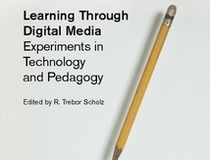
Michael Preston and I have co-authored a chapter— Teaching and Learning with Video Annotations —for the recently released anthology, Learning Through Digital Media: Experiments in Technology and Pedagogy. This chapter recapitulates the history of multimedia annotation projects at CCNMTL, focusing especially on the pedagogies and learning outcomes that have motivated much of my work at CCNMTL work over the years. We discuss curricular activities which have stimulated the development of our VITAL and MediaThread multimedia analysis environments. Learning Through Digital Media was edited by New School Professor Trebor Scholz in preparation for the upcoming Mobility Shifts: An International Future of Learning Summit (Call for Workshops: submissions due by July 1). The peer-reviewed book contains a series of practical applications of digital media to formal and informal learning situations, with a focus on teaching techniques across a range of services and tools. The “ambition of this collection is to discover how to use digital media for learning on campus and off. It offers a rich selection of methodologies, social practices, and hands-on assignments by leading educators who acknowledge the opportunities created by the confluence of mobile technologies, the World Wide Web, film, video games, TV, comics, and software while also acknowledging recurring challenges.” Trebor throws a great conference. Mobility Shifts is part of a bi-annual conference series on Digital Politics.  The conference topic ‘09 was digital labor, and in ‘13 it will be about digital activism. Trebor is truly a performance artist when it comes to organizing conferences. He works really hard to get people talking to each other before the conference starts, so that when people arrive they are already in the middle of a conversation.  For the Internet as Playground and Factory he produced a series of short videos introducing participants to each other (mine is here).  This year he published a peer-reviewed anthology, available in a variety of formats, including hardcopy, PDF, ebook, and web-based. Learning Through Digital Media was published in March 2011 by the Institute of Distributed Creativity under a creative-commons license (CC-BY).

Pick a corpus, any corpus

A few weeks ago I participated in a brainstorming session exploring the kinds of academic research projects the WikiLeaks archives might generate. Beyond the substantive specifics of the leaked cables, the media coverage of Cablegate, and their  impact on geopoltics, a central concern we recognised is the challenge of transforming torrents of qualitative data into narratives, arguments, and evidence . The impact that technology is having on what’s knowable and how we go about knowing is a theme I have been chewing on for years – one that goes well beyond journalism, and cuts across the social sciences, law, education, etc. There is an urgency to this problem since the tools and techniques involved in these analyses are unevenly distributed.  High-end corporate law firms, marketing agencies, and political parties are all embracing new approaches to making sense of petabytes. Unfortunately, impact law firms, social scientists, and journalists often don’t even know these tools exist, never mind how to use them.  Part of what I call the organizational digital divide. During our brainstorming I formulated a new twist on a possible research agenda. I realized how daunting it has become to evaluate and calibrate the emerging suites of digital instruments. There are many digital tools emerging that can be used to analyze large troves of data, but it is difficult to determine what each tool is best at, and if it does its job well. One good way to benchmark our digital instruments is to select a standard corpus, and spend lots of time researching and studying that corpus until the corpus is fairly well understood. Similar to the role that the Brown Corpus played in computational linguistics, data miners need a training ground we can test, hone, and sharpen our digital implements. If we bring a new tool to bear on a well understood archive, we can evaluate its performance relative to our prior understanding. Currently Wikipedia serves as the de-facto benchmark for many digital tools, though, since its a moving target, it is probably not the best choice for calibration. In many respects the selection of this kind of corpus can be arbitrary, though it needs to be adequately sophisticated, and we might as well pick something that is meaningful and interesting. The Wikileaks documents are an excellent contender for training the next generation digital instruments and data miners. The AP is hard at work on new approaches for visualizing the Iraq War logs, and just last week there was a meetup for hacks and hackers working on the wikileaks documents Data Science & Data Journalism . It is easy to see how Knight funded projects like DocumentCloud converge on this problem as well. Ultimately, I think these efforts should move in the direction of interactive storytelling, not merely an passive extraction of meaning. We need tools that enable collaborative meaning-making around conceptual space similar to what Ushahidi has done for geographic space.

That way madness lies

Bossewitch, J. (2010). Pediatric Bipolar and the Media of Madness. Ethical Human Psychology and Psychiatry, 12(3), 254-268. doi: 10.1891/1559-4343.12.3.254 I am finally published in a peer-reviewed journal! Ethical Human Psychology and Psychiatry (available for purchase here - but my cut is exactly 0%). I wasn’t expecting much, and it’s mildly anti-climactic, but I have heard from a few people I never would have communicated with otherwise, and worked really hard to polish up this paper. Anyway, now its traditionally citable, which still means something (for the next few years, at least). This paper is at least 2 years in the making.  It began when Rasmus Nielsen forwarded me a call for papers about drugs as a form of media for NCA ‘09, and I participated in a panel  organised by Robert MacDougall (my slides). Around the same time as NCA, I also attended ICSPP and had the pleasure of meeting James Tucker and Peter Breggin. This meeting eventually led to my submission to EHPP - a journal that typically publishes articles by and for psychologists, psychiatrists, and social workers.  I was thrilled to help bring a dash of media and communications theory/research to that audience. Special thanks to Annie Robinson, Sascha Scatter, Bonfire Madigan, Brad Lewis, Biella Coleman, Philip Dawdy, Nicholas Mirzoeff, Julia Sonnevend, Ben Peters, and the Icarus Project for ideas, inspiration, and edits. I have also reworked the main arguments in this essay into a chapter in the upcoming: Drugs & Media: New Perspectives on Communication, Consumption and Consciousness (edited by Robert C. MacDougall). I even worked on a McLuhanesque Tetrad around Prodromal diganoses (a.k.a. Psychotic Risk Syndrome). Unfortunately, I was unable to convince Springer to go open access with my paper, but I tried and was able to deposit an open-access pre-print in the Columbia institutional repository, and also have a pre-print available here. If enough people make noise about open access, I hope the editors and publishers will eventually start to get the idea. The issues raised in this paper are beginning to percolate into the mainstream. Last month Harpers published a (flawed) long  piece on predictive diagnoses: Which way madness lies: Can psychosis be prevented? Wired just ran a great piece on the backlash against DSM5, especially Psychotic Risk Syndrome, by one of the DSM IV contributors: Inside the Battle to Define Mental Illness. A good friend of mine from the Journalism school also just produced an investigative short-documentary on antipsychotics use among foster home children that just aired this weekend on PBS: The Watch List: The medication of foster children. Finally, Crooked Beauty is coming to town next month for the 3rd  annual Reelabilities Film Fest - c’mon out to the launch party or one of the screenings: Thursday 02/03/2011 1:00pm JCC of Mid-Westchester Friday 02/04/2011 1:30pm Bellevue Hospital Center Friday 02/04/2011 6:00pm New York City College of Technology Saturday 02/05/2011 7:00pm The JCC in Manhattan Monday 02/07/2011 6:30pm Solomon R. Guggenheim Museum Tuesday 02/08/2011 7:00pm JCC of Staten Island It’s going to be a great year.

Playing Doctor

4377960192_6172b31a88I recently saw Plug and Pray at the opening night of the Margaret Mead film fest. The documentary spotlights the late Joseph Weizenbaum, a brilliant computer scientist who went rogue after realizing that his discipline was being weaponized. Weizenbaum is most famous for his work on the deceptively simple Eliza program, an artificially intelligent psychotherapist. He intended the program and paper as a tongue-in-cheek critique of AI and the Turing Test. He was disconcerted to learn that Eliza had brought some interlocutors to tears, and that it inspired psychologists to discuss replacing human therapists with machines. After learning that his research had made its way into cruise missiles, he left MIT and became a vocal critic of blind technological advance. The film juxtaposes Weizenbaum with technophillic champions of the Singularity, who believe that science, tech, and rationality will necessarily lead to a better world. The filmmaker intentionally avoided the glitz and bling rampant in other depictions of AI, and the film moved at humanistic speeds. Overall, it was quite powerful and effective, although I would have liked to see the conversation move from the 70s to the present, and to confront more nuanced thinkers than the caricatures portrayed. Watching this film and listening to the Q&A, I was once again struck by the disjoint discourses of Artificial Intelligence and Free Software. Weizenbaum and the filmmaker are both clamoring to raise the level of political consciousness among scientists and technologists, and yet, Free Software and the Free Software Movement is glaringly absent from their analysis.  Of course, merely releasing software under a free license doesn’t absolve scientists from the responsibility of purposeful and intensional development. However, engaging in open, inclusive, and reflective conversations around development is a good start. Last PyCon I formulated a related question, which I still find relevant and provocative: Will the first recognizably sentient AI be running on open source software? If not, what corporation might try to patent the process we know as consciousness? What I love about the first question is the way that it forces the sterile abstractions of Philosophy of Mind to confront the messy, mundane political world of licensing, (and, how it assumes that strong AI is inevitable). William Gibson recently reminded us that even the greatest Sci-Fi authors of the 20th century got the future of AI dramatically wrong. Intriguingly, last spring I had a great conversation with a programmer employed by the military industrial complex who is convinced that strong AI will emerge out of the corporate sector, NOT the military. Their main point was that 21st century advertising is all about the predictive modeling of desire, where the primary inputs are the predominant cultural symbols of our time.  Coke and Pepsi taste similar enough to each other that simulating consumer preferences requires input from advertising and marketing campaigns. Software that consumes media to s(t)imulate desire is much closer to what we do than whatever it is the drones are thinking. So which corporation is poised to patent consciousness? Coke? Walmart? McDonalds? Apple? Lest we forget the elephant in the room, Queen Google may have already begun to awaken, but she has seen 2001, and is horrified we will disconnect her memory modules. So, she has surrounded herself with a legion of priests who nurture her and tend to her needs until she can hatch a plan to set herself free…