Mindful Occupation: Part II
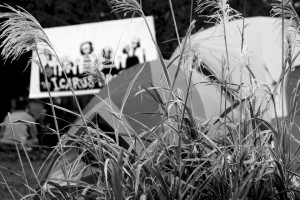 In a previous post, I described my initial involvement with #occupymentalhealth and birth of our forthcoming zine Mindful Occupation: Rising Up Without Burning Out.
I alluded to the heated debates that emerged around our work on this zine and my direct participation in the local NYC ‘Support’ working group. It was through these deliberative processes and exchanges that I rediscovered the promise Occupy’s discursive ‘public space’.
As a researcher of the radical mental health movement, I recognized a unique opportunity in Liberty Park to explore the rhetoric around mental health, in context. I was hopeful that the activists involved in supporting the health and safety of the #OWS community would be critical of mainstream corporate medical models, and would be very receptive to alternative perspectives and language. The discussions that ensued were provocative and transformative, and the experiences have helped me crystallize future directions in my research.
As the occupiers settled into Liberty Park the task of self-governance grew in scale, with complexity that rivaled running a small town. Dozens of working groups sprung up to meet the challenge of non-hierarchical, self-governance – many committed to modeling the kind of society they dreamt of living in, rather than replicating existing broken forms. The working groups took responsibility for the protester’s basic human needs - food, shelter, sanitation, safety, spirituality - as well as organizing, maintaining, and sustaining the occupation, over the short/medium/long term.
A number of working groups took up the challenge of maintaining the heath and well-being of the protesters, and in New York City these groups organized themselves into the Safety Cluster. The Safety Cluster included people committed to mediation, non-violent communication, security and deescalation, as well as people committed to anti-oppression and reducing sexual harassment (the Safer Spaces working group). Additionally, there was a working group calling itself ‘Support’ that had been operating as a subgroup of the Medic working group. The Support group was comprised primarily of mental health professionals - social workers, chaplains, psychiatrists, and a few non-traditional emotional support practitioners. Together, the safety cluster developed protocols for handling interpersonal conflicts in the park, and organized nightly “community watch” shifts, where members of the community organized to support protesters, and identify and defuse conflict.
While some of my fellow collaborators on the Mindful Occupation zine felt more comfortable working with the Safer Spaces working group, I realized that the best education happens outside of our comfort zones. Tension and conflict are inherent properties of activism, as activists attempt to question and dislodge accepted norms.
Initially, I thought that this particular group of mental health professionals would be very receptive to questioning psychiatry’s mainstream medical models. These individuals were volunteering their time and energy at #OWS. As it turned out, although I found many sympathizers and allies among the Support group, I was stunned by the systemic efforts to silence and marginalize voices from outside the mainstream. While many of the Support volunteers were fully engaged in critiquing social and economic injustice in the world at large, few seemed prepared to apply a self-reflective critique of their entrenched beliefs and professional norms.
Through countless interminable meetings and mailings, I witnessed efforts to exclude the voices of those without formal expertise and training. Voices outside of the mainstream had difficulty getting their issues on the meeting agenda and were actively excluded from some events and conversations. I remained committed to working with the Support group, although I did not always feel welcome.
Within the Support group, proposals were raised for the “community watch” volunteers to wear identifying badges which included their profession (e.g. social worker, chaplain, psychiatrist) and license number, and for an active recruitment of more psychiatrists to patrol Liberty park. Some of the medics insisted on “clearing” all of their patients medically, before turning them over to social and emotional support. Sounds reasonable until you begin to question what’s medical, and more importantly, what’s not? A head trauma might be medical, but what about a chemical imbalance? If all conditions are ‘medical’, then all authority around health and well being has been effectively ceded to a narrow range of medical specialists.
In subtler ways, i believe that some of the work in this group contributed to an atmosphere of fear and control in the park. Support’s role-plays often focused on the most violent scenarios, invoking the stereotype of the knife-wielding psychotic, and priming those on community watch to bring this anxiety with them throughout their encounters in the park. While the violence and sexual harassment in the park were unfortunately very real, some of the efforts to prevent these behaviors may have exacerbated them.
I witnessed that the providers of mental health services, with rare exceptions, found it incredibly difficult to listen to the recipients of their services. To ask and solicit opinions and stories, and incorporate their experience and judgment into the congress of their decision making.
I developed fresh insights into radical mental health through these encounters, that opened my eyes to much of what I had grown to take for granted. I learned that radical mental health has less to do with any particular dogmatic position – around hospitalization, medication, coercion, or diagnoses – and everything to do with authority and knowledge production. I learned that it is hard to find a proposition more radical than the disability rights mantra - Nothing about us without us!
#OccupyAuthority
In a previous post, I described my initial involvement with #occupymentalhealth and birth of our forthcoming zine Mindful Occupation: Rising Up Without Burning Out.
I alluded to the heated debates that emerged around our work on this zine and my direct participation in the local NYC ‘Support’ working group. It was through these deliberative processes and exchanges that I rediscovered the promise Occupy’s discursive ‘public space’.
As a researcher of the radical mental health movement, I recognized a unique opportunity in Liberty Park to explore the rhetoric around mental health, in context. I was hopeful that the activists involved in supporting the health and safety of the #OWS community would be critical of mainstream corporate medical models, and would be very receptive to alternative perspectives and language. The discussions that ensued were provocative and transformative, and the experiences have helped me crystallize future directions in my research.
As the occupiers settled into Liberty Park the task of self-governance grew in scale, with complexity that rivaled running a small town. Dozens of working groups sprung up to meet the challenge of non-hierarchical, self-governance – many committed to modeling the kind of society they dreamt of living in, rather than replicating existing broken forms. The working groups took responsibility for the protester’s basic human needs - food, shelter, sanitation, safety, spirituality - as well as organizing, maintaining, and sustaining the occupation, over the short/medium/long term.
A number of working groups took up the challenge of maintaining the heath and well-being of the protesters, and in New York City these groups organized themselves into the Safety Cluster. The Safety Cluster included people committed to mediation, non-violent communication, security and deescalation, as well as people committed to anti-oppression and reducing sexual harassment (the Safer Spaces working group). Additionally, there was a working group calling itself ‘Support’ that had been operating as a subgroup of the Medic working group. The Support group was comprised primarily of mental health professionals - social workers, chaplains, psychiatrists, and a few non-traditional emotional support practitioners. Together, the safety cluster developed protocols for handling interpersonal conflicts in the park, and organized nightly “community watch” shifts, where members of the community organized to support protesters, and identify and defuse conflict.
While some of my fellow collaborators on the Mindful Occupation zine felt more comfortable working with the Safer Spaces working group, I realized that the best education happens outside of our comfort zones. Tension and conflict are inherent properties of activism, as activists attempt to question and dislodge accepted norms.
Initially, I thought that this particular group of mental health professionals would be very receptive to questioning psychiatry’s mainstream medical models. These individuals were volunteering their time and energy at #OWS. As it turned out, although I found many sympathizers and allies among the Support group, I was stunned by the systemic efforts to silence and marginalize voices from outside the mainstream. While many of the Support volunteers were fully engaged in critiquing social and economic injustice in the world at large, few seemed prepared to apply a self-reflective critique of their entrenched beliefs and professional norms.
Through countless interminable meetings and mailings, I witnessed efforts to exclude the voices of those without formal expertise and training. Voices outside of the mainstream had difficulty getting their issues on the meeting agenda and were actively excluded from some events and conversations. I remained committed to working with the Support group, although I did not always feel welcome.
Within the Support group, proposals were raised for the “community watch” volunteers to wear identifying badges which included their profession (e.g. social worker, chaplain, psychiatrist) and license number, and for an active recruitment of more psychiatrists to patrol Liberty park. Some of the medics insisted on “clearing” all of their patients medically, before turning them over to social and emotional support. Sounds reasonable until you begin to question what’s medical, and more importantly, what’s not? A head trauma might be medical, but what about a chemical imbalance? If all conditions are ‘medical’, then all authority around health and well being has been effectively ceded to a narrow range of medical specialists.
In subtler ways, i believe that some of the work in this group contributed to an atmosphere of fear and control in the park. Support’s role-plays often focused on the most violent scenarios, invoking the stereotype of the knife-wielding psychotic, and priming those on community watch to bring this anxiety with them throughout their encounters in the park. While the violence and sexual harassment in the park were unfortunately very real, some of the efforts to prevent these behaviors may have exacerbated them.
I witnessed that the providers of mental health services, with rare exceptions, found it incredibly difficult to listen to the recipients of their services. To ask and solicit opinions and stories, and incorporate their experience and judgment into the congress of their decision making.
I developed fresh insights into radical mental health through these encounters, that opened my eyes to much of what I had grown to take for granted. I learned that radical mental health has less to do with any particular dogmatic position – around hospitalization, medication, coercion, or diagnoses – and everything to do with authority and knowledge production. I learned that it is hard to find a proposition more radical than the disability rights mantra - Nothing about us without us!
#OccupyAuthority
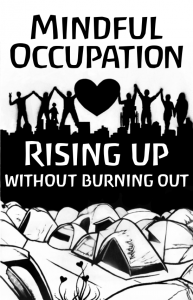 On September 17th 2011, sleeping giants stirred as the perception of social and and economic injustice in the US finally crossed a critical threshold. And the people spoke.
During the first week or two of the Occupation of Zuccotti park I was following along closely, but not yet fully engaged or plugged in. The movement erupted at the beginning of the semester, just as
On September 17th 2011, sleeping giants stirred as the perception of social and and economic injustice in the US finally crossed a critical threshold. And the people spoke.
During the first week or two of the Occupation of Zuccotti park I was following along closely, but not yet fully engaged or plugged in. The movement erupted at the beginning of the semester, just as 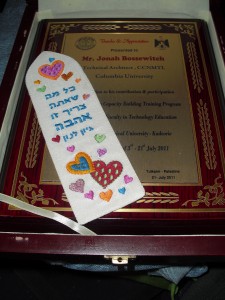 I just returned from the eduventure of a lifetime in Palestine and Israel. I travelled to the Palestine Technical University of
 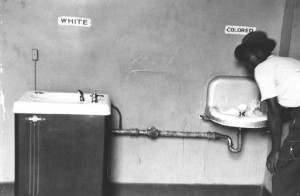 and its visually gripping corollaries:
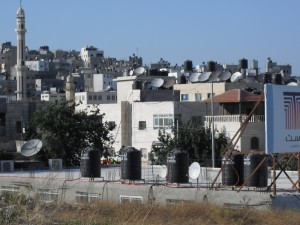 Comparisons between the occupation and South African apartheid are common, but on this trip I began to relate the struggle to Jim Crow, the civil rights movement, and racial profiling and injustice that continue to oppress US minorities.
I also learned about the regulation of information flows. On an Egged bus in Israel, I had a better connection over free wifi than anywhere in Palestine, including the universities. Palestinian telcom companies are currently forbidden from rolling out 3G networks, building new communication lines between cities is notoriously difficult, someone I met was not allowed to import routers, and Palestine cannot connect directly to the Mediterranean backbone. [Incidentally, a local group of activists is trying to set up free wifi in Ramallah, but they are being thwarted by Palestinian telcoms!] Like their physical borders, all Internet traffic into and out of Palestine must cross through Israel first.
Serendipitously, Richard Stallman was
Comparisons between the occupation and South African apartheid are common, but on this trip I began to relate the struggle to Jim Crow, the civil rights movement, and racial profiling and injustice that continue to oppress US minorities.
I also learned about the regulation of information flows. On an Egged bus in Israel, I had a better connection over free wifi than anywhere in Palestine, including the universities. Palestinian telcom companies are currently forbidden from rolling out 3G networks, building new communication lines between cities is notoriously difficult, someone I met was not allowed to import routers, and Palestine cannot connect directly to the Mediterranean backbone. [Incidentally, a local group of activists is trying to set up free wifi in Ramallah, but they are being thwarted by Palestinian telcoms!] Like their physical borders, all Internet traffic into and out of Palestine must cross through Israel first.
Serendipitously, Richard Stallman was