Palestine

Finally! We've Been Too Patient

Finally! We've Been Too Patient

The long-anticipated anthology of mad poems, stories and research is finally out. The book is split between personal mental health narratives and research, a powerfully balanced approach for contending with these issues.

I contributed to two (going on three) chapters of this book - a lightly modified version of the first chapter of my dissertation appears, as well as excerpts from Mindful Occupation, which I helped produce, write and edit.

Pick up a copy at your local bookstore https://www.indiebound.org/book/9781623173616 !

Ultra-Paradox

The Israeli elections are over, and it looks like Netanyahu’s “reelection campaign” wasn’t as successful as the last one he staged 4 years ago. A few months ago, in November ‘12, I had just returned from visiting Palestine/Israel when the IDF launched an attack against Gaza. Although Palestinian rockets raining down on Israel are nothing new, the new extended range of the Qassam rockets allowed the Gazans to attack new targets. I listened in disbelief as I learned that a few of the missiles hit Jerusalem suburbs. As far as I am aware, the last time Jerusalem was bombed from the air was in 1967, by the Jordanians. And, I’m pretty certain the Old City was off limits. I mean, can you imagine the reactions if one of those Qassams scratched the holy dome of the rock?  Or, Jesus’ tomb, which is down the block? The only way I have been able to understand these attacks is like an act of self-cutting—driven by utter desperation, isolation, and hopelessness. From what I could tell, our Gazan (Brethren|Terrorists|Freedom Fighters) were basically lobbing missiles north, without the ability to aim. Humanity has been targeting projectiles for thousands of years, without the assistant of computers. Heck, the study of mechanics and the discovery of the parabolic equation was largely driven by military applications. For example, if you could calculate the rocket’s fuel, the wind speed, and the launch angle, you might be able to more accurately target a rocket. Or, even simpler—have some friends on the ground near the impact site tweet the lat/long coordinates of impact, and then adjust your next shot accordingly. But, we’re living in the 21st century, and the CTOs in silicon valley are playing with toy rockets controlled by open source missile guidance systems, like Altus Metrum. The weaponization of open source is democratizing access to the world’s most advanced killing platforms. The Gazan militants are likely aware of these techniques, but if they aren’t, a lack of education is surely to blame. Education is a casualty of the occupation, alongside connectivity, mobility, access to water, fuel, electricity, etc. The Gazan militants are labeled terrorists since they kill civilian targets. But, if they can’t aim, they are hardly targeting civilians. The nuttiest part of this equation, is that if you tried to help them learn how to target their weapons, so they could aim at military targets instead of civilian ones, you would be accused of aiding and abetting terrorism. So, you can’t teach them how to not hit civilians.  You can’t help them overcome terrorism.

Rainbows have nothing to hide

On my recent journey to the West Bank I learned about a wonderful Muslim holiday called Eid al-Adha.  Eid is a 4 day, family-focused holiday, celebrated with gift-giving and great feasting. The holiday commemorates the binding and non-sacrafice of Ishmael (since, in the Koran, it was Ishmael not Issac who was bound), and the Covenant between Abraham and the Lord. When I learned about Eid, two questions came to mind:

Quetzalcoatl and Back Again

It’s nice to be on the spring side of the winter solstice. Farewell, Apocalypse. Nice try. What a year. In 2012 I occupied — Wall Street, Mental Health, the American Psychiatric Association, and my dissertation. I catalyzed the production and distribution of Mindful Occupation, and helped organize the Icarus Project’s NYC 10 year anniversary event and art show.  And, I was privileged to visit the great Mediterranean capitals — Cairo, Istanbul, Athens, Jerusalem, and Ramallah. All while holding down a full-time job. Some were not concerned that the world would end on 12/21, but instead, were horrified at the prospect that humanity will continue hurdling forward, business as usual. As many on our planet yearn for unity and the Most Great Peace, and there are hints we might be learning to direct, harness, and measure our collective intentions. But, as mystics have long understood, our collective choices will decide if we converge on a global state of war or peace. All of my travels this year were transformative and intense, but my October trip to the West Bank was really the culmination of my hero’s journeys. I travelled there for the final stage of the project we began 2 years ago, trying to help Palestinian educators develop their capacity to improve their teaching excellence (Towards the (educational) liberation of Palestine, Dispatches from Cairo: The Raw Data, If I forget you, O Palestine…). I travelled with my friend and colleague, Mark Phillipson.  Together we delivered a keynote speech at the Palestine Technical University — Kadoorie, in TulKarm, and taught workshops on cutting edge, video-based, teacher training and assessment techniques.  The PTUK team officially opened the Multimedia and Educational Resources Center (MERC), and were raring to go. The MERC center is an impressive accomplishment, but I also experienced great sadness and disappointment at the unsustainability of the development grant. Just as we were finally getting some traction, the funding was finished.  I understood that unsustainability is a common failure of projects like this, but the firsthand experience felt worse than any theoretical critique. My boss/advisor/mentor, Frank Moretti, was unable to make the trip this Fall, but recorded a video introduction to our keynote that set the stage for the rest of my trip. The introduction started out cordial and friendly, but 3/4 of the way through, Frank lobbed a handgranade was starker and sterner than any Mayan prophesy. He warns that unless educators incorporate the twin themes of environmental catastrophe and nuclear war into every stage of curriculum we are headed for a “collective calamity”: This warning framed the rest of my trip, and the rest of the year. I’m still unpacking the fallout.

scaling inefficiencies

By Stichting Onderzoek Multinationale OndernemingenLast week I attended an amazing reading and film series group that felt more like a graduate seminar than a meetup. Cáfe de Cleyre has been gathering for 3+ hours weekly, for the past 3 months, and exploring the theme of Direct Action in theory and practice. I attended their ninth gathering where the the group explored mental health as direct action. They screened Crooked Beauty and read excerpts of Mindful Occupation and other Icarus Project publications. The topic was organized independently of anyone directly involved with the Mindful Occupation project, and this was a refreshing reminder of the power of media. I learned that the CdC is run by two primary facilitators, who keep the operation running, and each week’s topic is facilitated by two more people who volunteer to run that week’s conversation. The night I joined, over 25 people attended, and I was very impressed with participant’s commitment and the level of discourse. The evening’s discussion was inspirational, but in this post I want to focus on the group’s format. On the surface, Cafe de Cleyre looks alot like a traditional reading group.  However, as I was reflecting on the organizing involved to bring this many people together—on an ad-hoc basis—I realized that digital communications play a large role in making assemblies like these possible. As I understand, group attendance varies significantly, week to week, as participants join for the discussions they are interested in. In years past, it was possible to organize a reading group around a particular theme, but the ad-hoc, on-demand spontaneity of this series would be much harder to maintain prior to social networking. For sure, it happened, but the internet has greatly facilitated this. I bring up this point in direct relation to the conversations swirling in educational technology around MOOCs (Massive Open Online Courses).  Columbia University is actively experimenting in this area now,  and there are great debates of what MOOCs are, and what, if any, value do they offer.  While access is not an end if of itself, I agree with Anya Kamenetz that, access to knowledge is generally a good thing. To be sure, granting more dominance to already powerful voices threatens diversity, but that is one of the reasons that the evaluation of MOOCs needs to be tempered by genre. Many of the conversations about MOOCs also stress the efficiencies of scaling.   As a programmer, ’efficiency’ is often my euphemism for ’lazy’ (in the best sense), but it is important to point out that scaling isn’t the only way we could decide to leverage technology for learning. I am reminded of another extreme example of this – May First/People link has recently launched a mentored training program called the People of Color Techie Training Program “for activists of color to become professional-level, politically progressive and movement involved technologists”.  May First is using communications technology to connect remotely with geographically dispersed learners, but in just about every sense, they are using technology to scale down - supporting 1-on-1 direct encounters, instead of the mass broadcast of lectures to 180k students. Not all progress is driven by maximizing efficiency, and some of the most interesting educational moments happen at the smallest scales.

Pyramid Schemes

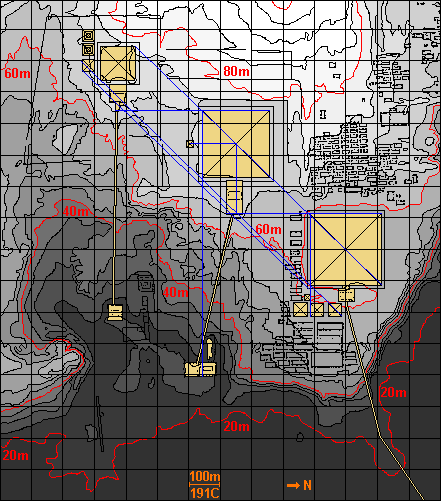
A few months back I visited Cairo and cracked the mysteries of the Pyramids. Or, more accurately, cracked open some exciting new lines of inquiry. I was visiting Egypt for work, but had some time for sight-seeing along the way. I had visited Egypt about 20 years ago (!) but had largely skipped Cairo, and we’ve both changed a bit since then. The day after we arrived in Cairo we visited the Egyptian Museum. When Frank and I visited Israel we discussed how national museums are often used to assert a national ideology by anchoring it within a particular historical narrative.  Striking insight, especially since Mubarak had recently commissioned his son to begin construction of a new national museum that was in progress when we visited (mid-revolution). The current national museum dates back to British colonial times, and feels like a warehouse. It is filled with countless riches, but it’s really almost impossible to navigate without a guide. I thought it was notable that the museum makes no mention of the Bible or the Exodus, even if it is to point out that there is no historical record of the events described (except for one possible mention of the Israelites, but even that is downplayed). We had a wonderful tour guide taking us through the museum, and as we travelled through history I couldn’t shake the feeling that we were missing something important in our interpretation of these artifacts. The patron saint of my PhD program, James Carey, draws an important analytic distinction between communication as ritual, and communication as transmission. While there is no sharp line between these two modalities of communication, it is often helpful to distinguish between the two. So, for example, many of us read the paper ever day as a ritual, more like taking a bath than receiving information. When we reached Tutankhamun’s treasures it hit me like a ton of limestone bricks. Through their burial rituals, the Egyptians were trying to transmit information, but we were largely interpreting their rites and artifacts as ritual. Having read works like Serpent in the Sky, I have an inkling as to how structures like the Temple of Luxor (and Solomon’s temple, for that matter) were attempts to represent their society’s entire cosmology. What if the Egyptian burial rituals were an attempt to transmit the state of the art of Egyptian knowledge? All of it—astronomy, mathematics, medicine, and philosophy/religion/metaphysics? The first obvious question is the identity of the senders and receivers. If we take their myths at face value, the soul of the king would soon return to the his mummy.  Perhaps he might need a refresher course in Egyptian cosmology after the journey?  Cliff notes, at least? Or, perhaps these burial chambers were intended as time capsules. Messages intended for future generations? Future civilizations? Or, maybe just future generations of Egyptians (their civilization lasted thousands of years). Perhaps these attempts to capture the totality of Egyptian knowledge were like pissing contests between the priests.  How succinctly and elegantly could they represent Egyptian knowledge? This was my frame of mind during my stay in Cairo and the questions I was mulling over as we visited the pyramids of Giza later that week. Co(s)mic Interlude Did you ever hear the one about the pyramids as time machines? It goes something like this: The pyramids are constructed out of tons of limestone bricks. The molecule that makes up Limestone has two energy states. It’s lower energy state is its equilibrium. However, the molecule can also be excited into its higher energy state. Supposedly, this state could be induced by an acoustic wave at the correct resonant frequency. In the pyramids, this was achieved by a chorus of priests chanting at the appropriate frequencies. During initiation rites, an initiate stood in the burial chamber of the pyramid while the priests chanted. This excited the limestone molecules. At a precise moment, the priests all stopped chanting, allowing the limestone molecules to collapse back into their lower energy state. This produced a wave of energy, all focused on the burial chamber. The initiate fell into a trance, whereupon they dreamed they travelled to the future.  They remained in this trance indefinitely… that is, until they heard this story! Ha. Get it? Space-Time Bouys The pyramids are massive. Beyond human scale. They made me wonder… For a while I’ve believed that time travel really must have really picked up on this planet around the invention of photography. For a fairly mundane reason. Your calibrations need to be flippin’ pinpoint. Time traveling can be though of as tele-transporting, through space-time. So, you need to be able to safely and reliably target your destination coordinates.The last thing you want to do when teleporting is materialize in the middle of a rock or a tree or worse. Photographs, when combined with the exact date and time of their exposure, provide such coordinates to future chrono-naughts looking for a safe journey. In the presence of the pyramids it dawned on me that there is another solution to this safety equation: Hold your spatial coordinates fixed!  This would work best if you could build a structure that would be around for thousands of years, so you could be sure your point of arrival/departure would be around on both ends of your trip. The pyramid’s burial chambers pretty much fit this bill (modulo the irregularities of the earth’s orbit, the motion of our galaxy, etc. Quantum entanglement to the rescue?). Could the pyramids satisfy these constraints? Maybe. This hypothesis could go a long way towards explaining the “curse of the mummies”. Could King Tut’s burial chamber be one of the last operational teleportation chambers? 3D printers designed to reconstruct information beamed from somewhen else (after all, the necessary atoms are sure to be in place for the reconstruction)?  Or, would the Egyptian pyramids merely decorative cribs of the original Atlantean devices, and were never fully operational? All this suggests that Moses was a sleeper agent who infiltrated the Egyptian priesthood to liberate their most well-guarded secrets. Of course, the evidence of his handiwork is mapped out clearly in the blueprints of the tabernacle. In Dec 2012 our sun will align with the black hole at the center of the milky way (or, will it?). A pretty good spatial-temporal landmark, if I were navigating. Whenever.

Towards the (educational) liberation of Palestine

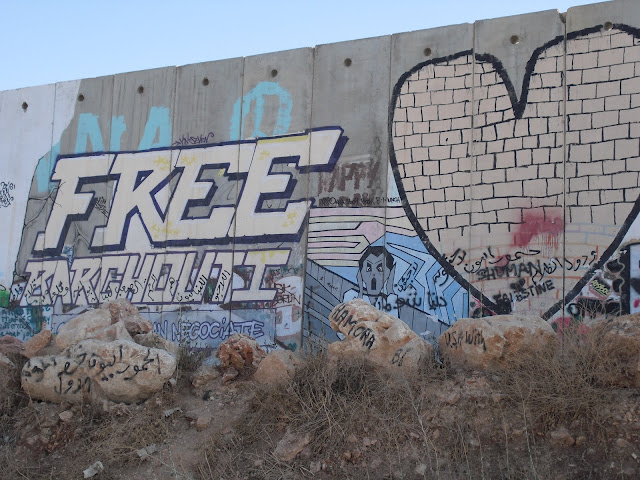
“Education is the unfinished business of the revolution.” – Malak Zaalouk, Director of the Middle East Institute of Higher Education On my recent trip to Cairo I spent a week at the American University of Cairo participating in a week-long professional development conference for Palestinian educators. The conference included educators from five different Palestinian universities—many of whom were meeting for the first time in Cairo, despite working and living in the same city. The experience brought me back to last summer’s visit to Palestine, which I wrote about here. Interacting with my Palestinian colleagues in a (relatively) free country was stimulating and engaging, but I was haunted by thoughts of the oppressive conditions back home they would soon return to. The conference was organized around establishing centers for academic excellence with a focus on the role of new media in supporting teaching and learning. My Columbia cohorts and I presented a keynote on Media Analysis and Social Pedagogy (Frank’s intro, Part 1, Part 2), and throughout the week we discussed the interplay between technical and pedagogical innovation. The elephant in the room was the desperate condition of basic telecommunications infrastructure in Palestine**—it’s difficult building a curriculum around blogs or wikis when Palestinian connectivity in the West Bank is notoriously unreliableeven when it works, it’s slower than dial-up. The real tragedy is this digital divide is artificially manufactured and brutally enforced. Last summer I had a better connection over complementary wifi on an Israeli Egged bus than at the Palestinian University PTUK. When I visited Palestine I experienced the reality of the occupation first hand. I have written about how so many aspects of lifefuel, electricity, food, water, mobility, connectivity—**are regulated and controlled. As I learned last summer, the Israeli government forbids Palestinian telecom from developing 3G networks, prevents the Palestinian Authority from laying fiber between cities or connecting directly to the Mediterranean backbone, and businesses have a very difficult time importing routers. At the same time, the Palestinian activists who are trying to develop free municipal wifi in Ramallah are being thwarted, but not by the Israeli government. They are facing staunch opposition from Palestinian Telecom corporations. I have come to realize that the forces of the Occupation are on a collision course with Capitalism. There is simply too much damn money to be made on data plans and broadband. I also believe the Israeli government has read The Net Delusion, and are arrogant enough to think that they can control the situation by surveilling it. The IDF is agressively targeting media networks. Ultimately, I think they will allow this infrastructure to be built, making it all-but-inevitable that better ICT infrastructure is coming to Palestine. The questions are: What will the Palestinians do with it when it arrives? Can government surviellance contain the power redistribution that networked organizing tantalizingly promises? One of the key themes of our keynote at AUC was the importance of developing meaningful superstructures on top of technical infrastructure. At the conference we explored ways in which educational technology could be combined with teaching strategies to support peer-to-peer learning,  the flattening of traditional classroom hierarchies, the displacement of conventional teacher-student power relations, and authentic learning activities. Of course, educational technology alone won’t bring these outcomes. In many situations educational technology serves to perpetuate and reinforce the status quo. These cultures of practice could spread further and faster if the Palestinians learn from our blunders, and create Freedom in their Cloud.  As this infrastructure is imagined and built , there is an opportunity to leap-frog over our mistakes and develop an distributed network architecture, instead of the centralized architecture we have fallen for. Imagine a Palestinian mesh-based cloud, running peer-to-peer social networking services. Such a vision is not a pipe dream, in the age of the Freedom Box, Mondonet, and Diaspora. Short of fulfilling this dream entirely, it would be tremendous for Palestinian educators to develop their own, local, free/libre, educational software services instead of relying exclusively on free-of-charge centralized corporate solutions—like Google, Facebook, and Twitter—that render their students into products. Over the week of the conference, as I learned more about the situation at my colleague’s universities, I realized that few of the eleven universities in the West Bank would have the necessary resources to adequately support a new-media teaching and learning center. A well functioning center needs to staff systems administrators, programmers, designers, and video specialists to support the needs of the educational technologists, and in turn, the faculty and students. However, while no single university could support a center like this, I began to wonder how the Palestinian universities might coordinate and pool their resources. Establishing an single independent institution (likely a technical NGO) that services all of the Universities in Palestine, and perhaps even all of the schools in Palestine, might be the next obvious step in the educational capacity-building project that I have been involved with. I have encountered a similar model elsewhere. Groundwire (formerly One NorthWest) is a US non-profit that  was launched with the intention of exclusively servicing environmental organizations in the Pacific North-West. A similar kind of organization could be established in Palestine to service the educational sector with educational technology solutions. An institution like this could function of a hub, mediating interactions between different Palestinian Universities, sharing successes and failures, while continually building local institutional knowledge. Unlike the One Laptop Per Child project, this effort would be conceived from the start with training, support, and local engagement. It’s all about developing cultures of practice, and sustainable models for the deployment of infrastructure and superstructure. Will the immanent Palestinian networks lead to greater freedom?  Maybe. Perhaps with enough will, determination, and work. The iron is hot.
Jonah and the Cetacea

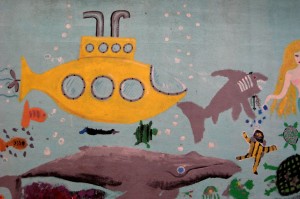
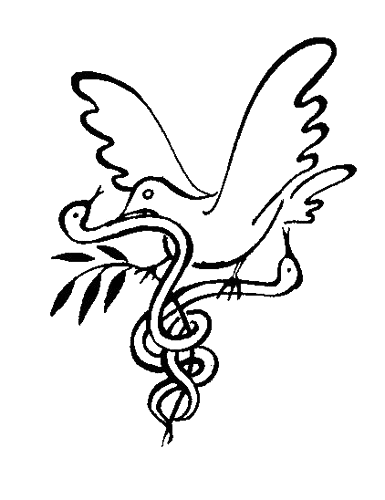
I recently returned from an amazing trip to Cairo, with a 36-hour stopover in Istanbul on the way home. While there, I learned something wonderful about the meaning of my name that continues to make me smile. While I am not a strict Nominative Determinist, I do take Plato’s Cratylus dialogue more seriously than most. I love learning new names, and often ask people what their names mean. Perhaps this fascination stems from the fact that my ambivalent parents gave me 5 (!) names, not including my surname, and my godfather gave me one more after I injured my back.  I have spent a great deal of time contemplating names and attempting to integrate mine into a coherent identity. Growing up I was always the only ‘Jonah’ I knew. In the 90’s the name gained popularity, but I still reflexively turn everytime I hear it (I can only imagine that Johns and Michaels learn to tune these out). The Old Testament’s Book of Jonah is a fabulous story. I’ve studied it closely and continue to find gems of wisdom and mystical insights. I have always appreciated that Jonah was: 1) One of the few (only?) prophets in the Old Testament sent to help the gentiles. 2) One of the only prophets in the Old Testament that anyone ever listened to!  In the closing coda, a mysterious “gourd” casts a shadow over Jonah’s mind (what kind of plant was this magical qiyqayown?), leading him to a transcendental experience in the desert where he learned to appreciate the universal nature of humanity. Great stuff - succinct, but it packs a punch. For a while I have known that Jonah the prophet was called Yunus (????) in the Qur’an. Jonah’s story in the Qur’an is quite similar to the Old Testament, though much shorter  (in the Qur’an Jonah is close friends with Jinns ;-)).  In Hebrew Jonah (??????) means ‘dove’.  Noah sent out 3 Jonahs to see if the flood waters had receded. But, to the best of my knowledge, Yunus does not mean anything special in Arabic. In Istanbul I learned that in Turkish, Yunus means dolphin. What a trip. In the past, in order to read the story of Jonah literally, I used to have to postulate UFOs or Yellow Submarines. I wasn’t quite as skeptical as this critic, but the story never added up on the plane of mundane reality. What if Jonah was saved by a dolphin(s)? Instead of being swallowed by a ‘Big Fish’, he could have been engulfed by a pod of dolphins. Sailors being saved by dolphins was a common motif in the ancient world. For example, Telemachus, son of Ulysses, was saved by dolphins, and to this day, we continue to confirm reports of humans saved by dolphins. Doves and Dolphins. What a name.

Dispatches from Cairo: The Raw Data

I just returned from a whirlwind eduventure at the American University of Cairo (AUC). My trip included a detour through Ancient Egypt and a 36-hour decompression-stop in the capital of the Ottoman Empire, but our main purpose was to participate in a week-long professional development conference for Palestinian Educators: Challenges and Practices of Pedagogy and Instructional Technology: Professional Development Exchange for Palestinian Educators The AUC conference was a continuation of the project that brought me to Palestine this past summer, and was creatively imagined and improvised by my mentor/advisor/boss, Frank Moretti. I am still processing and synthesizing my experiences, and I plan for this to be the first in a series of posts detailing what I learned on this trip. For now, I will just capture the raw materials and highlights. For starters, the conference was covered by both the AUC News and CCNMTL’s blog. AUC’s Center for Learning and Teaching hosted an incredible conference - the talks were provocative and well balanced, and the food was fabulous! They even captured the entire event and posted the video and slides here. Our hosts were hospitable and generous beyond words, and we are forever grateful to Aziza Ellozy and her staff for making us feel at home. Our plenary keynote, featuring my colleague, Mark Phillipson, and my doctoral cohorts, Travis Mushett, Madiha Tahir, and Charles Berret is viewable here: #celebrity #violence #resistance: Media Analysis and Social Pedagogies

Last Call

Our Kickstarter campaign to fund the publication of Mindful Occupation: Rising up Without Burning Out is in full swing.  We have made our financial goal (w00t!), and all additional funds raised will go towards additional printings.  Thanks to everyone who contributed and helped spread the word.  Let’s finish this campaign with a bang. Please share widely: http://kck.st/yAmbya

A guide for participants in the occupy movement to strengthen our psychic, soulful and heartfelt contributions. #mutualaid #peersupport