That way madness lies
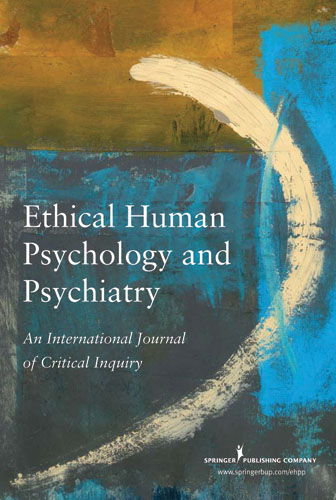 Bossewitch, J. (2010). Pediatric Bipolar and the Media of Madness. Ethical Human Psychology and Psychiatry, 12(3), 254-268. doi: 10.1891/1559-4343.12.3.254
I am finally published in a peer-reviewed journal! Ethical Human Psychology and Psychiatry (available for purchase here - but my cut is exactly 0%). I wasn’t expecting much, and it’s mildly anti-climactic, but I have heard from a few people I never would have communicated with otherwise, and worked really hard to polish up this paper. Anyway, now its traditionally citable, which still means something (for the next few years, at least).
This paper is at least 2 years in the making. It began when Rasmus Nielsen forwarded me a call for papers about drugs as a form of media for NCA ‘09, and I participated in a panel organised by Robert MacDougall (my slides). Around the same time as NCA, I also attended ICSPP and had the pleasure of meeting James Tucker and Peter Breggin. This meeting eventually led to my submission to EHPP - a journal that typically publishes articles by and for psychologists, psychiatrists, and social workers. I was thrilled to help bring a dash of media and communications theory/research to that audience. Special thanks to Annie Robinson, Sascha Scatter, Bonfire Madigan, Brad Lewis, Biella Coleman, Philip Dawdy, Nicholas Mirzoeff, Julia Sonnevend, Ben Peters, and the Icarus Project for ideas, inspiration, and edits.
I have also reworked the main arguments in this essay into a chapter in the upcoming: Drugs & Media: New Perspectives on Communication, Consumption and Consciousness (edited by Robert C. MacDougall). I even worked on a McLuhanesque Tetrad around Prodromal diganoses (a.k.a. Psychotic Risk Syndrome).
Unfortunately, I was unable to convince Springer to go open access with my paper, but I tried and was able to deposit an open-access pre-print in the Columbia institutional repository, and also have a pre-print available here. If enough people make noise about open access, I hope the editors and publishers will eventually start to get the idea.
The issues raised in this paper are beginning to percolate into the mainstream. Last month Harpers published a (flawed) long piece on predictive diagnoses: Which way madness lies: Can psychosis be prevented? Wired just ran a great piece on the backlash against DSM5, especially Psychotic Risk Syndrome, by one of the DSM IV contributors: Inside the Battle to Define Mental Illness. A good friend of mine from the Journalism school also just produced an investigative short-documentary on antipsychotics use among foster home children that just aired this weekend on PBS: The Watch List: The medication of foster children.
Finally, Crooked Beauty is coming to town next month for the 3rd annual Reelabilities Film Fest - c’mon out to the launch party or one of the screenings:
Thursday 02/03/2011 1:00pm JCC of Mid-Westchester
Friday 02/04/2011 1:30pm Bellevue Hospital Center
Friday 02/04/2011 6:00pm New York City College of Technology
Saturday 02/05/2011 7:00pm The JCC in Manhattan
Monday 02/07/2011 6:30pm Solomon R. Guggenheim Museum
Tuesday 02/08/2011 7:00pm JCC of Staten Island
It’s going to be a great year.
Bossewitch, J. (2010). Pediatric Bipolar and the Media of Madness. Ethical Human Psychology and Psychiatry, 12(3), 254-268. doi: 10.1891/1559-4343.12.3.254
I am finally published in a peer-reviewed journal! Ethical Human Psychology and Psychiatry (available for purchase here - but my cut is exactly 0%). I wasn’t expecting much, and it’s mildly anti-climactic, but I have heard from a few people I never would have communicated with otherwise, and worked really hard to polish up this paper. Anyway, now its traditionally citable, which still means something (for the next few years, at least).
This paper is at least 2 years in the making. It began when Rasmus Nielsen forwarded me a call for papers about drugs as a form of media for NCA ‘09, and I participated in a panel organised by Robert MacDougall (my slides). Around the same time as NCA, I also attended ICSPP and had the pleasure of meeting James Tucker and Peter Breggin. This meeting eventually led to my submission to EHPP - a journal that typically publishes articles by and for psychologists, psychiatrists, and social workers. I was thrilled to help bring a dash of media and communications theory/research to that audience. Special thanks to Annie Robinson, Sascha Scatter, Bonfire Madigan, Brad Lewis, Biella Coleman, Philip Dawdy, Nicholas Mirzoeff, Julia Sonnevend, Ben Peters, and the Icarus Project for ideas, inspiration, and edits.
I have also reworked the main arguments in this essay into a chapter in the upcoming: Drugs & Media: New Perspectives on Communication, Consumption and Consciousness (edited by Robert C. MacDougall). I even worked on a McLuhanesque Tetrad around Prodromal diganoses (a.k.a. Psychotic Risk Syndrome).
Unfortunately, I was unable to convince Springer to go open access with my paper, but I tried and was able to deposit an open-access pre-print in the Columbia institutional repository, and also have a pre-print available here. If enough people make noise about open access, I hope the editors and publishers will eventually start to get the idea.
The issues raised in this paper are beginning to percolate into the mainstream. Last month Harpers published a (flawed) long piece on predictive diagnoses: Which way madness lies: Can psychosis be prevented? Wired just ran a great piece on the backlash against DSM5, especially Psychotic Risk Syndrome, by one of the DSM IV contributors: Inside the Battle to Define Mental Illness. A good friend of mine from the Journalism school also just produced an investigative short-documentary on antipsychotics use among foster home children that just aired this weekend on PBS: The Watch List: The medication of foster children.
Finally, Crooked Beauty is coming to town next month for the 3rd annual Reelabilities Film Fest - c’mon out to the launch party or one of the screenings:
Thursday 02/03/2011 1:00pm JCC of Mid-Westchester
Friday 02/04/2011 1:30pm Bellevue Hospital Center
Friday 02/04/2011 6:00pm New York City College of Technology
Saturday 02/05/2011 7:00pm The JCC in Manhattan
Monday 02/07/2011 6:30pm Solomon R. Guggenheim Museum
Tuesday 02/08/2011 7:00pm JCC of Staten Island
It’s going to be a great year.
 A
A 
 A few months ago the giant pharmaceutical company Pfiezer