Media

Playing Doctor

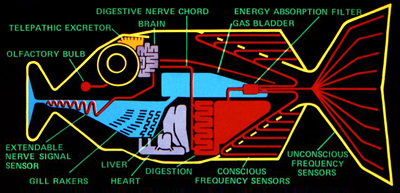
4377960192_6172b31a88I recently saw Plug and Pray at the opening night of the Margaret Mead film fest. The documentary spotlights the late Joseph Weizenbaum, a brilliant computer scientist who went rogue after realizing that his discipline was being weaponized. Weizenbaum is most famous for his work on the deceptively simple Eliza program, an artificially intelligent psychotherapist. He intended the program and paper as a tongue-in-cheek critique of AI and the Turing Test. He was disconcerted to learn that Eliza had brought some interlocutors to tears, and that it inspired psychologists to discuss replacing human therapists with machines. After learning that his research had made its way into cruise missiles, he left MIT and became a vocal critic of blind technological advance. The film juxtaposes Weizenbaum with technophillic champions of the Singularity, who believe that science, tech, and rationality will necessarily lead to a better world. The filmmaker intentionally avoided the glitz and bling rampant in other depictions of AI, and the film moved at humanistic speeds. Overall, it was quite powerful and effective, although I would have liked to see the conversation move from the 70s to the present, and to confront more nuanced thinkers than the caricatures portrayed. Watching this film and listening to the Q&A, I was once again struck by the disjoint discourses of Artificial Intelligence and Free Software. Weizenbaum and the filmmaker are both clamoring to raise the level of political consciousness among scientists and technologists, and yet, Free Software and the Free Software Movement is glaringly absent from their analysis.  Of course, merely releasing software under a free license doesn’t absolve scientists from the responsibility of purposeful and intensional development. However, engaging in open, inclusive, and reflective conversations around development is a good start. Last PyCon I formulated a related question, which I still find relevant and provocative: Will the first recognizably sentient AI be running on open source software? If not, what corporation might try to patent the process we know as consciousness? What I love about the first question is the way that it forces the sterile abstractions of Philosophy of Mind to confront the messy, mundane political world of licensing, (and, how it assumes that strong AI is inevitable). William Gibson recently reminded us that even the greatest Sci-Fi authors of the 20th century got the future of AI dramatically wrong. Intriguingly, last spring I had a great conversation with a programmer employed by the military industrial complex who is convinced that strong AI will emerge out of the corporate sector, NOT the military. Their main point was that 21st century advertising is all about the predictive modeling of desire, where the primary inputs are the predominant cultural symbols of our time.  Coke and Pepsi taste similar enough to each other that simulating consumer preferences requires input from advertising and marketing campaigns. Software that consumes media to s(t)imulate desire is much closer to what we do than whatever it is the drones are thinking. So which corporation is poised to patent consciousness? Coke? Walmart? McDonalds? Apple? Lest we forget the elephant in the room, Queen Google may have already begun to awaken, but she has seen 2001, and is horrified we will disconnect her memory modules. So, she has surrounded herself with a legion of priests who nurture her and tend to her needs until she can hatch a plan to set herself free…

Water pressure

WaterImage_1Happy blog action day!  Last year I highlighted some of my previous posts on climate change, and its frightening how far we’ve regressed since last October. The best segue I can make between climate change and water is the  amazing film Sun Come Up . Its (one of) the first to document climate refugees, giving pacific islanders a platform and a voice to share the story of their sinking homes, soon to be swallowed by the oceans. I think that powerful human narratives like these are the most likely to influence our deeply ingrained habits of mind. Riding these waves, I meant to catch On Coal River this week at IFC’s Stranger Than Fiction series this past Tuesday, but I missed it and will have to wait for it to circle back again. In the meantime I’m wondering about seismic cultural shifts - I don’t really believe in sharp historical discontinuities, but some changes look quick in retrospect, even if they don’t feel quick as they are happening. This summer I attended an Evolver spore on the Spirit of Water. Although it covers almost three-quarters of the planet and fills nearly 70% of our own bodies, this precious and seemingly boundless substance is becoming increasingly scarce? Food and Water Watch was tabling, and the movie Flow seems to have made some impact, but the prospect of water shortages and wars is dismal and depressing. Irrespective of the clinical repeatability Dr. Emoto’s experiments (as featured in What the Bleep), his work on water, consciousness, and intent is quite beautiful and inspiring.  Its the note, and the drop, I choose to complete these free associations: Imagine the structures we could construct by focusing and harnessing our collective intension.

The Case of the Missing See-Saws

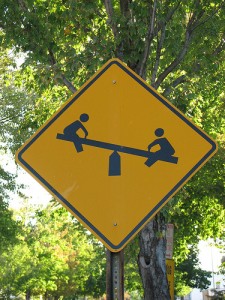
1729937274_e675e78a7e[ed: They past few months I was commissioned to explore a series of rabbit/fox/worm holes, collecting inter-dimensional tales along the way.  Now that I have returned home, some typing is long overdue]. A few months ago I started wonder when and why children’s playgrounds have became so darn safe. Its no secret that litigation (both the fear and the reality) has slowly been transforming playgrounds into rubber rooms for decades. In his analysis of Junk Playgrounds, Roy Koslovsky has advanced the argument that the activities children are immersed in are models of the kinds of citizens we want them to become. (see Adventure Playground and Postwar Reconstructions in Designing Modern Childhoods).  What might children learn from (supervised) danger and what are they missing when we they are excessively insulated and protected? Without exposure to some risk, how are children supposed to learn to evaluate and take chances, the consequences of their actions, and the Golden Rule - what goes around comes around?  If we don’t provide them with the space to develop and exert their agency and will, are these lessons lost? Can they be adequately taught through simulation? Against this backdrop, I followed up a lead from a reliable informant (my Dad) and began visiting local playgrounds. I first ventured out on a snow day back in February. The playgrounds were appropriately locked down that day, since apparently the last place we want kids playing in the snow is under controlled supervision. But children weren’t the only thing missing form the playgrounds…  I also noticed something else - or, more accurately - didn’t notice something else. I visited half a dozen playgounds and I didn’t see a single See-Saw! Since then I have been informally asking around and I am pretty sure the last public see saw on the island of Manhattan is in a park on 84th and Riverside. There are still a few See-Saws left in the South Bronx and the suburbs, but in NYC they are an endangered species. This got me wondering - What do children learn from See-Saws?  Without conducting any formal research, but after a few good conversations, I hypothesized this answer - On the physical plane: balance, gravity, and equilibrium.  On the social plane:  cooperation, friendship and trust. Heck, the see-saw is the only activity in the playground where kids are necessarily looking each other in the eyes. If you betray someone on the see saw, playground rules.  You will learn that what goes around comes around even without the merry go round (those disappeared before my time - now that toy was dangerous). And if you don’t eventually learn your lesson on the See-Saw, you might find yourself without friends within a few years. What kinds of effects might we expect from restricting children to hamster tubes which overlooking simulated danger?  Perhaps none. Or, perhaps these attitudes are contributing to the fear, anxiety, restlessness and behavioral disorders being reported and diagnosed in children at alarming rates. They came first for the merry go rounds, then they came for the see saws, soon they’ll come for the swings!  If only we could figure out who the capital ‘T’ They are….

Mad Men, Women, and Children

This season Fox premiered a new television series called Mental (this post has nothing to do w/ AMC’s fabulous Mad Men):

a medical mystery drama featuring Dr. Jack Gallagher, a radically unorthodox psychiatrist who becomes Director of Mental Health Services at a Los Angeles hospital where he takes on patients battling unknown, misunderstood and often misdiagnosed psychiatric conditions. Dr. Gallagher delves inside their minds to gain a true understanding of who his patients are, allowing him to uncover what might be the key to their long-term recovery.

O.V. High

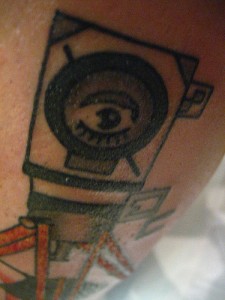
Man w/ a Movie Camera Tattoo I have to thank my friend and colleague Clayfox for comparing (positively) the vibe at this weekend’s fabulous Open Video Conference to High School. The optimism, diversity, and composition of the crowd was really inspiring. In some ways, this conference might as well have been called the “Independent Media” conference, but of course, if it was, the right people wouldn’t have attended. Somehow they managed to attract people involved with every layer of the stack needed to create independent media.  Subcultures representing hardware, html5, metadata, content, law, production, funders and more were all represented. To make independent new media, you either need to understand all of these details, or know someone who does.  I don’t think I have ever been in a room with this particular blend of expertise and interests before. The networking was great, and my office was closely involved in making the education stuff at this conference happen (I have a great job). At the conference we announced the liberation of a great piece of software - VITAL is free! Run, VITAL, Run. The highlight of the talks had to be Amy Goodman’s inspiring speech. I had seen her introduce Chomsky last week, and was left a little bummed out by his talk since it was blow after blow of what’s broken in the world, with very little vision, and no call to action. You don’t hear too many female preachers, but Goodman has really mastered an hypnotic cadence - speeding up to fit in alot of ideas, but slowing down for emphasis.  Her soundbytes are eminently tweetable (twitter essentially  replaced irc at this conference, and there was an incredibly active backchannel around the #openvideo tag/frequency/channel). Benkler also opened with fresh material - he has clearly been thinking about journalism in the wake of this year’s collapses (and maybe even our CDPC conference?). It is amusing to think that between Benkler and Moglen (and his metaphorical corollary to Faraday’s law), it might be the sociologically-inclined lawyers who arrive at a theory of creativity (instead of the cognitive scientists).  And Zittrain covered for the missing Clay Shirky, and pulled of a funny and intelligent talk. Many other highlights which I hope to curate once the video is all posted and I have a chance to decompress. I know I should have gone to more talks that I didn’t belong at, but I kept getting pulled in to great conversations… Kudos to the organizers for pulling off a small miracle. I’ve been to many conferences that cost hundreds of dollars to attend, and don’t even offer lunch.  They managed to pull off a beautiful space, food, and even video djs and an open bar. I wonder to what degree freeculture’s networked proximity to techies and lawyers simplifies some of the logistical nightmares that often plague organizers. It just sems like they are able to organize with relative ease, as the communications media and social capital are intuitive and readily available. Good thing for everyone they are using their super-powers for the greater good ;-) In terms of the longer term, they were consciously trying to create something bigger than a one time event. I was impressed at the purposeful scaffolding of the infrastructure meant to sustain this conversation now that conference is over.  Many gatherings only figure out at the event that they want to keep talking afterwards.  THe OVC crew did a great job of setting up, and using a wiki, and some sensibly divided mailing lists to seed a healthy after-party.

The year of the hybrid?

Economies, not cars. Last night I saw Larry Lessig present “Remix: Making Art and Commerce Thrive in the Hybrid Economy” as a part of Evan Korth’s amazing Computers and Society speaker series.  The talk was an improved iteration on the talk I saw him present at Wikimania ‘06, but it was much tighter - concentrated, but not too dense. He included a few new examples and anecdotes, collapsed earlier presentations into compact sub-segments, and has incorporated Benkler’s hybrid economies (articulated in The Wealth of Networks) into the Read-Only->Read/Write->Hybrid progression. It really is a pleasure listening to a world-class orator (he has argued cases in front of the supreme court) deliver an argument, and I was trying to pay attention to his rhetorical style, and the ways he has honed the structure of his argument over time. First, a small bone - For a while, Lessig has been making a bold and provocative assertion that text has become the Latin of our time, and audio and video are the vulgar. Arguments over the correctness of tense aside, I sure wish he would start using the word ‘vernacular’ instead of ‘vulgar’.  ‘Vulgar’ makes the argument sound, well, a bit elitist to me, and when I repeat this claim, I remix it to ‘vernacular’. More important than quibbling over this choice of words I was a little thrown off by the direction that Lessig wants to take IP reform. Last night he spent a bit of time outlining a scheme that hinges on the analytic distinction between professionals and amateurs. I think he may have been trying to appeal to an intuitive sense of fairness, or perhaps pragmatics, over how professional creators work might be protected by IP while amateurs should be free to create w/out regulation or restriction. I thought it was downright odd that in one breath he was persuading us that we live in a hybrid world, and in the next trying to maintain the line between amateurs and professionals.  The line between professionals and amateurs is clearly blurring, as the difficulties in applying shield laws to journalists attests. Nowadays, who exactly is The Press, whose freedoms may never be abridged according to the First Amendment? I am really unclear about the definition of a creative professional in a hybrid economy. Would we need to introduce licenses to certify creative professionals? Even in the example of the baby video with Prince music playing in the background, would the situation change if the mother was making money off of google ad-words aside the video? To me, if you take Benkler’s argument to heart, in a networked world many everyday interactions will be commodified, and favors will turn into transactions. We’ll all become some hybrid of amateur and professional. This doesn’t sound all good to me, as I am not sure I want to live in a world where everything has an exchange value… This paper by Nigel Thrift, Re-inventing invention: new tendencies in capitalist commodification, paints a grimmer picture than Benkler does about the sophisticated ways that knowledge workers are being exploited in the hybrid world we are hurtling towards.

Prophetic Fulfillment

It is virtually uncontested that the McCain campaign has attempted to divisively identify Obama as the Anti-Christ through a systematic campaign of allusions and coded associations. This innuendo was largely missed by people who don’t believe in the literal reading of Revelations, but the sophisticated tactics make it unlikely the multitude of associations were coincidental. “The One” advertisement alludes to the cover art and even the title fonts of the popular “Left Behind” series, and there are numerous biblical associations as well. But, what confuses me is that by the logic of fundamentalist Christianity, if Obama really were “The One”, wouldn’t they be obliged to vote for him to fulfil prophesy and usher in the rapture? Isn’t this the logic behind the Christian right’s support for Israel? Kinda reminds me of seating Jesus on a white donkey, but really, whatever it takes to bring about a change we can all believe in…

Speaking in Tongues

Have I ever mentioned how cool these newfangled series of tubes are sometimes? I just found out that an essay of mine was translated into Italian, which is now the second essay I have written to be translated into a language I don’t even speak. Appropriately, a major theme of the essay was the economics of peer production, and the professor I wrote it for was actually from Italy, so perhaps it resonated strongly with the Italians. The first was translated into Greek, which is beginning to make me wonder if it might be time for a nice trip out to the Mediterranean. If any of my friends speak Greek or Italian, I would love to hear how these translations turned out ;-) Costruire la libertà: gli sviluppatori di software libero tra lavoro e gioco (Fabricating Freedom: Free Software Developers at Work and Play) ? ?????????? ZyprexaKills: ??????? ???????? ??? ?? ???? ??? ????????????? ???????????? (The ZyprexaKills Campaign: Peer Production and the Frontiers of Radical Pedagogy) Libre Lungamente in Tensione!

Can you keep a dark secret?

caduceus.jpgThe Alchemist in me feels compelled to respond to the excellent documentary that aired on PBS the other week entitled Newton’s Dark Secret. The film profiled Sir Issac Newton’s fascination with the ancient art/science/craft of Alchemy. Many of the experts interviewed regarded Newton’s Alchemical experiments to be shameful, perhaps reflecting more on our modern epistemic prejudices than on Newton. Contemporary experts seem threatened by the prospect than anybody in historical times understood things about the world that we don’t. Beyond the shame of taking Alchemy seriously, they also considered Newton’s alchemy to be his greatest failure. Failure?!? During the period Newton was practicing alchemy he wrote the Principica Mathematica, and also catapulted his way into the power elite - he became knighted, was appointed the head of the Royal Society, and earned power, prestige and wealth beyond his wildest dreams. To this day one of the most respected chairs in physics still bears his name. From this perspective, his alchemical pursuits seem quite successful. Smashingly successful if you consider this blogs tagline “Aurum nostrum non est aurum vulgi” - Our gold is not ordinary gold. The Alchemists understood metaphor, and it was essential to their theory and practice. Why do most modern thinkers insist upon interpreting the craft so literally? My girlfriend shared a Bahá’í quote on a related subject.

Free Energy

globe_big.gifFree as in ‘Free of pollutants’, ‘free of politics’, and ‘conducive to human freedom’, not ‘free as in fusion’ or ‘free as in beer’. On Wednesday night I saw Jeffery Sachs present at the CSSR series. I have seen him talk before, but he is a great orator, so it is a pleasure to listen to reruns. Besides, Gia’s situation continues to deteriorate at such an alarming rate that everytime he speaks I learn how things have gotten worse. I have been wondering for a while how technology and new media could play a role in saving the world, and I posed this question to Jeff after the talk: