Honest Software
 Originally publihsed on theploneblog.org
How hybrid economies help keep software honest.
Last week’s Plone Conference was truly phenomenal - provocative, intense, and fun (big thanks Jon and ONE/Northwest!).
One of the most amazing things I experienced last week was alluded to in Eben Moglen’s keynote (to be posted soon)- the manner in which this community has managed to bring together people who don’t ordinarily interact.
Throughout the breakout sessions, I continued to question dividing us up according to our respective vertical sectors - Corporate, Non-Profit, Educational, and Government. As I have begun to write about elsewhere, systems like Plone can help balance the flow of communication and power between people in a variety of situations and settings. Content, collaboration, and community are contexts which exist across sectors, and the tools we all need cross over as well (sometimes with slightly different tunings).
In many ways lumping together all the folks involved with education is odd. Universities are microcosms of cities, and their IT needs are as diverse as the the rest of the world. However, there are still structural and social similarities that form the basis for common language and culture. After engaging with my fellow educators a the educational panel session and the BOF session I understood the value of us sharing and strategizing, beyond just commiseration.
But through it all, there was one thing that united all of the different attendees - a piece of general purpose software called ‘Plone’.
It is worth dwelling on this mixture of participants and the varying forces they apply to the software. Lessig and Benkler have both been writing a great deal about hybrid economies lately, trying to understand their rhythms, and how we might be able to design them to succeed. They have been writing generally about the “commercial economy” and the “second economy” (sharing, social production, etc), but the lessons may cross over directly to our community.
I realized in Seattle how beneficial diversity can be for software production.
Most of the consultants using Plone are there strictly for traditional market considerations - to make a profit. They are helping to keep the software honest. Unlike some other open source projects which exclusively service the educational world, Plone is not sheltered from the raw, harsh forces of the commercial market. This means that some of the people using Plone use it because it helps them get their jobs done efficiently. Others have called this “productivity arbitrage”, and it is a concept that may hold the key to designing successful open source projects.
It is challenging to imagine working backwards and trying to design a software ecology which captures the hearts and minds of such a diverse following. No small task.
As Rheingold said “There’s been an
assumption that since communism failed, capitalism is triumphant,
therefore humans have stopped evolving new systems for economic
production.” - Is Plone’s ecology an example of one of these new systems, and if so, what are our distinguishing characteristics?
Originally publihsed on theploneblog.org
How hybrid economies help keep software honest.
Last week’s Plone Conference was truly phenomenal - provocative, intense, and fun (big thanks Jon and ONE/Northwest!).
One of the most amazing things I experienced last week was alluded to in Eben Moglen’s keynote (to be posted soon)- the manner in which this community has managed to bring together people who don’t ordinarily interact.
Throughout the breakout sessions, I continued to question dividing us up according to our respective vertical sectors - Corporate, Non-Profit, Educational, and Government. As I have begun to write about elsewhere, systems like Plone can help balance the flow of communication and power between people in a variety of situations and settings. Content, collaboration, and community are contexts which exist across sectors, and the tools we all need cross over as well (sometimes with slightly different tunings).
In many ways lumping together all the folks involved with education is odd. Universities are microcosms of cities, and their IT needs are as diverse as the the rest of the world. However, there are still structural and social similarities that form the basis for common language and culture. After engaging with my fellow educators a the educational panel session and the BOF session I understood the value of us sharing and strategizing, beyond just commiseration.
But through it all, there was one thing that united all of the different attendees - a piece of general purpose software called ‘Plone’.
It is worth dwelling on this mixture of participants and the varying forces they apply to the software. Lessig and Benkler have both been writing a great deal about hybrid economies lately, trying to understand their rhythms, and how we might be able to design them to succeed. They have been writing generally about the “commercial economy” and the “second economy” (sharing, social production, etc), but the lessons may cross over directly to our community.
I realized in Seattle how beneficial diversity can be for software production.
Most of the consultants using Plone are there strictly for traditional market considerations - to make a profit. They are helping to keep the software honest. Unlike some other open source projects which exclusively service the educational world, Plone is not sheltered from the raw, harsh forces of the commercial market. This means that some of the people using Plone use it because it helps them get their jobs done efficiently. Others have called this “productivity arbitrage”, and it is a concept that may hold the key to designing successful open source projects.
It is challenging to imagine working backwards and trying to design a software ecology which captures the hearts and minds of such a diverse following. No small task.
As Rheingold said “There’s been an
assumption that since communism failed, capitalism is triumphant,
therefore humans have stopped evolving new systems for economic
production.” - Is Plone’s ecology an example of one of these new systems, and if so, what are our distinguishing characteristics?
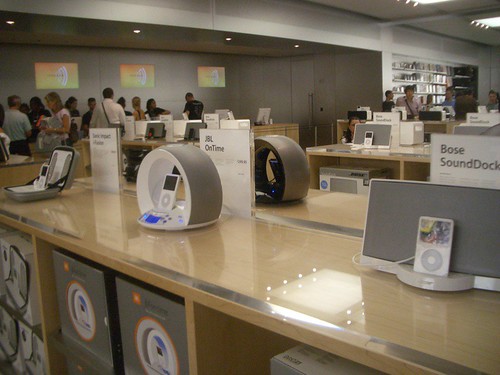 A recent visit to the new