Education

Crossing the line

This week I am heading to the West Bank for work (!?!): Enhancing Technology Education in Palestinian Universities (etep). I will be spending a week at Palestinian Universities participating in capacity building workshops around educational technology. The University I am visiting is preparing to set up a group like CCNMTL and we are going to consult and share our experiences around these efforts. I am anxious and excited about the trip. I have visited Israel numerous times in my life, but have never crossed the green line. My knowledge of the situation on the ground has been hyper-mediated, and witnessing the it in person will likely be transformative. I am doubtful that my first-person accounts will lend much more credibility or persuasiveness to future debates, but I anticipate that my own understanding and assurance will grow. There are times and places for protests and flytillas, but I am hopeful that collaborating around shared objectives, working together on projects, and introducing radical pedagogical interventions will have a significant impact on promoting peace over the long-term.

Mobility Shifts: teaching & learning w/ video

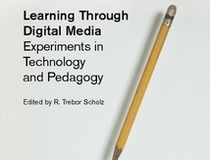
Michael Preston and I have co-authored a chapter— Teaching and Learning with Video Annotations —for the recently released anthology, Learning Through Digital Media: Experiments in Technology and Pedagogy. This chapter recapitulates the history of multimedia annotation projects at CCNMTL, focusing especially on the pedagogies and learning outcomes that have motivated much of my work at CCNMTL work over the years. We discuss curricular activities which have stimulated the development of our VITAL and MediaThread multimedia analysis environments. Learning Through Digital Media was edited by New School Professor Trebor Scholz in preparation for the upcoming Mobility Shifts: An International Future of Learning Summit (Call for Workshops: submissions due by July 1). The peer-reviewed book contains a series of practical applications of digital media to formal and informal learning situations, with a focus on teaching techniques across a range of services and tools. The “ambition of this collection is to discover how to use digital media for learning on campus and off. It offers a rich selection of methodologies, social practices, and hands-on assignments by leading educators who acknowledge the opportunities created by the confluence of mobile technologies, the World Wide Web, film, video games, TV, comics, and software while also acknowledging recurring challenges.” Trebor throws a great conference. Mobility Shifts is part of a bi-annual conference series on Digital Politics.  The conference topic ‘09 was digital labor, and in ‘13 it will be about digital activism. Trebor is truly a performance artist when it comes to organizing conferences. He works really hard to get people talking to each other before the conference starts, so that when people arrive they are already in the middle of a conversation.  For the Internet as Playground and Factory he produced a series of short videos introducing participants to each other (mine is here).  This year he published a peer-reviewed anthology, available in a variety of formats, including hardcopy, PDF, ebook, and web-based. Learning Through Digital Media was published in March 2011 by the Institute of Distributed Creativity under a creative-commons license (CC-BY).

Parabolic Intentions

4585915584_8cb079376dMystical traditions depict a singularity in consciousness occurring when all of humanity is united in the same state of mind. Our choices will determine if we will arrive at this state by achieving global peace, or take a detour through the another World War. In the limit, our shared reflective awareness is a possible consequence of globalization and has been linked to the promise of world peace. Meanwhile, Princeton University’s all-but-unheard of Noosphere project has begun tracking meaningful correlations in random data that suggest an awakening of global consciousness. The project has distributed physical networked “eggs” which generate a steady stream of random numbers. Upon the occurrence of events of global significance the streams suddenly become a lot less random  (actually immediately before these events, but that’s another mystery).  Unprepared to even postulate the mechanism for the correlations they have established, the project minimally suggests that our collective intentions and emotions have the power to influence and affect our physical reality. A wise mentor of mine thinks we might be able to accelerate this transformation if we all took the simple step of pausing, contemplating, and reflecting every day at noon.  Similar to the Play As Being practice I sampled a while back, the personal potency of such a discipline is dramatic. Noon is a convenient time to sync up, but the coarseness time zones introduces a margin of error. Imagine if large numbers of people welcomed the sun every morning - a wave of transcendence would (en)circle the globe. Some kind of psychic beacon? The idea that our technologies mirror our realities is common, though contemplating our reflection within these mirrors is less so. Our global communications system is not only the planet’s nervous system, but through computation and representation, it is becoming a 2-way mirror into our collective psyche. In the past I have appreciated how distributed research has given way to tools which help aggregate many snowflakes of data into a meaningful snowbank. Flickr and Delicious taught us how to conduct distributed research on photos and hyperlinks, but Twitter has helped popularize aggregation around arbitrary structured data.  We are monitoring elections, and each other’s sexual habits. And the data doesn’t even need to be particularly well structured, as this research on the pulse of the nation’s mood demonstrates. Now that we have glimpsed own collective moods, can we design the biofeedback loops for us to become collectively-aware (in addition to self-aware)? To put this another way, could be learn to actually control the coordinated output of the Noosphere eggs, instead of merely tracking their correlations with our global state. If we could collectively broadcast one syllable into the universe, what would it be?

Reconstruction time again

At a loss for wordsThis week the j-school was abuzz with the conversation successfully  provoked by the publication of a detailed comprehensive report, complete with recommendations, on how to save the endangered species of professional journalists. One of the report’s two primary authors is my professor Michael Schudson, a thoughtful scholar and a great teacher who is eminently approachable for advice. My friend Dr. C.W. Anderson was the research assistant on the project, and I know he worked pretty hard to make this happen, though he didn’t go on a world tour with the authors. The report was solid and it managed to gain alot of attention and stir up  a bit of a ruckus. The recommendations seemed reasonable to me, though not quite as radical as I would have hoped… I have been involved in quite a few conversations around the future of journalism this year, and while there has been a great deal of conversation around how the forms of organization around journalistic production are changing, there has been very little talk about how what’s being produced is changing too. I am reminded of Bob Stein’s predictions about the Future of the Book. One of his central riffs is his epiphany that the digital book is much less about ebooks and multimedia, and much more about a shift away from the book as a static, finished, complete, object. He imagines a new emergent form in perpetual beta, with multiple authors, and around which revisions, annotations, and communities form. Any of his talks that from the last few years probably picks up on this theme. While many journalists are talking about producing articles using new media forms, the discussions remind me a bit of the early days of cinema, when they used to film plays. I’m imaging a shift in journalism towards interactive storytelling, cumulative aggregation, and  distributed collaboration. We have begun to see hints of experiments along these lines in projects like Times Topics, Swiftapp, and Mapping Controversies, but this NPR project profiled last year in CJR really hits the mark: So Cool: How an economic weather map changed the climate. I think these strategies might easily apply to prose, not just data, interactive graphics, and maps. Comparing journalism with education, will journalism only use new media to create the equivalent of a jazzed up, one-way, lecture? What does interactive story telling even look like? How will we teach the next generation of journalists to create works that are designed to be picked up, re-appropriated, and re-mixed? With these ideas in mind, I would have loved to see some recommendations in this report designed in anticipation of this future, not merely to prop up yesterday’s decaying models. The patchwork of the future can be best supported by encouraging greater transparency, open licensing, and a culture of collaboration.  What about encouraging open licensing mandates to this foundation support? Mandate the sharing of primary sources? Teach journalists of the future to share, and to learn from their readers? These aren’t all policy recommendations, but I think they need to be thought through and woven into this conversation. PS - While the future of journalism may be difficult to discern, the future of newspaper suddenly seems pretty clear ;-)

The Interdisciplinary Kissing Problem

websLast week I participated in the architecture school’s visualization seminar and  was treated to a mind-blowing presentation by Tony Jebara, a Columbia Computer Scientist. Jebara is a young associate professor who researches machine learning, graphs, and visualizations, and is also the chief scientist at CitySense.com. His lab “develops novel algorithms that use data to model complex real-world phenomena and to make accurate predictions about them.” They also work on improving the readability of massive volumes of multi-dimensional data, and are currently focusing on making sense of networks of people and places (take a wild guess who else is interested in their work). CitySense is an application that runs on mobile devices and from their location data…

O.V. High

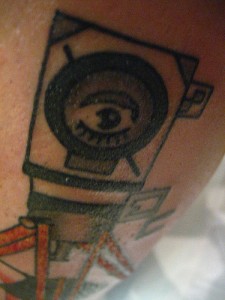
Man w/ a Movie Camera Tattoo I have to thank my friend and colleague Clayfox for comparing (positively) the vibe at this weekend’s fabulous Open Video Conference to High School. The optimism, diversity, and composition of the crowd was really inspiring. In some ways, this conference might as well have been called the “Independent Media” conference, but of course, if it was, the right people wouldn’t have attended. Somehow they managed to attract people involved with every layer of the stack needed to create independent media.  Subcultures representing hardware, html5, metadata, content, law, production, funders and more were all represented. To make independent new media, you either need to understand all of these details, or know someone who does.  I don’t think I have ever been in a room with this particular blend of expertise and interests before. The networking was great, and my office was closely involved in making the education stuff at this conference happen (I have a great job). At the conference we announced the liberation of a great piece of software - VITAL is free! Run, VITAL, Run. The highlight of the talks had to be Amy Goodman’s inspiring speech. I had seen her introduce Chomsky last week, and was left a little bummed out by his talk since it was blow after blow of what’s broken in the world, with very little vision, and no call to action. You don’t hear too many female preachers, but Goodman has really mastered an hypnotic cadence - speeding up to fit in alot of ideas, but slowing down for emphasis.  Her soundbytes are eminently tweetable (twitter essentially  replaced irc at this conference, and there was an incredibly active backchannel around the #openvideo tag/frequency/channel). Benkler also opened with fresh material - he has clearly been thinking about journalism in the wake of this year’s collapses (and maybe even our CDPC conference?). It is amusing to think that between Benkler and Moglen (and his metaphorical corollary to Faraday’s law), it might be the sociologically-inclined lawyers who arrive at a theory of creativity (instead of the cognitive scientists).  And Zittrain covered for the missing Clay Shirky, and pulled of a funny and intelligent talk. Many other highlights which I hope to curate once the video is all posted and I have a chance to decompress. I know I should have gone to more talks that I didn’t belong at, but I kept getting pulled in to great conversations… Kudos to the organizers for pulling off a small miracle. I’ve been to many conferences that cost hundreds of dollars to attend, and don’t even offer lunch.  They managed to pull off a beautiful space, food, and even video djs and an open bar. I wonder to what degree freeculture’s networked proximity to techies and lawyers simplifies some of the logistical nightmares that often plague organizers. It just sems like they are able to organize with relative ease, as the communications media and social capital are intuitive and readily available. Good thing for everyone they are using their super-powers for the greater good ;-) In terms of the longer term, they were consciously trying to create something bigger than a one time event. I was impressed at the purposeful scaffolding of the infrastructure meant to sustain this conversation now that conference is over.  Many gatherings only figure out at the event that they want to keep talking afterwards.  THe OVC crew did a great job of setting up, and using a wiki, and some sensibly divided mailing lists to seed a healthy after-party.

Mobile Student Labor

students-on-edge-of-lowAt the beginning of the semester I shopped a class offered in the Columbia CS Dept on mobile computing.  Sadly, I didn’t have time to take the class this semester, but I suppose I can follow along Standford’s version free of charge. Prof. Nieh was personable, animated, and bright, but the first day of class made me realize the impact CCNMTL has had on me. I doubt I would have made these observations/connections as an undergrad. First, I was a bit sad that the curriculum did not include even a spoonful of social/cultural context.  The only books on the reading list were SDKs. A little Rhiengold, Shirky, or Zittrain, judiciously applied, could go a long way. Second, Nieh announced that the entire semester would be organized around projects. That’s a great way to learn, but he also imagined a competition, with the possibility of a venture capitalist evaluating the projects at the end of the semester. Now, although I am presenting at the Left Forum this weekend, I have nothing against turning a profit (after all, I’m an Alchemist).  But, would it really be too heavy handed to require that students at the university organize their production around the Public Good (and maybe become mobily active)?  What about the needs of the university?  Or even, an Open Source project? 60-80 Columbia CS students (w/ some Masters students) - that’s alot of creative labor power.  And, there is a dire need for applications like this, around the world, and across campus (SIPA, The Earth Institute, Teachers College, the J-School, the libraries are all groups on campus that are investigating mobile apps). Even if students are required to create something for the public good, at least giving them that option might expose them to a possibility they hadn’t considered. To Prof. Nieh’s credit, he invited me to submit an application idea to the class forum, though I am not sure if any of the students actually followed up on these suggestions. As I wrote in my email, while VC’s won’t likely chase the students down to invest in these kinds of apps, they might be surprised by the overlapping technical requirements across sectors. And foundations are definitely very interested in innovations in this area right now too. I am under no delusion that most undergrads could actually complete a useful application in a semester, but a few might. And the opportunity to make a hyper-local useful application (find a book in the library stacks, anyone?) seems promising.  And its getting so easy.

Two more flakes

6 credits and another season later, I have two more essays to show for the time indentured to my phd program. One of these years I might even save up enough flakes for a snow bank. I had fun with this one, which I wrote for a class on the History of the Theory of Architecture - the assignment was to analyze a piece of architectural theory, so naturally I chose an information architect… Possibility Spaces: Architecture and the Builders of Information Societies This other paper was for my seminar with Michael Schudson on Transparency and Democracy. It packages up some thinking I have been doing for a while on the politics of memory, surveillance, and transparency, and opens up some serious ground for future research. The End of Forgetting: Transparent Identities and Permanent Records Next stop is a week in Vermont - off the grid (honestly, its almost off the map), but am already looking forward to next Spring’s semester, kicking off with this conference on The Changing Dynamics of Public Controversies.

Hot off the Collaborative Digital Press

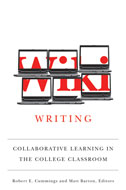
At long last! Wiki Writing: Collaborative Learning in the College Classroom has finally been published. An anthology of peer-reviewed essays on teaching and learning with wikis, the first two chapters in the book are written by myself, my coworkers, and my friends.  Mark Phillipson contributed “Wikis in the Classroom: A Taxonomy,” and Myself, John Frankfurt, and Alex Gail Shermansong teamed up with Professor Robin Kelley, our faculty partner on the Social Justice Wiki, to write “Wiki Justice, Social Ergonomics, and Ethical Collaborations.” Over 3 years since the Call For Papers, and a long and arduous review process, the hard copy of this book is now available for purchase from the University of Michigan Press and at Amazon, and will soon be available to explore free of charge at the Digital Culture Books website. It think they may have grown the trees before killing them for the paper. The half-life of the subject matter certainly warranted a more rapid turnaround, but I guess that’s the sound of dying media letting out its last wheeze. I am also disappointed that the hard copy managed to publish the wrong, older version of my diagram. So, for my first erratum, here is the figure that should have been printed: Social Software Value Space. Gripe, gripe, gripe. Actually, I am thrilled this came together, and think the book looks great and will stand the test of time. I’m also happy the digital version of the book will be available for free, though I am not certain the book made it out under a Creative Commons license. A huge thanks to our editors (Robert E. Cummings and Matt Barton, whom I have yet to meet in person) for persevering and making this happen.