Art

The year of the hybrid?

Economies, not cars. Last night I saw Larry Lessig present “Remix: Making Art and Commerce Thrive in the Hybrid Economy” as a part of Evan Korth’s amazing Computers and Society speaker series.  The talk was an improved iteration on the talk I saw him present at Wikimania ‘06, but it was much tighter - concentrated, but not too dense. He included a few new examples and anecdotes, collapsed earlier presentations into compact sub-segments, and has incorporated Benkler’s hybrid economies (articulated in The Wealth of Networks) into the Read-Only->Read/Write->Hybrid progression. It really is a pleasure listening to a world-class orator (he has argued cases in front of the supreme court) deliver an argument, and I was trying to pay attention to his rhetorical style, and the ways he has honed the structure of his argument over time. First, a small bone - For a while, Lessig has been making a bold and provocative assertion that text has become the Latin of our time, and audio and video are the vulgar. Arguments over the correctness of tense aside, I sure wish he would start using the word ‘vernacular’ instead of ‘vulgar’.  ‘Vulgar’ makes the argument sound, well, a bit elitist to me, and when I repeat this claim, I remix it to ‘vernacular’. More important than quibbling over this choice of words I was a little thrown off by the direction that Lessig wants to take IP reform. Last night he spent a bit of time outlining a scheme that hinges on the analytic distinction between professionals and amateurs. I think he may have been trying to appeal to an intuitive sense of fairness, or perhaps pragmatics, over how professional creators work might be protected by IP while amateurs should be free to create w/out regulation or restriction. I thought it was downright odd that in one breath he was persuading us that we live in a hybrid world, and in the next trying to maintain the line between amateurs and professionals.  The line between professionals and amateurs is clearly blurring, as the difficulties in applying shield laws to journalists attests. Nowadays, who exactly is The Press, whose freedoms may never be abridged according to the First Amendment? I am really unclear about the definition of a creative professional in a hybrid economy. Would we need to introduce licenses to certify creative professionals? Even in the example of the baby video with Prince music playing in the background, would the situation change if the mother was making money off of google ad-words aside the video? To me, if you take Benkler’s argument to heart, in a networked world many everyday interactions will be commodified, and favors will turn into transactions. We’ll all become some hybrid of amateur and professional. This doesn’t sound all good to me, as I am not sure I want to live in a world where everything has an exchange value… This paper by Nigel Thrift, Re-inventing invention: new tendencies in capitalist commodification, paints a grimmer picture than Benkler does about the sophisticated ways that knowledge workers are being exploited in the hybrid world we are hurtling towards.

Prophetic Fulfillment

It is virtually uncontested that the McCain campaign has attempted to divisively identify Obama as the Anti-Christ through a systematic campaign of allusions and coded associations. This innuendo was largely missed by people who don’t believe in the literal reading of Revelations, but the sophisticated tactics make it unlikely the multitude of associations were coincidental. “The One” advertisement alludes to the cover art and even the title fonts of the popular “Left Behind” series, and there are numerous biblical associations as well. But, what confuses me is that by the logic of fundamentalist Christianity, if Obama really were “The One”, wouldn’t they be obliged to vote for him to fulfil prophesy and usher in the rapture? Isn’t this the logic behind the Christian right’s support for Israel? Kinda reminds me of seating Jesus on a white donkey, but really, whatever it takes to bring about a change we can all believe in…

Free Energy Redux

No, this post isn’t about the LHC creating black holes, time machines, or perpetual motion - its an update on my ~2 year old post on Free Energy - where I reflected on what the environmental movement might learn from the free software movement… Looks like environmental labelling, one of the ideas I discussed, is actually starting to happen in the UK: What is your dinner doing to the climate? Synchronously, this week I am reading an excellent treatment of the rise of transparency as a form of (meta)-regulation for my seminar on Transparency and Democracy Democracy by Disclosure: The Rise of Technopopulism Now I finally have the theoretical apparatus to completely obfuscate my ideas ;-) BTW - Happy Software Freedom Day!

Lost in Controversy

This summer, Bruno Latour was our tour guide - leading the way, not out of The Cave, but beyond the entire Cave System. Along the journey I also learned about a very interesting pedagogical technique intended to take engineering students on a similar journey. Students at Sciences-Politique and Ecole des Mines in Paris, as well as at MIT in Boston are learning to map techno-scientific controversies according to a method which embodies Actor-Network-Theory (without all of the heavy theoretical jargon).  Past projects can be found at the Mapping Controversies web site, and Bruno Latour himself explains the project and its aspirations in this video. Many of the possibilities explored in these new media projects are related to a broader question I have been interested lately concerning the impact that technology is having on epistemology itself. How is technology and new media changing what is knowable and how we go about knowing?  I wrote an essay last Spring, The Bionic Social Scientist: Human Sciences and Emerging Ways of Knowing, which begins to explore these questions, and it is wonderful to see more examples of these ideas materializing around us. The Mapping Controversies pedagogy involves teams of students taking on the role of statistician, investigative journalist, scientist, and webmaster, working to research and represent a controversy. They discover (and depict) that concepts themselves vary depending upon who is speaking about them, and attempt to map these relations and progressions over time. I can imagine this technique displacing the traditional 5 ‘W’s of journalism - The venerable Who, What, When, Where, & Why needs to b upgraded to a multi-dimensional, post-modern, reality. What varies and depends upon who, where, and when, and without the kinds of research and representations that the Mapping Controversies project is pioneering, we will never adequately capture the multiplicities of whys. I don’t know if these kinds of representations are intermediate forms of research, or if one day they will be part of the final production delivered as news to readers, but it is an important question to begin to grapple with. Right now, the Mapping Controversies sites are somewhat anti-social - they are fixed, one-way communications, but from the introductory video, they hope to change this soon. At the moment, each map is also a unique work of art.  While it is premature to confine anyone yet to the paradigmatic blinders of conformity, I also think it is imperative for us to begin to imagine and develop a visual vocabulary that we can re/use when representing these kinds of relations. In the field of information visualization, researchers are beginning to catalog Information Design Patterns that maps like this could build upon. Of course, riffs and variations from these patterns are welcome, where significant and meaningful, but a common starting point will improve the communicativity of these maps. As these patterns solidify, the corresponding implementation patterns can grow along with these efforts, as tools like Ben Fry’s Processing Framework (recently ported from java to javascript, which is much more web friendly, and used extensively in the MOMA’s Design and the Elastic Mind exhibit), will begin to institutionalize the knowledge learned in constructing these maps. And, of course, all of the code and content used to create these projects should be free and open, so the world can learn and improve on their foundations.

Bruno vs. The Cavemen

This summer I was part of an amazing reading group where we slowed to a crawl and closely read Bruno Latour’s Politics of Nature. When I say we read the book, I mean we literally went around the table and read the book out loud, stopping to discuss difficult passages until we were confident we understood them. I haven’t taken to the time to read a book this closely in ages, and the experience reinforced the age old addage about finding the universe in a grain of sand. Reading a book that deals with such deep eternal themes, written by a brilliant theoretician who has himself synthesized and integrated an incredible amount of history, philosophy, and literature, was like glimpsing the entire cannon through Latour’s eyes, and well worth the effort. In this work, Latour performs a root canal on a form of conceptual dualism that has haunted Western thought for millennium. The book revolves around a perplexing circumstance in world we have constructed for ourselves - How did we end up in a world where one set of propositions (usually known as facts) are authoritative, unassailable, and incontrovertible and another set of propositions (usually known as values) are the kinds things we are allowed to argue about? Apart from the challenge of figuring out which of these flawed categories a particular proposition belongs to, the artificial separation between the tasks of constructing the common world and constructing the common good shuts down all possibility of discourse - before we even get a chance to try to arrive at consensus! The institutionalization of facts and values are so inextricably intertwined that it is folly to erect barriers between these two enterprises. Latour illustrates his perspective with examples from controversies in the sciences (especially Environmentalism and Political Ecology), but it is trivial to transpose his argument to the great debates between objectivity and subjectivity in Journalism, and the ways that certain kinds of propositions (‘data’ in many conversations about technology, and ‘revelation’ in conversations about religion) are invoked as trump cards to shut down all debate. Medical “science”, especially psychiatry and brain science are horrendous perpetrators of these offenses right now, and the consequences are anything but theoretical. The Onion provides my favorite example illustrating the confusion between facts and values. Latour’s proposed strategy for re-imagining the mexican standoff between nature/culture, science/democracy, facts/values, objectivity/subjectivity, necessity/freedom, etc is to re-tie a metaphysical Gordian knot as an epistemological one. He would like us to consider an dynamically expanding collective of players/concepts, composed of humans and non-humans (the non-humans have spokespeople, whose assertions are speech acts - qualified by the same kinds of language we use to indicate our confidence in any speech act). Revisiting and reinterpreting Plato’s metaphor of Cave, Latour traces the West’s tendency to cleanly divide smooth facts from messy values to the flawed idea of aspiring to leave the Cave to grasp/glimpse/experience the Truth. Even if this were attainable, the sojourners would still need to return back into the cave, to mediate and relate their experience to those still trapped within. Instead of aspiring to leave the cave, we need to transcend the entire Cave system. It isn’t completely fair to criticize a book for what it’s missing (no single book can be all things), but it would be great to expand this line of analysis in the future and elaborate on the role of mediation in the current and imagined collective. It seems pretty clear to me that for Latour, the ‘Sciences’ encompass the entire enterprise of Science, including the scientists, the funders, the corporations, the educators, and the scientific journalists. But, there is little in the book that unpacks these relations. A broader criticism sets an argument that John Durham Peter’s advanced in Speaking into the Air, against Latour’s conception of the Collective. Peter’s argues that we often view communication as salvation, when in fact alot of discourse never leads to consensus, and there are perspectives that are mutually incommensurate and irreconcilable. I may be naive to think the Collective that Latour dreams of is a realistic aspiration, though I sure would love to live to participate in it. I also want to explore the connections between this work and the Death of Environmentalism essay I encountered last year. I think Shellenberger and Nordhaus’ argument is a vivid and direct application of the theory Latour argues in The Politics of Nature. Ulises Mejias’ work on Networked Proximity is another work which might be fascinating to juxtapose with the dynamically expanding collective (which, can be thought about as a network).  Ulises’ notions of the para-nodal might be crucial to consider when the collective invokes the power to take things into account.

Location, location, location (and timing)

A few weeks back I attended a symposium (The Focus on Locus) at the Columbia Business school on the coming tusnami of location based services. For some reason I mistakenly believed the day might include discussions and demonstrations of visualizations and mapping UIs, but it was actually more about the other end of the equation - how every device on the planet will soon be aware of its own location, and the sorts of privacy, policy, and commercial implications of this emerging reality. Henning Schulzrinne, the chair of the CS dept kicked of the day from 1000m up by pointing out that, nowadays,  just about every device on the planet knows what time it is (non-trivial when you consider the standards, protocols, and apis that needed to be resolved for this to happen so smoothly everywhere), and reminded us that less than 10 years ago you still needed to set the time on your cell phone. Knowing the time has become completely transparent on many electronic and networked devices, and has become part of the fabric of the digital age. We search for emails, pictures, documents and more based on timestamps - they are so common it is even hard to imagine computing without them. Extrapolate a few years out, and the dimensional quartet of space-time will be reunited once more. Everything will know where it is, and not just geo coordinates - devices will know the street block they are on, the room they occupy in relation to floor plans, etc etc. Henning is even working on the standards and protocols to facilitate this ubiquity. Once you say this out load it becomes obvious - many of the systems that we use to figure out where we are rely on knowing when you are to do so. This dates back to the solution to the Royal Academy’s Longitude X-Prize, all the way up to the triangulation used by modern GPS. Location based services have also finally creeped out the 99% of the people who don’t seem to grok the privacy issues posed by the tracks our digital footprints leave behind. Perhaps its more visceral, immediate, and concrete, but people are buggin. In a very surreal moment, I realized that many of the privacy concerns raised at the Columbia Business School symposium were very similar to the privacy conversations happening at the hacker conference (the Last HOPE) I attended the week afterwards. (yeah yeah - the groups are both stereotypically libertarian, but would you have predicted the similarity?) Refreshingly, some of the models and thought experiments I have been developing in relation to my End of Forgetting work held up really well throughout both conferences. The information flux model remains relatively unique, and continues to suggest alternate ways of retying the gordian knot of that is strapping us to the petabyte age. It’s always fun attending a meeting like this and trying to maintian a critical perspective - paying attention to the omissions, the assumptions, and even the construction of the instruments (like the standards which might be used to indicate the privacy levels of data). Speak now or forever hold your place.

Speaking in Tongues

Have I ever mentioned how cool these newfangled series of tubes are sometimes? I just found out that an essay of mine was translated into Italian, which is now the second essay I have written to be translated into a language I don’t even speak. Appropriately, a major theme of the essay was the economics of peer production, and the professor I wrote it for was actually from Italy, so perhaps it resonated strongly with the Italians. The first was translated into Greek, which is beginning to make me wonder if it might be time for a nice trip out to the Mediterranean. If any of my friends speak Greek or Italian, I would love to hear how these translations turned out ;-) Costruire la libertà: gli sviluppatori di software libero tra lavoro e gioco (Fabricating Freedom: Free Software Developers at Work and Play) ? ?????????? ZyprexaKills: ??????? ???????? ??? ?? ???? ??? ????????????? ???????????? (The ZyprexaKills Campaign: Peer Production and the Frontiers of Radical Pedagogy) Libre Lungamente in Tensione!
Magic potions, strange trips, and healing plants

Last week I paid tribute to Albert Hoffman at an event hosted by Reality Sandwich. I have been following the site for a while, and really enjoyed the screenings and the conversation (led by John Perry Barlow and Daniel Pinchbeck). I was a bit startled to encounter a perspective that I hadn’t thought about for a while. There were psychedelic enthusiasts who faithfully imagined the world being a better place if we all took a little trip (slight caricature, but bear with me). After a few years working on the Icarus Project and immersed in academia I found this attitude slightly jarring. Talk about technological determinism - our salvation in the form of an external molecule? I happen to think that a bit of psychedelic experimentation might certainly help make the world a better place, but for one thing, if society were truly tolerant of freaks and drugs, we wouldn’t need them so badly in first place. For another, psychedelics are arguably more available now than ever before, and they haven’t (yet) catalysed the transformation imagined. But what really bugged me is how this counter-cultural rhetoric would play directly into the hands of Big Pharma. Their message for years is that happiness can be found at the bottom of a pill bottle. Try to vividly imagine what these drugs would look like in their hands - the clinical administration of extracted active ingredients, outside of the usual cultural sacred context. This wouldn’t accelerate the evolution of consciousness, just the flow of capital into Pharma’s coffers. I also found it interesting to trace the genealogy of LSD back to psychiatry. To be completely fair, Reality Sandwich’s message isn’t so simple, but I do feel its important to imagine how these messages might be appropriated. I’ll leave you with one of the shorts from Post Modern Times: Consciousness is the Key

No more pencils...

Well, summer vacation is finally upon me - now I only need to work fulltime. My first year in my PhD program I found myself thinking alot about methods. Not all that surprising, given that one day I will have to defend my methods along with my ideas, but a pretty abstract space to be preoccupied with, nonetheless. This spring I wrote a paper about all the techniques that the Social Sciences really need to be borrowing from industry and the hard sciences:

Mirror, Mirror On the Screen

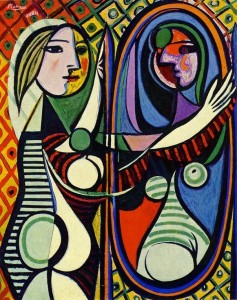
It’s been a few weeks since I first started experimenting with the Play As Being practice, and ventured into Second Life. I continue to appreciate the performative brilliance of utilizing Second Life as a means to study the nature of consciousness, being, and reality. I am starting to imagine a metaphysical syllabus that incorporates virtual world immersion as an instrument for laying bare the everyday assumptions we make about consensual reality. While I am learning something about myself as I project my identity into my avatar (its almost impossible not to, as veteran SL’ers will attest), I am also learning more about this world, and its seductive attraction. Lots of Second Lifers believe that Second Life is just as real as Real Life (which, for mystics might just mean that both are illusory), but I lean more towards the cautious opinion that Second Life is a mirror, albeit one with a great deal of depth. Mirrors are quite magical and wonderful (7 years of altered luck, and all that). They can be used to see far and deep – think reflecting telescopes or the michaelson-morely experiments – but they have also trapped a fair share of narcissuses in their alluring reflections. So does SL represent the vanity of vanities? Maybe not, but considering that the energy consumption of a typical SL avatar now exceeds the energy consumption of an average real world brazillian, it is important that folks consider their time in SL well spent. One upside of my recent journeys is that I now appreciate the research going on in this area much better. Here are two pieces from the Chronicle of Higher Ed reporting on research going on at Stanford’s Virtual Human Interactions Lab: