Art

Hippocratic hypocrisy

Hippocratic hypocrisy

caduceus-eyeWhen I graduated from Teachers College in ‘07, I donned the goofy ceremonial robes and walked with my classmates at the university-wide commencement.  I distinctly remember my astonishment when I heard the medical graduates recite the Hippocratic oath, right there, for all of us to witness. I remember thinking to myself that other professionals should be required to recite oaths too, as lawyers, teachers, journalists, and others all have the power to do great harm, but I suppose that medicine still occupies a unique place, as the power to heal is synonymous with the power to kill. I have arrived at a point in my dissertation research where I am now convinced that the psychiatric-pharmaceutical complex is in violation of the Hippocratic oath. I realize that this is a heavy accusation to make, but I now believe that the field has gone beyond simple, or even gross negligence, and has crossed the line into willful harm.

Dear Frank,

I remember the first time we met. It was my third and final interview for my current job at CCNMTL back in Spring ‘04. I was initially anxious, but you immediately made be feel welcome and comfortable. [Over the years I came to appreciate your gift for authentically connecting with just about anyone, often within 30 seconds of meeting them. You dispatched with superficial niceties and blazed trails directly to people’s souls. You bridged intellect and emotion, without a hint of pomp or circumstance, projecting sensitivity and respect to everyone you encountered. Age, class, race, gender - not so much that these dimensions were irrelevant, but you always managed to connect with the individual. You actually listened. And learned.] During that interview I remember walking into your office, encircled floor to ceiling with books. You asked me about my undergraduate senior thesis, a topic I hadn’t revisited in almost a decade, and then proceeded to pull Julian Jaynes off the shelf. You showed me your photo with Allen Ginsberg, and then asked me if I recognized the person in another grainy b/w photo. When I correctly identified Wittgenstein I was pretty confident I had landed the job. But, more importantly, I had found a new mentor. We didn’t interact very often my first summer at CCNMTL. I worked in Butler library, under Maurice’s supervision, and you were keeping summer hours, at your office in Lewisohn. When Fall rolled around I was eager to enroll in classes, and begin my graduate journeys, but I was nervous about signing up for a course with my boss. You never made me feel like a subordinate, but I was scarred from my relationship with management at previous jobs, and wasn’t sure what it would be like for us to enter into a student-teacher relationship. I hadn’t quite figured out that that was the only kind of relationship that you knew how to cultivate, although our roles were constantly revolving and inverting, as you shared your wisdom, and facilitated growth in every exchange. You brought out the best in everyone around you, rarely content to talk about people or events - always rushing or passing your way into the realm of the Forms. As I reflected when Robbie retired, I chose to enroll in your legendary Readings seminar after one of your students (I think it was Joost van Dreunen) made the case that your syllabus was your text on social/cultural/critical/communications/media theory. That year was invigorating. I remember rediscovering the joys of school, as I learned to reclaim spaces of intellectual exploration and play, and translate them into action. On the surface, our seminars resembled office meetings, but the luxury of non-directed (not to be confused with non-purposeful) conversation, which was a privilege I needed to readjust to. Together we figured out ways to weave together disparate threads of my life - work, hobbies, play, passions - somehow, I learned to integrate these (often inconsistent) vectors into a unified construct. A self, I suppose. But, it was my self, not one you imposed on me. It never felt like you pushed your agendas or ideologies on me - rather, you always wanted to help me discover what I really want to think about and work on. And I know that I’m not the only one that believes this - this was your way. I often wish you had written more, although your autobiographical text is a multi-volume, multi-dimentional, multimedia masterpiece. Sometimes I wonder how seriously you took Socrates’ critique of writing, along with his commitment to be a midwife for ideas. Did you lose count of the number of dissertations you helped deliver? One under-studied paper that you published, “Who controls the canon? A classicist in conversation with cultural conservatives,” (Moretti (1993), Teachers College Record, 95, pp. 113-126) captures many of the paradoxes you embodied and worked through. A radical classicist, a skeptical optimist, a scientific artist, a philosophical craftsman, an institutional revolutionary. Somehow, you integrated these roles with a career trajectory that not even the most advanced detectors in the Large Hadron Collider could trace. I watched you start countless conversations with a Greek or Latin etymology, charming the academics, administrators, and funders alike in a display of the continuing power of the Western cannon. You constantly reminded us of the classical education that many of our favorite thinkers received, and insisted we read them against that backdrop. But, more importantly, a reminder of how radical these thinkers all were in their own time, and how likely they themselves would be protesting the ossification of the cannon, if they were around today. These lessons will live on through one of the last projects you initiated, Decolonizing the Cannon, which a number of us are committed to follow through with. After 25+ years of reading Homer every fall, it will take us a lifetime to reconstruct the lesson plans you left behind. In the 9 years that I’ve known you we’ve been to hell and back. We’ve studied together, traveled together, worked together, gotten sick and healed together, but all the while kept our senses of humor. I’ve read many beautiful eulogies about you, but in this letter I want to emphasize your enduring sense of humor. You were a funny man. LMAO funny. Slapstick funny. Dada surrealist funny. Hashish funny. Plenty of the humor was dark, and perhaps, as your student Ruthie suggested to me recently, your humor helped shield you from the brutal injustices that you perceived and experienced all around us. But you were also sometimes a klutz, in an absentminded-professor sense, and a disorganized mess. A creative mess, but a mess. But, I have to say, that even when you were operating on scripted autopilot, you were way better than most people at their best. There wasn’t much you enjoyed more than being called out for your lapses in attention, and my glimpses of your inner monologue were often hysterical. I think that your analysis of power led you to conclude the the world was simply absurd. We all witnessed you acting on this with gravitas and determination, but in the minutia of our micro-interactions, there was always a wide smile and a belly laugh. I don’t think any of us will ever forget the sound of your laugh. (Or, your bark. Man, did you love to throw down and argue. But, that’s another post.) After I started taking classes with you, it didn’t take me long to realize that that the secret to understanding what you were talking about was knowing what you were reading that week. You would basically have one conversation all week long, no matter who you were talking to. I imagine it was bewildering to many of my coworkers when you brought up false-needs, or commodification at our weekly staff meetings, but if people paid close attention, they could almost observe the wheels spinning all week long, as you lived the theorists you were teaching through the practice of our projects. I often explained to people the incestuous nature of my work/school commitments by comparing my situation to a graduate student in the natural sciences. They might spend 40-60 hours a week in a lab, and working for you was about as close as I could imagine to working in a communications lab. I often wondered how many of my cohorts managed to keep up on developments in new media (and many of them certainly did) without the ambient immersion in a practice that exercised and embodied the theories we were reading. When summer vacation rolled around, you never quit.  I remember how you used to talk about the stretch of time between Sept-May as one long sprint (as long as I’ve known you, you’ve taught at least 2-2 + advising phd students + multiple committees at TC and the J-School, on top of your administrative responsibilities as executive director at CCNMTL and a senior officer in the libraries) , but you didn’t exactly slow down in the summer either. Or, perhaps I should say that you did slow down, but you never stopped teaching and learning.  For at least 3 or 4 summers I participated in “slow reading groups” with you and a few of your dedicated students. We didn’t get any credit for these sessions, and you didn’t get paid. We would sit in your office, and go around the table reading a book out loud, pausing whenever we needed clarification.  And, we often needed clarification. You were convinced that no one was reading anything closely anymore, and that the hundreds of pages that were assigned in courses each week were flying by without students or teachers taking the time to slow down and absorb them.  The second summer we tried this we read Latour’s Politics of Nature, a text we all internalized and will never forget. You had such a funny relationship with technology. You loved gadgets, but were constantly thwarted and befuddled by them. I wonder how many laptops and phones you lost or broke in the years we have known each other. You never stopped learning, but were suspicious of every new tool that showed up, and the more hype around the tool, the more you growled defensively at it. But often, after months of critiquing and berating something, you would come around and start appreciating it. While some of my coworkers/cohorts seem to have chips on their shoulders about the ineffectual futility of technological interventions, you had an optimistic will that allowed you to wield technology like you wielded the classics. Opportunistically, and instrumentally, in the service of social justice. That was your gig. Relentlessly. Sometimes I wonder if you felt like you had painted yourself into a corner with all of your critiques – like when you whispered quietly to me that you wanted to learn how to use Second Life, without blowing your critical cover. Last week I ran into an ex-girlfriend that I hadn’t seen in over 10 years. It was nice to reconnect, and in the course of our conversation I realized that we hadn’t spoken since I had started working and studying at Columbia. I was an entirely different person back then, one I barely recognized. Perhaps people return to graduate school in order to change, but true transformations require a relinquishing of your old identity and ego, without a clear idea of what might emerge on the other end. The Judaic tradition has a teaching that anyone who teaches you the alphabet is considered a parent. You literally taught me the alphabet, as we revisited the alphabet as a revolutionary communications technology (via Eric Havelock), and you taught me many other alphabets and languages that gave me access to entire new worlds.  You also invited me into your home, and made me feel like I was part of your family. Most of all, you modeled and embodied an honesty, integrity, and sheer force of will that I am blessed to have intersected. Safe travels, Frank, and enjoy your vacation. Love, /J
RIP Aaron. You are not alone

The corner of the internet that I hang around in has been mourning all weekend with tributes, eulogies, and heartfelt sharing about the untimely death of Aaron Swartz. I don’t remember meeting Aaron personally, but I have heard him speak, am friends with many of his friends, and was very aware of his work and activism. I am furious and sad to hear that he took his own life. I have lost a few friends and relatives to suicide, and years ago wrestled with some of these demons myself. Honestly, I am not sure how I feel about politicizing this moment. There are strong arguments on both sides. Being persecuted by the state is horribly stressful and isolating, and I also feel strongly about many of issues that Aaron advocated for. But, I am concerned about responses that reduce and simplify Aaron’s complex decision. This post about suicide reporting on the internet raises the concern that sensational reporting causes an increase in suicides in the wake of the coverage. What I want to contribute to this conversation is an important message to any geeks, hackers, or activists that are struggling with isolation, alienation, depression, or even suicidal thoughts. You are not alone. And, sometimes it takes alot of courage to decide to stay alive. For the past 10 years, radical mental health groups like The Icarus Project have been developing support materials for activists that provide alternative ways of thinking and talking about mental health. Take a peek at their forums, publications, podcasts, documentaries, and more. They have really helped so many people rewrite their own narratives, and connect with others struggling with similar emotions. In the past year or two especially, I have seen more and more geeks/hackers who are attempting to organize around these issues, eliminate stigma, and provide peer-support outside of the mainstream psychiatric paradigm. Geeks, hackers, and activists are especially suspicious of authority, and habitually question systems of power.  They are justifiably mistrustful of psychiatry, but need a place to turn to for support. I don’t know the state of all of these projects, but they seem like a good place to pick up the conversation for how can we take better care of each other and provide kind of compassionate support we all need so horrible tragedies like Aaron’s, Ilya’s and countless others can be averted in the future.

Quetzalcoatl and Back Again

It’s nice to be on the spring side of the winter solstice. Farewell, Apocalypse. Nice try. What a year. In 2012 I occupied — Wall Street, Mental Health, the American Psychiatric Association, and my dissertation. I catalyzed the production and distribution of Mindful Occupation, and helped organize the Icarus Project’s NYC 10 year anniversary event and art show.  And, I was privileged to visit the great Mediterranean capitals — Cairo, Istanbul, Athens, Jerusalem, and Ramallah. All while holding down a full-time job. Some were not concerned that the world would end on 12/21, but instead, were horrified at the prospect that humanity will continue hurdling forward, business as usual. As many on our planet yearn for unity and the Most Great Peace, and there are hints we might be learning to direct, harness, and measure our collective intentions. But, as mystics have long understood, our collective choices will decide if we converge on a global state of war or peace. All of my travels this year were transformative and intense, but my October trip to the West Bank was really the culmination of my hero’s journeys. I travelled there for the final stage of the project we began 2 years ago, trying to help Palestinian educators develop their capacity to improve their teaching excellence (Towards the (educational) liberation of Palestine, Dispatches from Cairo: The Raw Data, If I forget you, O Palestine…). I travelled with my friend and colleague, Mark Phillipson.  Together we delivered a keynote speech at the Palestine Technical University — Kadoorie, in TulKarm, and taught workshops on cutting edge, video-based, teacher training and assessment techniques.  The PTUK team officially opened the Multimedia and Educational Resources Center (MERC), and were raring to go. The MERC center is an impressive accomplishment, but I also experienced great sadness and disappointment at the unsustainability of the development grant. Just as we were finally getting some traction, the funding was finished.  I understood that unsustainability is a common failure of projects like this, but the firsthand experience felt worse than any theoretical critique. My boss/advisor/mentor, Frank Moretti, was unable to make the trip this Fall, but recorded a video introduction to our keynote that set the stage for the rest of my trip. The introduction started out cordial and friendly, but 3/4 of the way through, Frank lobbed a handgranade was starker and sterner than any Mayan prophesy. He warns that unless educators incorporate the twin themes of environmental catastrophe and nuclear war into every stage of curriculum we are headed for a “collective calamity”: This warning framed the rest of my trip, and the rest of the year. I’m still unpacking the fallout.

Pyramid Schemes

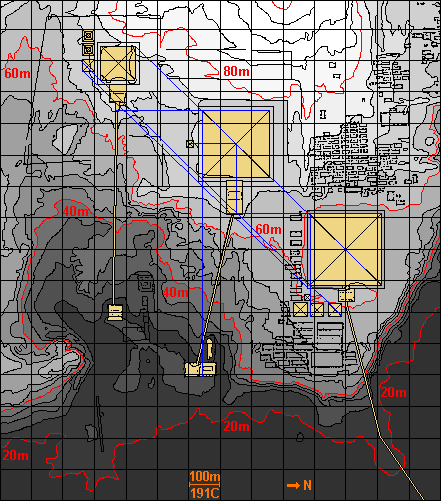
A few months back I visited Cairo and cracked the mysteries of the Pyramids. Or, more accurately, cracked open some exciting new lines of inquiry. I was visiting Egypt for work, but had some time for sight-seeing along the way. I had visited Egypt about 20 years ago (!) but had largely skipped Cairo, and we’ve both changed a bit since then. The day after we arrived in Cairo we visited the Egyptian Museum. When Frank and I visited Israel we discussed how national museums are often used to assert a national ideology by anchoring it within a particular historical narrative.  Striking insight, especially since Mubarak had recently commissioned his son to begin construction of a new national museum that was in progress when we visited (mid-revolution). The current national museum dates back to British colonial times, and feels like a warehouse. It is filled with countless riches, but it’s really almost impossible to navigate without a guide. I thought it was notable that the museum makes no mention of the Bible or the Exodus, even if it is to point out that there is no historical record of the events described (except for one possible mention of the Israelites, but even that is downplayed). We had a wonderful tour guide taking us through the museum, and as we travelled through history I couldn’t shake the feeling that we were missing something important in our interpretation of these artifacts. The patron saint of my PhD program, James Carey, draws an important analytic distinction between communication as ritual, and communication as transmission. While there is no sharp line between these two modalities of communication, it is often helpful to distinguish between the two. So, for example, many of us read the paper ever day as a ritual, more like taking a bath than receiving information. When we reached Tutankhamun’s treasures it hit me like a ton of limestone bricks. Through their burial rituals, the Egyptians were trying to transmit information, but we were largely interpreting their rites and artifacts as ritual. Having read works like Serpent in the Sky, I have an inkling as to how structures like the Temple of Luxor (and Solomon’s temple, for that matter) were attempts to represent their society’s entire cosmology. What if the Egyptian burial rituals were an attempt to transmit the state of the art of Egyptian knowledge? All of it—astronomy, mathematics, medicine, and philosophy/religion/metaphysics? The first obvious question is the identity of the senders and receivers. If we take their myths at face value, the soul of the king would soon return to the his mummy.  Perhaps he might need a refresher course in Egyptian cosmology after the journey?  Cliff notes, at least? Or, perhaps these burial chambers were intended as time capsules. Messages intended for future generations? Future civilizations? Or, maybe just future generations of Egyptians (their civilization lasted thousands of years). Perhaps these attempts to capture the totality of Egyptian knowledge were like pissing contests between the priests.  How succinctly and elegantly could they represent Egyptian knowledge? This was my frame of mind during my stay in Cairo and the questions I was mulling over as we visited the pyramids of Giza later that week. Co(s)mic Interlude Did you ever hear the one about the pyramids as time machines? It goes something like this: The pyramids are constructed out of tons of limestone bricks. The molecule that makes up Limestone has two energy states. It’s lower energy state is its equilibrium. However, the molecule can also be excited into its higher energy state. Supposedly, this state could be induced by an acoustic wave at the correct resonant frequency. In the pyramids, this was achieved by a chorus of priests chanting at the appropriate frequencies. During initiation rites, an initiate stood in the burial chamber of the pyramid while the priests chanted. This excited the limestone molecules. At a precise moment, the priests all stopped chanting, allowing the limestone molecules to collapse back into their lower energy state. This produced a wave of energy, all focused on the burial chamber. The initiate fell into a trance, whereupon they dreamed they travelled to the future.  They remained in this trance indefinitely… that is, until they heard this story! Ha. Get it? Space-Time Bouys The pyramids are massive. Beyond human scale. They made me wonder… For a while I’ve believed that time travel really must have really picked up on this planet around the invention of photography. For a fairly mundane reason. Your calibrations need to be flippin’ pinpoint. Time traveling can be though of as tele-transporting, through space-time. So, you need to be able to safely and reliably target your destination coordinates.The last thing you want to do when teleporting is materialize in the middle of a rock or a tree or worse. Photographs, when combined with the exact date and time of their exposure, provide such coordinates to future chrono-naughts looking for a safe journey. In the presence of the pyramids it dawned on me that there is another solution to this safety equation: Hold your spatial coordinates fixed!  This would work best if you could build a structure that would be around for thousands of years, so you could be sure your point of arrival/departure would be around on both ends of your trip. The pyramid’s burial chambers pretty much fit this bill (modulo the irregularities of the earth’s orbit, the motion of our galaxy, etc. Quantum entanglement to the rescue?). Could the pyramids satisfy these constraints? Maybe. This hypothesis could go a long way towards explaining the “curse of the mummies”. Could King Tut’s burial chamber be one of the last operational teleportation chambers? 3D printers designed to reconstruct information beamed from somewhen else (after all, the necessary atoms are sure to be in place for the reconstruction)?  Or, would the Egyptian pyramids merely decorative cribs of the original Atlantean devices, and were never fully operational? All this suggests that Moses was a sleeper agent who infiltrated the Egyptian priesthood to liberate their most well-guarded secrets. Of course, the evidence of his handiwork is mapped out clearly in the blueprints of the tabernacle. In Dec 2012 our sun will align with the black hole at the center of the milky way (or, will it?). A pretty good spatial-temporal landmark, if I were navigating. Whenever.

#OccupyAPA: Mad Power, Mad Pride, Mad Action

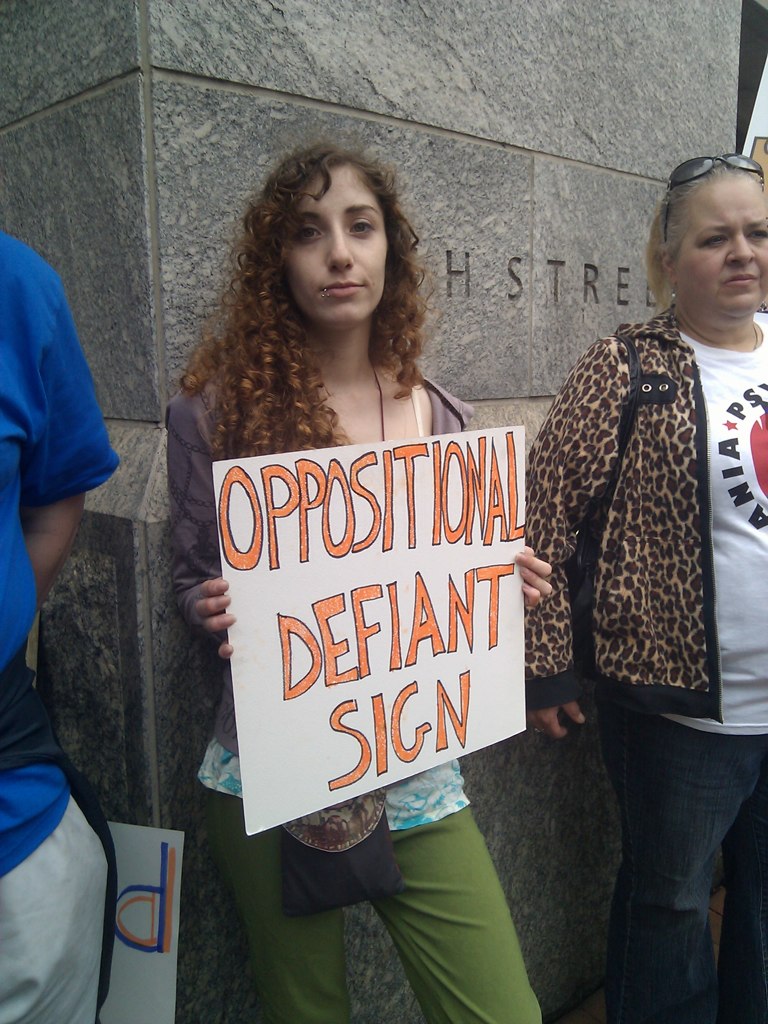
Last weekend I went down to Philly to Occupy the American Psychiatric Association’s yearly conference (#OccupyAPA). I joined the protests on Saturday, attended the APA on Sunday, and participated in the Radical Caucus, hosted by a group of psychiatrists attending the conference on Sunday night. The weekend was overflowing with information and emotion, and I when I finishing unpacking it all I might just have a dissertation (or, at least a fat chapter). This year’s APA was especially controversial since the DSM5 is scheduled to be published in 2013. Over a decade in production, and already delayed more than once, the DSM5 is, in a word, disastrous. Many psychiatrists, including the lead author of DMS-IV, have spoken out vehemently against both the processes and outcomes of DSM5. [CALL TO ACTION: The final round of public comments on DSM5 is now open, until June 15th, 2012.] The controversies around DSM-5 coupled with the energy of Occupy Wall Street, brought activists and the media out in force. The Philadelphia Inquirer ran a front page story on the protests (Former patients protest psychiatric convention), New Scientist covered the protests alongside their DSM coverage (Label jars not people), The Grey Lady covered and opined the DSM disaster (though not the protests), the BBC was filming, NPR was recording, and at least 2 documentary film crews (Cause of Death: Unknown), and a multitude of citizen journalists captured and reported on the actions. Saturday morning kicked off at Quaker Friend’s Center, with a powerful lineup of psychiatric survivors firing up the protesters with speeches, songs, and changes. Hundreds of protestors marched through the streets of Philly to the main convention center, many wearing psychopharmacomania t-shirts, and holding creatively maladjusted signs. The protest culminated in a label rip, staged outside of the main convention center (The Alchemist makes an appearance at 2:25, warning that psychiatry is a threat to itself and to others).: The Icarus Project represented, and we were thrilled to distribute physical copies of the eagerly anticipated Mindful Occupation to protestors, psychiatrists, and the media. The protests were a rush, but for me, the surprise thrill was gaining admission to the APA conference itself on Sunday. I attended a few talks and a poster session, irrefutably detailing and confirming my research and predictions. Then I hit paydirt. The vendor exhibition hall. HOLY FUCK. Highlights included: Future Blockbuster? Anti-psychotic action in 3D: A live psychiatrist, hired by AstraZeneka, delivering their powerpoint presentation (she only squirmed a little when I asked her if this was the drug that killed 3-year old Rebecca Reilly): and devices that only psychiatry can dream up uses for:             The Radical Caucus deserves a follow-up post of of its own. For starters, Brad Lewis’ brilliant breakdown seamlessly applies the hard-fought lessons of academic theory to the trenches of emotionally-loaded, real-life conflict. I have much more to say about this meeting, but first I need to track down who swallowed the comment that I posted in response to Brad’s post ;-). For now, I’ll leave you with a teaser for next year’s APA: “Pursuing Wellness Across the Lifespan” - I guess that covers kids, the elderly, vets, prisoners, pregnant women, and whoever else is ensnared by DSM-5’s diagnostic nets (including the appendix).

Towards the (educational) liberation of Palestine

“Education is the unfinished business of the revolution.” – Malak Zaalouk, Director of the Middle East Institute of Higher Education On my recent trip to Cairo I spent a week at the American University of Cairo participating in a week-long professional development conference for Palestinian educators. The conference included educators from five different Palestinian universities—many of whom were meeting for the first time in Cairo, despite working and living in the same city. The experience brought me back to last summer’s visit to Palestine, which I wrote about here. Interacting with my Palestinian colleagues in a (relatively) free country was stimulating and engaging, but I was haunted by thoughts of the oppressive conditions back home they would soon return to. The conference was organized around establishing centers for academic excellence with a focus on the role of new media in supporting teaching and learning. My Columbia cohorts and I presented a keynote on Media Analysis and Social Pedagogy (Frank’s intro, Part 1, Part 2), and throughout the week we discussed the interplay between technical and pedagogical innovation. The elephant in the room was the desperate condition of basic telecommunications infrastructure in Palestine**—it’s difficult building a curriculum around blogs or wikis when Palestinian connectivity in the West Bank is notoriously unreliableeven when it works, it’s slower than dial-up. The real tragedy is this digital divide is artificially manufactured and brutally enforced. Last summer I had a better connection over complementary wifi on an Israeli Egged bus than at the Palestinian University PTUK. When I visited Palestine I experienced the reality of the occupation first hand. I have written about how so many aspects of lifefuel, electricity, food, water, mobility, connectivity—**are regulated and controlled. As I learned last summer, the Israeli government forbids Palestinian telecom from developing 3G networks, prevents the Palestinian Authority from laying fiber between cities or connecting directly to the Mediterranean backbone, and businesses have a very difficult time importing routers. At the same time, the Palestinian activists who are trying to develop free municipal wifi in Ramallah are being thwarted, but not by the Israeli government. They are facing staunch opposition from Palestinian Telecom corporations. I have come to realize that the forces of the Occupation are on a collision course with Capitalism. There is simply too much damn money to be made on data plans and broadband. I also believe the Israeli government has read The Net Delusion, and are arrogant enough to think that they can control the situation by surveilling it. The IDF is agressively targeting media networks. Ultimately, I think they will allow this infrastructure to be built, making it all-but-inevitable that better ICT infrastructure is coming to Palestine. The questions are: What will the Palestinians do with it when it arrives? Can government surviellance contain the power redistribution that networked organizing tantalizingly promises? One of the key themes of our keynote at AUC was the importance of developing meaningful superstructures on top of technical infrastructure. At the conference we explored ways in which educational technology could be combined with teaching strategies to support peer-to-peer learning,  the flattening of traditional classroom hierarchies, the displacement of conventional teacher-student power relations, and authentic learning activities. Of course, educational technology alone won’t bring these outcomes. In many situations educational technology serves to perpetuate and reinforce the status quo. These cultures of practice could spread further and faster if the Palestinians learn from our blunders, and create Freedom in their Cloud.  As this infrastructure is imagined and built , there is an opportunity to leap-frog over our mistakes and develop an distributed network architecture, instead of the centralized architecture we have fallen for. Imagine a Palestinian mesh-based cloud, running peer-to-peer social networking services. Such a vision is not a pipe dream, in the age of the Freedom Box, Mondonet, and Diaspora. Short of fulfilling this dream entirely, it would be tremendous for Palestinian educators to develop their own, local, free/libre, educational software services instead of relying exclusively on free-of-charge centralized corporate solutions—like Google, Facebook, and Twitter—that render their students into products. Over the week of the conference, as I learned more about the situation at my colleague’s universities, I realized that few of the eleven universities in the West Bank would have the necessary resources to adequately support a new-media teaching and learning center. A well functioning center needs to staff systems administrators, programmers, designers, and video specialists to support the needs of the educational technologists, and in turn, the faculty and students. However, while no single university could support a center like this, I began to wonder how the Palestinian universities might coordinate and pool their resources. Establishing an single independent institution (likely a technical NGO) that services all of the Universities in Palestine, and perhaps even all of the schools in Palestine, might be the next obvious step in the educational capacity-building project that I have been involved with. I have encountered a similar model elsewhere. Groundwire (formerly One NorthWest) is a US non-profit that  was launched with the intention of exclusively servicing environmental organizations in the Pacific North-West. A similar kind of organization could be established in Palestine to service the educational sector with educational technology solutions. An institution like this could function of a hub, mediating interactions between different Palestinian Universities, sharing successes and failures, while continually building local institutional knowledge. Unlike the One Laptop Per Child project, this effort would be conceived from the start with training, support, and local engagement. It’s all about developing cultures of practice, and sustainable models for the deployment of infrastructure and superstructure. Will the immanent Palestinian networks lead to greater freedom?  Maybe. Perhaps with enough will, determination, and work. The iron is hot.

Last Call

Our Kickstarter campaign to fund the publication of Mindful Occupation: Rising up Without Burning Out is in full swing.  We have made our financial goal (w00t!), and all additional funds raised will go towards additional printings.  Thanks to everyone who contributed and helped spread the word.  Let’s finish this campaign with a bang. Please share widely: http://kck.st/yAmbya

A guide for participants in the occupy movement to strengthen our psychic, soulful and heartfelt contributions. #mutualaid #peersupport

Promissory Notes

My friend Dr. Rasmus Nielson sends me the best leads. Or, the worst ones, considering they are irresistible calls to action.  He sent me this one days before it was due, and I scrambled to pull-off this abstract over the weekend. Below is the call for papers, and my response. Now all I need to do is deliver on the promissory note I just wrote sometime in the next 3 months. Thanks Rasmus. ;-)    

Yelling it like it is

Adrianne Jeffries is a journalist on the tech beat who just published a pretty hot story in The Observer detailing how banks are mining social networking data to calculate credit scores. The article, As Banks Start Nosing Around Facebook and Twitter, the Wrong Friends Might Just Sink Your Credit, describes how startups like Credit Karma and Lenddo are convinced that deadbeats flock together, and are harvesting our data-exhaust and feeding it into FICO scores. Having friends who default on their loans may soon negatively impact your credit worthiness. Following standard journalistic convention, Jeffries contacted privacy experts for their take on the issue. She reached out to Eben Moglen, a Columbia Law professor, social justice advocate, and director of the Software Freedom Law Center. Although Moglen is a vocal defender of personal privacy and liberty, he refused to provide her with the ease-to digest soundbite she came looking for.  Instead, he takes Jeffreies to task for her hypocrisy, accuses her of contributing to the problem she claims she wants to fix, and for failing to fulfill her responsibilities as a professional journalist. Jeffries is stunned by this reaction, and published the complete transcript of her interview with Moglen, even though she did not use any quotes from him in her story. As I read the transcript of Moglen eviscerating professional journalism, I initially cringed in empathy for the journalist on the receiving end of Moglen’s brilliant tirade. Why would Moglen treat a journalist this way instead of giving her the harmless pull-quote she came looking for? The easy answer is that Moglen had a bad day, is a fool, or a jerk. However, in my experience, Moglen’s communications are usually purposeful and deliberate (although ’tender’ is not the first adjective I would associate with him :-) ). I think it is worth giving him the benefit of the doubt, and speculating on possible deliberate motivations for this response. Was Moglen trying out a new media strategy? Was this a calculated publicity stunt? A performative critique of journalistic conventions? How effective was it, for both Jefferie’s career and Moglen’s message? I think this incident deserves a close study, as it raises and reveals many important meta-questions about the shifting roles of journalism and activism, in addition to exposing the sad disarray of the nascent privacy movement. On the substantive issues covered in the story, Jeffries did a pretty good job researching the specifics and the underlying issues, and the piece is smart, witty, and provocative – with decent odds of capturing the attention of a few passing of eyeballs. The story conforms to the standards of the genre, and she quotes CEOs, venture capitalists, and a activist/public intellectual, Doug Rushkoff. The trouble is that over the years there have been countless stories detailing the pressing dangers of corporate surveillance, and the public does not seem to care (many have been covered on this blog, including a story about medication compliance factoring into FICO scores). After decades of trying to educate and advocate journalists and the public about these issues, I can easily imagine Moglen losing patience for the ineffectual conventions of mainstream journalism. U.S. journalists continue to water down their responsibility for truth-telling, speaking truth to power, and taking responsibility for being agents of change. The stilted genre of fair-and-balanced soundbites is even more absurd in the digital age when stories can be supported by providing long-form context and elaboration. Instead of pandering to the decontextualized soundbite, Moglen responded in a manner that demands all-or-nothing coverage. Similar to Emily Bell’s analysis of #occupywallstreet’s success, where the protester’s refusal to conform to soundbites and slogans helped them gain mainstream media cycles, Moglen’s response to Jeffries rejected the soundbite and resulted in her publication of their complete interview. For all we know Moglen has responded this way to other journalists, and this is just the first time the interview has been published. But, I think that activists should consider this response and weigh its relative benefits. Would the privacy movement have gained more any more credibility if Moglen had produced an easily digestible soundbite?  Perhaps, although privacy has proven itself to be such a complex issue that another round of he-said/she-said warnings/reassurances are unlikely to truly educate or persuade. I think the real challenge posed my Moglen’s response speaks to journalism’s failure to embrace the possibilities of hypertext, and grow beyond the conventions that dead-tree publishing imposed.  Why don’t stories regularly include links to the expert  interviews, in their entirety? Or, if the interview is sloppy or inaccurate, links to the experts relevant work. Moglen has spoken on numerous occasions warning about the dangers of corporate surveillance, an Jeffries easily could have quoted Molgen in her article, and referred readers to talks like Freedom in the Cloud or Navigating the Age of Democratized Media. Her interviews with him should have started with these talks as a baseline, not require him to rehash privacy 101 for the umpteenth time. The comments to the interview are also rich with perspectives on the responsibilities of journalists, though not many commentators engage in the critique of journalism that Moglen advances.  Jeffries herself often engages, defending her response on the grounds that “The reporter’s responsibility is to report the truth. I’m not an activist or an advocate”, and branding Moglen a “digital vegan”. The polar extremes portrayed in this exchange indicate just how desperately the privacy movement needs to develop more nuanced models of strategic agency, as “going off the grid”, or giving up and “promiscuously broadcasting” are the only choices most people think are available to them. My research on the The End of Forgetting outlines alternatives that expand our range of choices and might help advance the terms of this debate beyond - unplugging vs. sticking our heads in the sand.