Supervillains, Systemic Corruption, and the Children
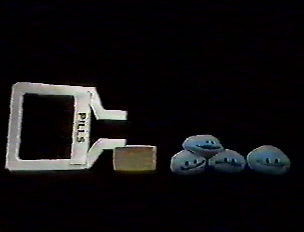 I’ve been drafting this post on Frontline’s provocative investigative piece The Medicated Child since it aired, and the longer I put off finishing this the more connections pile up.
Since this has aired, we have learned that anti-depressants are no more effective than placebos (although more expensive placebos bring more relief than the generics ;-), there really is prozac in the drinking water, and the $15.9 billion ‘07 market for anti-psychotics is expected to grow to $17.8 billion by ‘11.
But the Frontline doc is a must watch for lots of reasons. The piece profiles three children who have been mis-diagnosed as bipolar. While the plausibility of a bipolar diagnosis in children is still being hotly debated, diagnoses are up 4000% between ‘98-‘03. In this piece we meet the lazy, obese, depressed parents who impose their sick worlds on their unsuspecting children who show glimmers of imagination and life, even as they are being chemically swaddled.
In one scene we watch a mother feeding her son corndogs, gatorade, goldfish, and cookies, and wondering why his behaviour becomes hyperactive sometimes. In another, a young girl is setup and goaded by her psychiatrist to share her violent fantasies, which she likely learned from here father, an Iraqi war veteran. In another, a mother is told by the psychiatrist that drugs are the only therapeutic option, and she leaves the office with an additional prescription for Xanax for her son’s first day-of-school anxiety. And the images of the poor boy who developed a neck tick on Risperidol were so disturbing I almost couldn’t bring myself to write this post.
The extent of the systemic corruption that these profiles reveal is mind boggling. Not only must we be concerned with conspiracies within the pharmaceutical industry, but now Big Food is getting in on the action. So, get out your tin-foil hat and lets start constructing a few narratives to help our feeble minds comprehend this complex, emergent phenomenon. The high-fructose corn syrup in our nations food supply, is modifying our children’s behaviour so they are diagnosed with a condition that is treated with a drug which makes them insatiably hungry! These drugs also cause obesity and diabetes, but that’s OK, because Big Pharma is investing heavily in diabetes treatments as well.
I don’t actually believe that the world has been overrun by super-villains. But these narratives do beg the question (which I have written about here before) - are conspiracy theories ever a useful heuristic for teasing out the emergent correlations from complex systems. Are these causal? Who would you charge with the crime? With corruption this systemic, the responsibility is distributed, accountability nil, and momentum virtually unstoppable.
An entirely alternative perspective which skirts the ideologically loaded value judgement of designating these behaviors “illnesses” is suggested by Harvard psychologist Dan Gilbert, author of Stumbling on Happiness
(watch his 18 minute TED talk here). Perhaps the conditions that the pharma funded psychiatric establishment brands as illnesses are actually the normal responses of our psychological immune systems. The world is currently a very traumatic environment, and I think we need to seriously reconsider ways we can, in the words of The Icarus Project “inspire hope and transformation in an oppressive and damaged world.”
I recently learned about ridiculously simple casual game called mind habbits, which seems rather superficial at first blush, but indicates just how malleable and programmable the 3lb lump of neurons on our shoulders can be. The researches behind the game began with the question “Can we purposefully design a game that helps people feel good about themselves?” Their initial amazing results suggest alternate approaches to scaling up talking therapy, other than miracle pills.
So, learn more about psych-pharmacological harm reduction, ignore those frowns, and think good thoughts - positivity takes practice.
I’ve been drafting this post on Frontline’s provocative investigative piece The Medicated Child since it aired, and the longer I put off finishing this the more connections pile up.
Since this has aired, we have learned that anti-depressants are no more effective than placebos (although more expensive placebos bring more relief than the generics ;-), there really is prozac in the drinking water, and the $15.9 billion ‘07 market for anti-psychotics is expected to grow to $17.8 billion by ‘11.
But the Frontline doc is a must watch for lots of reasons. The piece profiles three children who have been mis-diagnosed as bipolar. While the plausibility of a bipolar diagnosis in children is still being hotly debated, diagnoses are up 4000% between ‘98-‘03. In this piece we meet the lazy, obese, depressed parents who impose their sick worlds on their unsuspecting children who show glimmers of imagination and life, even as they are being chemically swaddled.
In one scene we watch a mother feeding her son corndogs, gatorade, goldfish, and cookies, and wondering why his behaviour becomes hyperactive sometimes. In another, a young girl is setup and goaded by her psychiatrist to share her violent fantasies, which she likely learned from here father, an Iraqi war veteran. In another, a mother is told by the psychiatrist that drugs are the only therapeutic option, and she leaves the office with an additional prescription for Xanax for her son’s first day-of-school anxiety. And the images of the poor boy who developed a neck tick on Risperidol were so disturbing I almost couldn’t bring myself to write this post.
The extent of the systemic corruption that these profiles reveal is mind boggling. Not only must we be concerned with conspiracies within the pharmaceutical industry, but now Big Food is getting in on the action. So, get out your tin-foil hat and lets start constructing a few narratives to help our feeble minds comprehend this complex, emergent phenomenon. The high-fructose corn syrup in our nations food supply, is modifying our children’s behaviour so they are diagnosed with a condition that is treated with a drug which makes them insatiably hungry! These drugs also cause obesity and diabetes, but that’s OK, because Big Pharma is investing heavily in diabetes treatments as well.
I don’t actually believe that the world has been overrun by super-villains. But these narratives do beg the question (which I have written about here before) - are conspiracy theories ever a useful heuristic for teasing out the emergent correlations from complex systems. Are these causal? Who would you charge with the crime? With corruption this systemic, the responsibility is distributed, accountability nil, and momentum virtually unstoppable.
An entirely alternative perspective which skirts the ideologically loaded value judgement of designating these behaviors “illnesses” is suggested by Harvard psychologist Dan Gilbert, author of Stumbling on Happiness
(watch his 18 minute TED talk here). Perhaps the conditions that the pharma funded psychiatric establishment brands as illnesses are actually the normal responses of our psychological immune systems. The world is currently a very traumatic environment, and I think we need to seriously reconsider ways we can, in the words of The Icarus Project “inspire hope and transformation in an oppressive and damaged world.”
I recently learned about ridiculously simple casual game called mind habbits, which seems rather superficial at first blush, but indicates just how malleable and programmable the 3lb lump of neurons on our shoulders can be. The researches behind the game began with the question “Can we purposefully design a game that helps people feel good about themselves?” Their initial amazing results suggest alternate approaches to scaling up talking therapy, other than miracle pills.
So, learn more about psych-pharmacological harm reduction, ignore those frowns, and think good thoughts - positivity takes practice.
 A few months ago the giant pharmaceutical company Pfiezer
  The state of health coverage in the U.S. is absolutely appalling. Consider the recent incident involving
  The Alchemist in me feels compelled to respond to the excellent documentary that aired on PBS the other week entitled