
Alchemy

Coding Mental

Coding Mental

Last weekend I traveled to the lovely city of New Haven for a mental health hackathon hosted by Hack Mental Health Care. I was very pleasantly surprised by the experience, which proved interesting, fun and invigorating (with a few healthy dashes of disappointment and horror). I was mostly expecting undergraduate participants with ideas for mood tracking apps, but the event drew over 200 people, and was quite diverse.  In addition to programmers, designers, product folks and business people showed up. Genders were closely balanced and minorities were represented. Crucially, over 30% of the participants had clinical or lived experience. The event also featured a therapy dog, yoga sessions and a guided mediation. Peer voices and ethics were featured in some of the talks, although due to time constraints, project design was complete and implementation was already underway. And, kudos on the Code of Conduct… next year I would also love to see consent-based photography and sponsored childcare. The organizers worked hard to prompt the participants in advance with these challenges:
Digital Communications in Theory and Practice

My doctoral program has an innovative alternative to traditional comprehensive exams.  Instead of reading 80+ books and spending a few days filling blue-books with essays, we can choose to 1. Publish a paper to a peer-reviewed academic journal, 2. Present a paper at an academic conference, and 3. Develop a syllabus. I just defended my comps and am now officially ABD (wahoo!).  I hope to trade in those letters for a different 3, but in the meantime, here is the work I submitted to complete my MPhil:

Dispatches from Cairo: The Raw Data

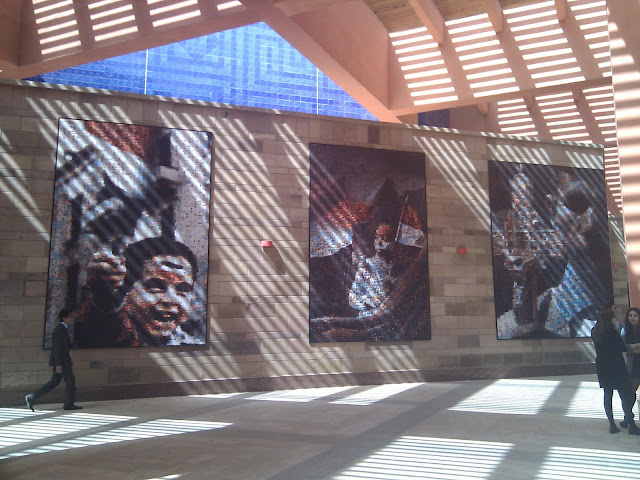
I just returned from a whirlwind eduventure at the American University of Cairo (AUC). My trip included a detour through Ancient Egypt and a 36-hour decompression-stop in the capital of the Ottoman Empire, but our main purpose was to participate in a week-long professional development conference for Palestinian Educators: Challenges and Practices of Pedagogy and Instructional Technology: Professional Development Exchange for Palestinian Educators The AUC conference was a continuation of the project that brought me to Palestine this past summer, and was creatively imagined and improvised by my mentor/advisor/boss, Frank Moretti. I am still processing and synthesizing my experiences, and I plan for this to be the first in a series of posts detailing what I learned on this trip. For now, I will just capture the raw materials and highlights. For starters, the conference was covered by both the AUC News and CCNMTL’s blog. AUC’s Center for Learning and Teaching hosted an incredible conference - the talks were provocative and well balanced, and the food was fabulous! They even captured the entire event and posted the video and slides here. Our hosts were hospitable and generous beyond words, and we are forever grateful to Aziza Ellozy and her staff for making us feel at home. Our plenary keynote, featuring my colleague, Mark Phillipson, and my doctoral cohorts, Travis Mushett, Madiha Tahir, and Charles Berret is viewable here: #celebrity #violence #resistance: Media Analysis and Social Pedagogies

Creep-Ola

classic_jukebox.jpgLast Saturday night I was at a bar downtown for a friend’s birthday. I decided to pick out a few songs (no, I didn’t use the obnoxious “play now” feature). After selecting my songs, the Rock-Ola internet jukebox asked me if I wanted to take a quiz. It asked me for my gender and age bracket, and then asked me what issue I thought was the most important one in the 2008 presidential elections (I think the choices were the environment, ending the Iraq war, health care, social security, & What Election?). I was mildly surprised that this machine was collecting this kind of data, until I realized that they must be attempting to correlate musical taste with political leanings (they knew the songs I chose). This could come in quite handy when trying to directly target political advertising, or even redistricting. I couldn’t easily figure out who owns Rock-Ola, or where this information is going, but I hope to figure it out soon. The “right” playlist might one day qualify you for suspicious behavior?

Promiscuous Laptops

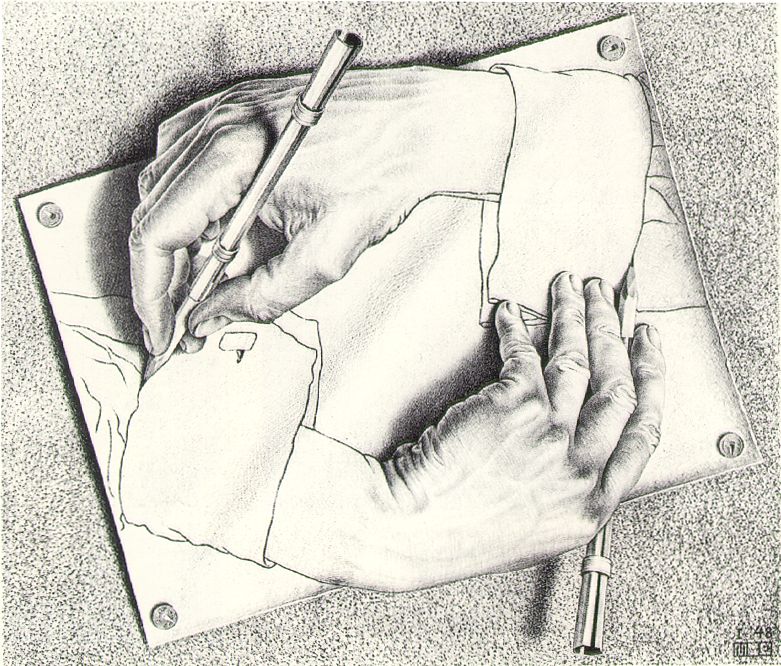
escher_hands.jpgSo, I published another post on OLPCNews today: Sharing and Not-Sharing Alike User Generated Content I am trying to figure out the best way to aggregate my own work, and am a little stumped. On the one hand, I don’t want to duplicate content, but on the other, I am skeptical of the long term prospects of some of the sites I have contributed to. Guess that’s what happens when you don’t own your own data. Anyway, I am starting to at least keep a running list of links to this kind of stuff. I know these aren’t all traditional “publications”, but it is important that people start regarding some of these kinds of contributions along these lines.

Can you keep a dark secret?

caduceus.jpgThe Alchemist in me feels compelled to respond to the excellent documentary that aired on PBS the other week entitled Newton’s Dark Secret. The film profiled Sir Issac Newton’s fascination with the ancient art/science/craft of Alchemy. Many of the experts interviewed regarded Newton’s Alchemical experiments to be shameful, perhaps reflecting more on our modern epistemic prejudices than on Newton. Contemporary experts seem threatened by the prospect than anybody in historical times understood things about the world that we don’t. Beyond the shame of taking Alchemy seriously, they also considered Newton’s alchemy to be his greatest failure. Failure?!? During the period Newton was practicing alchemy he wrote the Principica Mathematica, and also catapulted his way into the power elite - he became knighted, was appointed the head of the Royal Society, and earned power, prestige and wealth beyond his wildest dreams. To this day one of the most respected chairs in physics still bears his name. From this perspective, his alchemical pursuits seem quite successful. Smashingly successful if you consider this blogs tagline “Aurum nostrum non est aurum vulgi” - Our gold is not ordinary gold. The Alchemists understood metaphor, and it was essential to their theory and practice. Why do most modern thinkers insist upon interpreting the craft so literally? My girlfriend shared a Bahá’í quote on a related subject.