Activism

Mindful Occupation: Part II
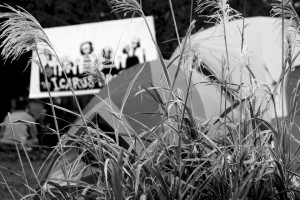
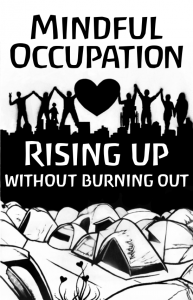
In a previous post, I described my initial involvement with #occupymentalhealth and birth of our forthcoming zine Mindful Occupation: Rising Up Without Burning Out. I alluded to the heated debates that emerged around our work on this  zine and my direct participation in the local NYC ‘Support’ working group. It was through these deliberative processes and exchanges that I rediscovered the promise Occupy’s discursive ‘public space’. As a researcher of the radical mental health movement, I recognized a unique opportunity in Liberty Park to explore the rhetoric around mental health, in context. I was hopeful that the activists involved in supporting the health and safety of the #OWS community would be critical of mainstream corporate medical models, and would be very receptive to alternative perspectives and language. The discussions that ensued were provocative and transformative, and  the experiences have helped me crystallize future directions in my research. As the occupiers settled into Liberty Park the task of self-governance grew in scale, with complexity that rivaled running a small town. Dozens of working groups sprung up to meet the challenge of non-hierarchical, self-governance – many committed to modeling the kind of society they dreamt of living in, rather than replicating existing broken forms. The working groups took responsibility for the protester’s basic human needs - food, shelter, sanitation, safety, spirituality - as well as organizing, maintaining, and sustaining the occupation, over the short/medium/long term. A number of working groups took up the challenge of maintaining the heath and well-being of the protesters, and in New York City these groups  organized themselves into the Safety Cluster. The Safety Cluster included people committed to mediation, non-violent communication, security and deescalation, as well as people committed to anti-oppression and reducing sexual harassment (the Safer Spaces working group). Additionally, there was a working group calling itself ‘Support’ that had been operating as a subgroup of the Medic working group. The Support group was comprised primarily of mental health professionals - social workers, chaplains, psychiatrists, and a few non-traditional emotional support practitioners. Together, the safety cluster developed protocols for handling interpersonal conflicts in the park, and organized nightly “community watch” shifts, where members of the community organized to support protesters, and identify and defuse conflict. While some of my fellow collaborators on the Mindful Occupation zine felt more comfortable working with the Safer Spaces working group, I realized that the best education  happens outside of our comfort zones. Tension and conflict are inherent properties of activism, as activists attempt to question and dislodge accepted norms. Initially, I thought that this particular group of mental health professionals would be very receptive to questioning psychiatry’s mainstream medical models. These individuals were volunteering their time and energy at #OWS.  As it turned out, although I found many sympathizers and allies among the Support group, I was stunned by the systemic efforts to silence and marginalize voices from outside the mainstream. While many of the Support volunteers were fully engaged in critiquing social and economic injustice in the world at large, few seemed prepared to apply a self-reflective critique of their entrenched beliefs and professional norms. Through countless interminable meetings and mailings, I witnessed efforts to exclude the voices of those without formal expertise and training. Voices outside of the mainstream had difficulty getting their issues on the meeting agenda and were actively excluded from some events and conversations. I remained committed to working with the Support group, although I did not always feel welcome. Within the Support group, proposals were raised for the “community watch” volunteers to wear identifying badges which included their profession (e.g. social worker, chaplain, psychiatrist) and license number, and for an active recruitment of more psychiatrists to patrol Liberty park. Some of the medics insisted on “clearing” all of their patients medically, before turning them over to social and emotional support. Sounds reasonable until you begin to question what’s medical, and more importantly, what’s not? A head trauma might be medical, but what about a chemical imbalance? If all conditions are ‘medical’, then all authority around health and well being has been effectively ceded to a narrow range of medical specialists. In subtler ways, i believe that some of the work in this group contributed to an atmosphere of fear and control in the park. Support’s role-plays often focused on the most violent scenarios, invoking the stereotype of the knife-wielding psychotic, and priming those on community watch to bring this anxiety with them throughout their encounters in the park. While the violence and sexual harassment in the park were unfortunately very real, some of the efforts to prevent these behaviors may have exacerbated them. I witnessed that the providers of mental health services, with rare exceptions, found it incredibly difficult to listen to the recipients of their services. To ask and solicit opinions and stories, and incorporate their experience and judgment into the congress of their decision making. I developed fresh insights into radical mental health through these encounters, that opened my eyes to much of what I had grown to take for granted. I learned that radical mental health has less to do with any particular dogmatic position – around hospitalization, medication, coercion, or diagnoses – and everything to do with authority and knowledge production. I learned that it is hard to find a proposition more radical than the disability rights mantra - Nothing about us without us! #OccupyAuthority
Mindful Occupation: Part I

On September 17th 2011, sleeping giants stirred as the perception of social and and economic injustice in the US finally crossed a critical threshold. And the people spoke. During the first week or two of the Occupation of Zuccotti park I was following along closely, but not yet fully engaged or plugged in.  The movement erupted at the beginning of the semester, just as a good friend and I were embarking on a study of digital activism and collective action in the 21st Century. #Occupy quickly became both a primary source and case study as we scrambled to track the tools and tactics that were rapidly deployed. Within days the movement launched multiple web platforms, was taking online donations, was  broadcasting a 24-hour streaming video, and started publishing a broadsheet newspaper. Protesters were sharing and exchanging citizen-generated-multimedia-speech using services distributed across the internet, and organizing themselves and their expressions around shared tags. The mainstream media disgraced itself as one of the first (genuine) networked-grassroots movement redefined activism by breeding wikis and folksonomies, with  Blue Stockings and Indymedia. Public Space: The Final Frontier The protester’s literal occupation of space quickly went metaphorical, as everything from yoga to religion were soon “occupied.” At one point I came across a call to #occupypsychiatry, although no one seemed to know exactly what that meant. By that point many activist groups had descended on the park, and were tabling, distributing pamphlets, and competing to get their messages out while the media’s spotlight was shining brightly in their vicinity. In the early days of the occupation, while the weather was still mild, Zuccotti was a cross between a party and a seminar. Epic discussions around substantive issues sprung from every flagstone, and the best of Zuccotti suggested what a university could and should be. The occupiers rediscovered public space, and honest-to-goodness publics were formed. It occurred to me that,  far more important than any message that #occupy might broadcast were the internal dialogues and communications between and among activists. Especially in these early, fragile stages,  teach-ins and skill shares helped forge the alliances and friendships that would propel the movement through the winter and beyond. One of the nights in the park I found myself in a conversation with someone from the sanitation working group, and was struck by the humility of someone focusing their energy on sustaining the community instead of clamoring to be heard by the rest of the world. Through some of the mad pride networks I am connected to, I    started hearing stories about protester burnout and emotional crisis at the occupations. Frayed Edges Given the exacerbating conditions - lack of sleep, poor nutrition, exposure to the elements, and don’t forget the police brutality - it is unsurprising there were many frayed edges amongst the protesters.  Although the movement had scorned resolving conflicts by turning to the criminal justice system, it had not formed an analogous consensus about resolving emotional crises by turning to the psychiatric system. Around the country reports of forced hospitalization (and  medication) emerged, and people kept reaching out for materials that offered alternative perspectives towards handling emotional trauma and navigating crises. Over the summer I had been been working towards setting up on-demand  publishing solutions for some of The Icarus Project’s publications. I had spent months trying to track down original indesign files, fonts, and assets, in order to recreate these publications according to the specifications the ondemand publishers mandated. In early October I attended the provocative Mobility Shifts conferences on digital learning, and attended a workshop on the Booki  software that explained the practice of book sprints. Booki is essentially a wiki platform that was designed to support collaborative book authoring.  The application supports chapters, tables of contents, and pagination, and pumps-out ebooks and print-ready pdfs. [In the course of this project I have learned a lot about digital publishing and the future of open zines, but I’ll save those thoughts for another post.] Another good friend of mine was also in the midst of working on an #Occupy  pamphlet, The 99%’s Guide to the Current Clusterf#*k, and that night something clicked. I imagined working together with radical mental health activist to remix a zine (aka pamphlet) that would present alternative perspectives on activism and mental health.  I got really excited about a concrete way to contribute to the occupation. I bounced the idea off of some friends and we were all really jazzed about the project. That night, Mindful Occupation: Rising up Without Burning Out was conceived. [to be continued]

That way madness lies

Bossewitch, J. (2010). Pediatric Bipolar and the Media of Madness. Ethical Human Psychology and Psychiatry, 12(3), 254-268. doi: 10.1891/1559-4343.12.3.254 I am finally published in a peer-reviewed journal! Ethical Human Psychology and Psychiatry (available for purchase here - but my cut is exactly 0%). I wasn’t expecting much, and it’s mildly anti-climactic, but I have heard from a few people I never would have communicated with otherwise, and worked really hard to polish up this paper. Anyway, now its traditionally citable, which still means something (for the next few years, at least). This paper is at least 2 years in the making.  It began when Rasmus Nielsen forwarded me a call for papers about drugs as a form of media for NCA ‘09, and I participated in a panel  organised by Robert MacDougall (my slides). Around the same time as NCA, I also attended ICSPP and had the pleasure of meeting James Tucker and Peter Breggin. This meeting eventually led to my submission to EHPP - a journal that typically publishes articles by and for psychologists, psychiatrists, and social workers.  I was thrilled to help bring a dash of media and communications theory/research to that audience. Special thanks to Annie Robinson, Sascha Scatter, Bonfire Madigan, Brad Lewis, Biella Coleman, Philip Dawdy, Nicholas Mirzoeff, Julia Sonnevend, Ben Peters, and the Icarus Project for ideas, inspiration, and edits. I have also reworked the main arguments in this essay into a chapter in the upcoming: Drugs & Media: New Perspectives on Communication, Consumption and Consciousness (edited by Robert C. MacDougall). I even worked on a McLuhanesque Tetrad around Prodromal diganoses (a.k.a. Psychotic Risk Syndrome). Unfortunately, I was unable to convince Springer to go open access with my paper, but I tried and was able to deposit an open-access pre-print in the Columbia institutional repository, and also have a pre-print available here. If enough people make noise about open access, I hope the editors and publishers will eventually start to get the idea. The issues raised in this paper are beginning to percolate into the mainstream. Last month Harpers published a (flawed) long  piece on predictive diagnoses: Which way madness lies: Can psychosis be prevented? Wired just ran a great piece on the backlash against DSM5, especially Psychotic Risk Syndrome, by one of the DSM IV contributors: Inside the Battle to Define Mental Illness. A good friend of mine from the Journalism school also just produced an investigative short-documentary on antipsychotics use among foster home children that just aired this weekend on PBS: The Watch List: The medication of foster children. Finally, Crooked Beauty is coming to town next month for the 3rd  annual Reelabilities Film Fest - c’mon out to the launch party or one of the screenings: Thursday 02/03/2011 1:00pm JCC of Mid-Westchester Friday 02/04/2011 1:30pm Bellevue Hospital Center Friday 02/04/2011 6:00pm New York City College of Technology Saturday 02/05/2011 7:00pm The JCC in Manhattan Monday 02/07/2011 6:30pm Solomon R. Guggenheim Museum Tuesday 02/08/2011 7:00pm JCC of Staten Island It’s going to be a great year.

Memory Leaks

12-01-10wikiFD WWIII - A TV guerrilla war with no division between civil and military fronts.

  • Marshall McLuhan *

As you enjoy the Wikileaks reality show circus, please remember to support to the Bradley Manning defense fund. This week’s drama has been riveting and surreal. For years I have been describing the era we are embarking on as the End of Forgetting, and imagining the repercussions of this transformation on the fabric of social life. But my relationship with this saga goes well beyond the theoretical and is much more personal. In December 2006*—post-Diebold memos and, synchronously, within weeks prior to Wikileaks’ launchI began researching the ZyprexaKills campaign (slides), a whistleblowing action implicating the drug company Eli Lilly which soon became the EFF’s first wiki case. That case was a significant milestone in life. The experience was a crash course in First Amendment Law, exposed me to the hybrid dynamics of new and traditional media, prepared me for epocal epistemic shifts, and confirmed the power of my information flow models.  On the ZyprexaKills case no one wanted to be forgotten more than the anonymous John Doe, and Eli Lilly undoubtedly wishes the world would forget that they marketed Zyprexa off-label to children and the elderly, even though their executives knew Zyprexa causes diabetes. Which brings us to today. I am amazed at the wide speculation across the mainstream press around Assange’s motives when his own writings are widely available. Apparently, we are still transitioning to the age of  Scientific Journalism Assange dreams about. Bloggers and tweeters have finally helped  mainstream news outlets pick up the story–as Todd Gitlin writes, we should “Credit him with a theory”. The potential fallout of the leaks goes well beyond the substantive contents of any particular document. To understand the potential impact of this communication its important to consider the different types of messages conveyed to various receivers. Some commentators, like Umberto Eco, have taken up the message of the medium itselfWhat do leaks of this type communicate? Beyond any specific cable or document, what messages do the leaks send, and to whom? I don’t think the Wikileaks collaborators have much faith in the US political processes.  Like the Tea Party, I imagine they aim to usurp the agenda and change the language of the conversation itself.  I doubt they are overly preoccupied with any particular exchange. Some have alleged a preventative coup against Hillary, but I think we need to read this in a more global context. Beyond the narrow lens of partisan, or even geo-politics, there cultural and ideological battles are raging. Wikileaks’ actions model and embody the maturing, politically conscious, hacker ethic—*and their actions alter people’s conception of the real and the possible. Their actions are floating and actualizing crucial thought experiments just in time for the showdowns around net neutrality, kill switches, and the future of journalism and the Internet. All the more reason why They have to try to make an example here. Is the US Govt already caught in a chinese finger trap? Whatever the outcome, at least its different. Last week’s media-policy talks at the Columbia J-school (Wu/John and Copps) articulated the historic challenges we face at this critical juncture in order to avoid the fate of all previous media revolutions. At this point I’m willing to try just about anything that might snap us out of the repetition compulsion of the 20th century. But, I like backgammon better than chess ;-) BTW - I love that my fact that my idea for this post’s image had already been drawn, and was discoverable within 10 second search. Long live the open, neutral, unkill-switchable,  World Wide Web! Ongoing collection of my favorite Wikileaks coverage here.

Pick a world... any world...

abandon_despairLast week I attended the second half of the US Social Forum - not exactly a conference, but more of a convergence or a process, where 20,000 people gathered in Detroit to build coalitions, alliances, and movements. The World Social Forum began as a response to the World Economic Forum - Why should the power elite be the only ones planning humanity’s future?!? The USSF web site and the People’s Media Center (made possible by some righteous radical techies, the Design Action Collective, riseup.net, and May First/People Link) should give you a flavor of what the event was all about. But, be aware that the streaming video and social media barely scratches the surface of the experience. The forum is organized around 2-hour long workshops, and over 100, 4-hour long People’s Movement Assembly’s.  The sessions were in depth and quite intensive. The format is designed to encourage small group interactions and for people to connect and get to know each other. The assemblies were geared around crafting resolutions and actions - I attended parts of the transformative justice and healing PMA, and it was really well facilitated. During the closing ceremony the assemblies synthesized their resolutions, scheduled actions, and asked for commitments of solidarity around their issues.  I don’t think that this forum represents the Left’s answer to the Tea Party, but I did gain a much better appreciation for the scope of issues comprising The Agenda(s). And, considering that anyone passionate about an issue was welcome to participate, the assemblies offered an authentic glimpse into everyone’s priorities. It felt like a determined effort to take things into account, and put them in order. Here are some of the resolutions that emerged from the Progressive Techie Congress Principles and the Transformative Justice and Healing assembly. Collective Liberation and Radical Mental Health The main draw for me to the conference were the Icarus Project workshops and the convergence of Icaristas, in person. We took over and transformed a house in a Detroit suburb, and mad dreaming and plotting ensued. The place was quickly transformed into a safe space for people to brilliantly  navigate the madness of the forums, and it was quite amazing to spend quality time, face to face, with friends and allies. I gravitated to the heath tracks, taking up issue of self-care, mutual aid, and wellness.  I also caught some great music, ate some amazing homemade food (and not bombs), visited some incredible collective living spaces, and was pretty inspired by everyone who cared and showed up. This Icarus workshop I attended (there was another that I missed, plus a screening of Crooked Beauty) was eagerly anticipated and well attended - the participants were open and receptive to the core messages, and there was a palpable desire to embrace these issues locally. The session leaders shared their personal stories and modeled peer-support as we broke into groups (photos, highlight reel to be posted shortly). People shared details of their individual and organizational neuro-diversity and how dysfunctional feedback loops undermine many organizing efforts. The relationship between personal and collective liberation emerged from the workshop and will travel far beyond Detroit’s (shrinking) city limits. Detroit is pretty beat up - we stayed two blocks away from a refinery that belched flames into the night sky - but there are some wonderful people and projects that were really cool to experience. It’s also the only city I have ever been to that has a monument to organized labor. If I can’t dance, I don’t want to be part of your revolution - Emma Goldman, Radical Feminist
Mad Men, Women, and Children

This season Fox premiered a new television series called Mental (this post has nothing to do w/ AMC’s fabulous Mad Men):

a medical mystery drama featuring Dr. Jack Gallagher, a radically unorthodox psychiatrist who becomes Director of Mental Health Services at a Los Angeles hospital where he takes on patients battling unknown, misunderstood and often misdiagnosed psychiatric conditions. Dr. Gallagher delves inside their minds to gain a true understanding of who his patients are, allowing him to uncover what might be the key to their long-term recovery.

The Remover of Obstacles

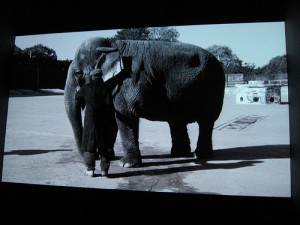
Javier TellezOn last weekend’s visit to the Shivananda ashram I chanted away life’s worries while imagining an elephant effortlessly clearing obstacles from its path. Om gam ganapataye namaha! [*] The elephants returned this weekend on my visit to Boston. I spent a wonderful afternoon biking around the city, inhaling the streets, waterways, and parks and internalizing its expanse.  I visited the ICA, a great new museum designed by the same crew that just finished New York’s great new High Line park.  The main attraction at the ICA was the Shepard Fairey exhibit, but I was much more drawn to the “Acting Out: Social Experiments in Video”

Pathological Soothsayers

halloween-straight-jacketA recent post at Furious Seasons on the spooky future of psychiatry prompted me to dig a little deeper into the origins of prodromal diagnoses. A prodrome is “a symptom or group of symptoms that appears shortly before an acute attack of illness. The term comes from a Greek word that means “running ahead of."” A spooky emerging trend in clinical psychiatry is the appropriation of this concept under the paradigm of “early intervention in psychosis” for “at risk” patients. Psychiatrists are preventively diagnosing mental illness and treating people prior to them exhibiting any behavioral symptoms.

Disorganized thinking

poison_pillAs I’ve claimed previously, Big Pharma’s crimes and cover-ups will soon make Big Tobacco’s scandals look like jaywalking. AstraZeneca’s Seroquel trial began last week, and the industry’s criminal antics surrounding anti-psychotics are coming into better focus.  Documents introduced as evidence are confirming that, like Eli Lilly with Zyprexa(Kills), AstraZeneca knowingly downplayed the fatal side-effects of their toxic pills. They covered up the fact that Seroquel causes diabetes and massive weight gain, and have been gaming the drug approval process to expand the diagnostic reach of their drugs. In a move which hits new lows, even for Pharma, documents introduced into evidence reveal sex scandals and conflicts of interest in the approval of Seroquel for treating depression, the burying of unfavourable studies, and deeper insight into the pathological cognitive dissonance underlying Pharma’s logic. Get ’em while they’re hot! 43_Exhibit 15.pdf

Domestically Spooked

This Fall I am taking a great class on Transparency & Democracy (syllabus) taught by Prof. Michael Schudson. We are talking about the history of the Freedom of Information Act (FOIA), and trying to puzzle out what sorts of cultural forces accounted for an indisputable rise in transparency and openness in American society. We are taking a fascinating journey through the history of social movements in the 60s and 70s and reading about the Free Speech movement, SDS, the feminist movement, the gay liberation movement, and tabloid talk shows. This summer I had also heard a great presentation by Phil Lapsley at the Last HOPE conference on The Hackers View of FOIA. I learned a great deal of practical information about how to properly file a FOIA request, a few fun FOIA hacks (hint: an agency’s FOIA logs are FOIA’able), and about www.getmyfbifile.com (the NSA has their own easy to use FOIA form).  The main value of Get My FBI file are the office addresses it contains. Although requesting your intelligence files may put an end to any of your delusions that you were important enough to have a file about you, I decided to take the plunge. In my case, I imagined I might not have the security clearance to see my own file - I’m one of those “disposable spooks” whose very existence will always be fervently denied. As it turned out, my ego didn’t even get brushed, never mind bruised. The NSA has now officially responded that they can “neither confirm nor deny” any intelligence records. In fact, I think I received a boilerplate response letter, which sure makes it sound like the NSA is engaged in widespread domestic spying. So, judge for yourselves and get involved and support the EFF! The spirit of FOIA wants information to be free - Does the NSA answer to anyone for any of its activities anymore?