
Solstice Special

moonmars_071127_harms800.jpgI haven’t posted much here lately, but I have been writing. I just finished my first semester as a doctoral student in the Journalism school and completed a flurry of term papers. These two are from my pro-seminar with Michael Schudson, a class meant to introduce us to the history of the field and the faculty in the program. Our final assignment was to identify gaps in the field, which is a tough one, as all non-existence proofs are – especially in an interdisciplinary field, there will always be a fringe element occupying the gap. People in the class interpreted the assignment in two ways – some chose to identify gaps, while other actually went out and tried to fill some. I took the opportunity to begin to pre-emptively answer the question I am sure to be challenged with in the years ahead - the ever-daunting methodolgical quetsion – what on earth am I doing and how am I am doing it? Out of Thin Air: Metaphor, Imagination, and Design in Communication Studies (and this was the midterm paper which got me thinking in this direction Transcending Tradition: America and the Philosophers of Communication). I also took a wonderful class this semester at the New School taught by Paolo Carpignano (The Political Economy of Media - here is the syllabus). The class was all about the shifting relations between fabrication and communication, or more colloquially, work and play. We opened with Marx and Arendt and closed with Benkler and boyd. I took the opportunity to capture some of my experiences working on the Plone project before they fade from memory. Fabricating Freedom: Free Software Developers at Work and Play I am really glad to be done with the semester and am looking forward to a few weeks of “just” working full time!
Crowded Wisdom

This week I saw a presentation given by a member of the Yahoo!/Berkeley research team. At the talk, Dr. Naaman demoed this unassuming tool that his group has been working on: TagMaps (live demo, description) I am really glad I went to the talk, since the demo helped me understand how sophisticated this tool really is. I had a definite ah-ha moment learning about all the new flavors of semantic information soon to be mined from the massive amounts of memories we are collectively recording. During the talk I was reminded of this recent essay on Evolution and the Wisdom of the Crowds which explains how counter-intuitive these emergent properties are to our everyday experience. But, this seemingly teleological construction of semantic knowledge naturally emerges from a rich enough system, as the flickr research demonstrates. To clarify what you are looking at here, no humans tuned or trained the system to teach it which are the significant landmarks in these regions. The representation is computed using the aggregate processing of many, many tags. These tags are starting to provide enough information to disambiguate different senses of a word (based on the adjacent tags that are also present). Patterns are also discernible from the spatial-temporal information on these photos, and yearly events (e.g. BYOBW) have been detected and recognized by the system. Formerly unanswerable questions, like “What are the boundaries of the Lower East Side?”, now have a fuzzy answer of a sort, in the form of collective voting. While the UI work here is neat, it pales in comparison to this Jaw-dropping Photosynth demo presented at TED this year (though it does beat the pants of the current UI of pink dots on a map which forces you to paginate over all the matching pictures in batches of 20). The widget is even available as web service which you can feed your own data into. But, the real work here is going on behind the scenes. It’s being published and presented in CS contexts, just in case anyone thought this “social media” stuff was for just for kids. How flickr helps us make sense of the world: context and content in community-contributed media collections There is certainly lots to digest here. It’s one thing for an algorithm to decide on the most representative photographs of the Brooklyn Bridge essentially based on popularity (though its a shame that avat-garde art photos will be automatically marginalized through this technique), but its quite another to imagine other important areas of discourse being regressed to the mean - its an odd sort of leveling effect that is likely another manifestation of Jaron Laniers’ Digital Maoism. The presenter did note that social media designers do need to anticipate feedback effects, as when they launch a new tool and users adjust to the new conditions and modify their behavior accordingly (or begin to “game” the system to take advantage of it). We are a long way from 1960’s AI and its conviction that the world is best modeled and represented as a series of explicit propositions.

Plone University

Originally published on theploneblog.org Open source software as pedagogical scaffolding, and F/OSS ecologies as a dialogical knowledge communities. This is a fun post recognizing the role of open source software and breaking routines in learning new programming patterns and paradigms. 7 Reasons I switched back to PHP after 2 years on Rails

Rails was an amazing teacher. I loved it’s “do exactly as I say” paint-by-numbers framework that taught me some great guidelines. I love Ruby for making me really understand OOP. God, Ruby is so beautiful. I love you, Ruby. But the main reason that any programmer learning any new language thinks the new language is SO much better than the old one is because he’s a better programmer now!

Creep-Ola

classic_jukebox.jpgLast Saturday night I was at a bar downtown for a friend’s birthday. I decided to pick out a few songs (no, I didn’t use the obnoxious “play now” feature). After selecting my songs, the Rock-Ola internet jukebox asked me if I wanted to take a quiz. It asked me for my gender and age bracket, and then asked me what issue I thought was the most important one in the 2008 presidential elections (I think the choices were the environment, ending the Iraq war, health care, social security, & What Election?). I was mildly surprised that this machine was collecting this kind of data, until I realized that they must be attempting to correlate musical taste with political leanings (they knew the songs I chose). This could come in quite handy when trying to directly target political advertising, or even redistricting. I couldn’t easily figure out who owns Rock-Ola, or where this information is going, but I hope to figure it out soon. The “right” playlist might one day qualify you for suspicious behavior?

Promiscuous Laptops

escher_hands.jpgSo, I published another post on OLPCNews today: Sharing and Not-Sharing Alike User Generated Content I am trying to figure out the best way to aggregate my own work, and am a little stumped. On the one hand, I don’t want to duplicate content, but on the other, I am skeptical of the long term prospects of some of the sites I have contributed to. Guess that’s what happens when you don’t own your own data. Anyway, I am starting to at least keep a running list of links to this kind of stuff. I know these aren’t all traditional “publications”, but it is important that people start regarding some of these kinds of contributions along these lines.

Parasitic Conditions

petscan

Analyzing humor is like dissecting a frog. Few people are interested and the frog dies of it. – E.B. White

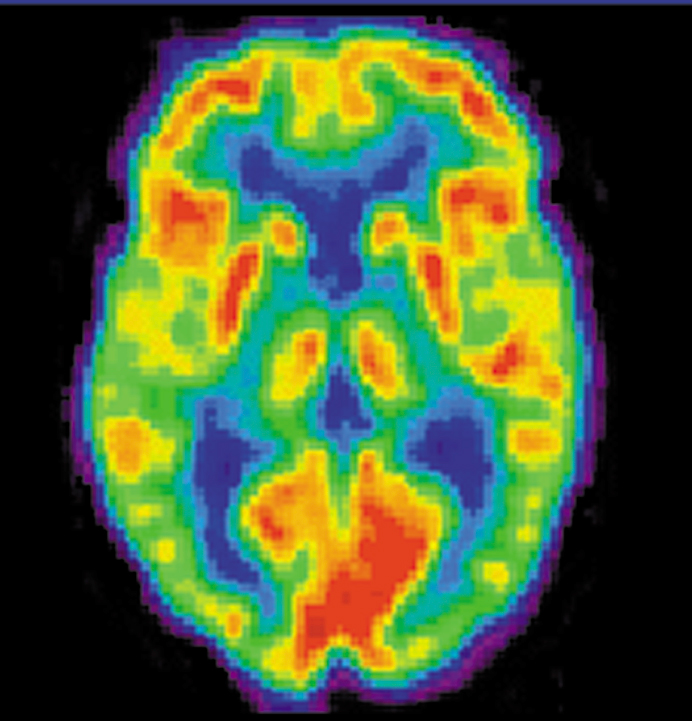
I don’t want to spoil the punchline of this Onion story, Woman Overjoyed By Giant Uterine Parasite, but let’s just say that there is nothing like the power of irony to drive a stake through the distinction between empirical observations and value judgements. This is really the best argument I have come across to explain what’s wrong with the psychiatric medical model. It’s not that mental conditions aren’t correlated with changes in biochemistry or neural brain state. Its the value judgment that is implied in labeling the phenomena an illness. And this little Onion article does a great job of conveying that. It’s got me wondering what other naturally occurring conditions can be explained/judged in more than one way?

The long-tail wagging the drugged out pooch?

Drugged out dogA few months ago the giant pharmaceutical company Pfiezer laid off 10,000 people, or about a tenth of its global workforce. There are many factors that are draining the industry of profits including the fact that patents eventually expire allowing generics to compete, it is extremely costly to develop new drugs, and the industry is caught in a vicious advertising/marketing arms race that is diverting significant percentages of development costs (in similar proportions to the marketing of a big budget Hollywood movie). There is plenty to chew on here in terms of how intellectual property laws are impacting human rights (keeping lifesaving drugs out of many patient’s reach) and the notion that as “mission critical” drugs come out of patent, drug companies are busy inventing new “lifestyle illnesses” for which they conveniently sell the cure. The concept of illness has become a major US export, as the documentary Does Your Soul Have a Cold? begins to explore. But what really caught my attention in this story is the idea that the pharmaceutical industry is witnessing a phenomena that is becoming familiar to the media/entertainment industry - the death of “hits” or the multi-billion dollar blockbuster.

Emergent Intentionality

fractal.gifOr, My Fancy Rationale for Indulging in Conspiracy Theories. New Scientist just ran a story on The Lure of Conspiracy Theory. They claim that:

Conspiracy theories can have a valuable role in society. We need people to think “outside the box”, even if there is usually more sense to be found inside the box. The close scrutiny of evidence and the dogged pursuit of alternative explanations are key features of investigative journalism and critical scientific thinking. Conspiracy theorists can sometimes be the little guys who bring the big guys to account - including multinational companies and governments.

Treating customers like cavepeople

caveman.gifThe state of health coverage in the U.S. is absolutely appalling. Consider the recent incident involving Blue Cross/Blue Sheild that my friend at Interprete has had to endure, at great expense of her time and patience - Blue Cross, Blue Shield Chronicles. The notion that a latent condition is a preexisting one is preposterous - it’s like saying you were fated to have this condition, so it was pre-existing. The citizen journalism angle to this story is interesting too. It is quite remarkable how powerful google alerts can be in the hands of a PR rep or an investigative journalist, and how a mouse can roar in a way that demands a response (let’s hope that we can help insure a positive one). Subversive tactics which emply tools like Google alerts and ad-words style targeted advertising potentially refute Sunstein’s argument in republic.com about disjoint sets of users in cyberspace. His argument basically discounts the ability to spam for your cause and the value in tracking all communications around a particular issue or theme and confronting opposing viewpoints where they occur.