 Heh. I enjoy a nice long weekend off, and a few of my worlds collided while I was away…
This weekend msnbc.com snatched up the Knight Foundation funded everyblock.com project, and now a bunch of people I know - from journalism, free software, law, and software development are all talking about the ethics and implications of choosing different Free/Open Source licenses for grant funded projects and experiments in sustainable journalism ;-)
The Knight Foundation has been funding innovation in technology and journalism for a few years, and lately has been mandating open licenses for all the code and content they sponsor. Knight is not alone. Mellon, Hewlitt, OSI, NSF, NIH, and other grantmakers have all begun to encourage that the IP they fund be as open as possible (to varying degrees). Seems obvious. If you want to maximize your philanthropic ROI, make sure that the future can extract the full potential of the work you fund - not be shackled, stifled, or duped by the misapplication of intellectual property.
I continue to be hopeful that pressure from funders might represent a tipping point for openness. Many organizations need bunches of carrots to overcome their knee-jerk institutional momentum to horde - even if sharing costs them nothing (in dollars, labor, or resources, although sometimes transparency can take its toll on egos).
But is all openness created equal? No way am I going to attempt to recreate the great BSD-GPL wars in this post, but I will say that it stings every time I hear someone accuse the GPL of being viral (are vaccines viral?). I also wince every time I see a vibrant open source community make an argument against the GPL - I have seen this happen around Sakai, OpenCast, and even lately around around Plone and its plugins.
[From my perspective, its the purportedly unencumbered communities that are really viral, as they continue to ratchet down GPL communities to lowest common denominator licenses, by whining about how they can’t use GPL code (which they can, provided they share-alike). But don’t take my word for it - ask Zed why he (A/L)GPLs.]
To me, first and foremost, the GPL signals trust. As I understand it, this legal instrument has helped enable institutions and individuals, large and small, to trust each other, without fear of being stabbed in the back or being taken for a sucker. In the end, the GPL is just a license, and while it has been increasingly taken more seriously, enforcement is never fun (except for lawyers, I guess).
Eben Moglen is the founder of the The Software Freedom Law Center and also the author of GPL, but their firm can’t officially shill for the GPL. They care enough about freedom to continue to help any open software communities in need, but I sometimes wonder how they manage to bite their tongues and not scream We told you so or We warned you. Some of these same communities who have scorned the GPL have had to turn to the SFLC to bail them out when they got attacked by patent sharks. Perhaps the Everyblock story will serve as a cautionary tale, and people will learn to start taking the SFLC’s legal advice seriously. I believe that history will show that it was the GPL that ultimately averted Microsoft’s monopoly - no license could have accomplished this without the boundless energy and will of the open source developers, but the GPL was the pentagram restraining a very bad actor.
But not everyone sees the world this way, and there are other valid perspectives. In conversations I have had with Jacob Kaplan-Moss (who co-founded Django, alongside Everyblock’s Adrian Holovaty) Jacob voiced a strong conviction that transparency, openness, and sharing are better ways to develop software, and that those values ought/need not be legally mandated. He prefers to participate in a community where those values are understood and shared. Some might call his perspective slightly naive (while others might trace some of these attitudes to the roots of Django and the proprietary journalistic corporation that birthed it), but James Vasile makes a very similar point:
Heh. I enjoy a nice long weekend off, and a few of my worlds collided while I was away…
This weekend msnbc.com snatched up the Knight Foundation funded everyblock.com project, and now a bunch of people I know - from journalism, free software, law, and software development are all talking about the ethics and implications of choosing different Free/Open Source licenses for grant funded projects and experiments in sustainable journalism ;-)
The Knight Foundation has been funding innovation in technology and journalism for a few years, and lately has been mandating open licenses for all the code and content they sponsor. Knight is not alone. Mellon, Hewlitt, OSI, NSF, NIH, and other grantmakers have all begun to encourage that the IP they fund be as open as possible (to varying degrees). Seems obvious. If you want to maximize your philanthropic ROI, make sure that the future can extract the full potential of the work you fund - not be shackled, stifled, or duped by the misapplication of intellectual property.
I continue to be hopeful that pressure from funders might represent a tipping point for openness. Many organizations need bunches of carrots to overcome their knee-jerk institutional momentum to horde - even if sharing costs them nothing (in dollars, labor, or resources, although sometimes transparency can take its toll on egos).
But is all openness created equal? No way am I going to attempt to recreate the great BSD-GPL wars in this post, but I will say that it stings every time I hear someone accuse the GPL of being viral (are vaccines viral?). I also wince every time I see a vibrant open source community make an argument against the GPL - I have seen this happen around Sakai, OpenCast, and even lately around around Plone and its plugins.
[From my perspective, its the purportedly unencumbered communities that are really viral, as they continue to ratchet down GPL communities to lowest common denominator licenses, by whining about how they can’t use GPL code (which they can, provided they share-alike). But don’t take my word for it - ask Zed why he (A/L)GPLs.]
To me, first and foremost, the GPL signals trust. As I understand it, this legal instrument has helped enable institutions and individuals, large and small, to trust each other, without fear of being stabbed in the back or being taken for a sucker. In the end, the GPL is just a license, and while it has been increasingly taken more seriously, enforcement is never fun (except for lawyers, I guess).
Eben Moglen is the founder of the The Software Freedom Law Center and also the author of GPL, but their firm can’t officially shill for the GPL. They care enough about freedom to continue to help any open software communities in need, but I sometimes wonder how they manage to bite their tongues and not scream We told you so or We warned you. Some of these same communities who have scorned the GPL have had to turn to the SFLC to bail them out when they got attacked by patent sharks. Perhaps the Everyblock story will serve as a cautionary tale, and people will learn to start taking the SFLC’s legal advice seriously. I believe that history will show that it was the GPL that ultimately averted Microsoft’s monopoly - no license could have accomplished this without the boundless energy and will of the open source developers, but the GPL was the pentagram restraining a very bad actor.
But not everyone sees the world this way, and there are other valid perspectives. In conversations I have had with Jacob Kaplan-Moss (who co-founded Django, alongside Everyblock’s Adrian Holovaty) Jacob voiced a strong conviction that transparency, openness, and sharing are better ways to develop software, and that those values ought/need not be legally mandated. He prefers to participate in a community where those values are understood and shared. Some might call his perspective slightly naive (while others might trace some of these attitudes to the roots of Django and the proprietary journalistic corporation that birthed it), but James Vasile makes a very similar point:

 What happens when the Swine Virus breeds with the Avian Flu?
Pigs Fly, of course. Welcome to the end of time. I’m off to collect a few debts.
This latest data point is the most recent in a string of bizarre crimes that I have been tracking in my capacity as a double agent (in the Kierkegaardian sense).
Consider these events from last year’s news:
What happens when the Swine Virus breeds with the Avian Flu?
Pigs Fly, of course. Welcome to the end of time. I’m off to collect a few debts.
This latest data point is the most recent in a string of bizarre crimes that I have been tracking in my capacity as a double agent (in the Kierkegaardian sense).
Consider these events from last year’s news:
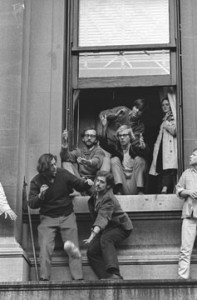 At the beginning of the semester I shopped a class offered in the Columbia CS Dept on
  It’s been almost 2 months since I participated in the intense and spectacular
  A
A