 Contrary to some of the disappointment chatter slithering around the blab-o-sphere, I had a phenomenal time at PyCon ‘08. While it is obvious that the conference (not the language ;-) ) had some scaling problems this year, I am confident that our community is self-reflective and humble enough to constructively digest this feedback and heal itself.
This year’s conference had over 1k attendees (up from last year’s ~400), including 270+ sprinters who coded throughout the following week. The attendance, as well as the sponsorship exceeded all expectations, and there was a bit of awkwardness around the feeling that attendees captive attention was for sale. I thought the keynotes were solid, though a clearer system for indicating sponsorship will help next year. Lighting talks, usually my hands-down favorite, were a bit of a disaster - sponsors (many with nothing more to contribute than a hiring announcement) were promised priority and on Saturday some attendees were bumped off the schedule. I would also have appreciated a really inspirational keynote speaker, as well as additional efforts to raise awareness around the range of social justice issues our craft impacts.
For me, this conference provided an opportunity to cut through traditional hierarchical communication channels and interact directly with senior developers across a wide variety of sectors. I spoke to people working in leading organizations servicing education, libraries, non-profits, journalism, scientific computing, desktop computing, mobile computing, embedded computing, enterprise consulting, interactive marketing, entertainment, defence, gaming, and many more. I spoke to systems administrators, language designers, programmers, architects, computer scientists, project managers, educators, and entrepreneurs. And all of this diversity was united by the common programming language we all use and love - Python.
Python, the language, is itself open-source, and many projects written using python are free and open as well. The language, and its surrounding ecology has a distinct personality, and some of its normative values (at least its aesthetic ones) are captured in these principles, known as The Zen of Python. Approaching this conference from the sociological vantage point of a freshman doctoral student in communications, I certainly paid more attention to the reinforcement of cultural practices at this gathering than I used to. Many of the talks actively encouraged respect, sharing, playing nicely, and coding responsibly. In some cases these topics were the topic of the talk, not even the subtext.
But the best part certainly had to be catching up with old friends and making new ones. For those of you that don’t know developers well, our craft involves the invention of the prototypical abstractions, the perpetual refinement of analytical distinctions, and the endless quest for their elegant synthesis. It only takes the slightest verbal nudge to shift the conversation to a metaphysical or theological domain, brining to bear the full brunt of these analytical methods on age-old questions. Maybe its just the developers I hang out with, but they are unquestionably a wise and philosophically-minded bunch.
They also tend to love technology, python or otherwise, and are an incredible source to tap into for discussing and speculating emerging trends - from storage to cloud computing, from the browser wars to singularities, this crowd has knowledgeable opinions on them all.
And as for the future of Python… well, I know that every year for the past ten have been the year of the linux desktop, but Python is incredibly positioned right now. There aren’t really that many contenders poised to displace Java, like Java displaced C/C++ (or Cobol, in the enterprise), but Python is going strong. From Sun’s and Microsoft’s very serious commitments to jython and IronPython, to Google and NASA’s commitment to Python, to MIT’s recent selection of Python as the language that CS 101 is taught in (and a robust educational community w/in the Python world) , we better figure this conf scaling thing out quickly, because next year is sure to be even bigger.
Contrary to some of the disappointment chatter slithering around the blab-o-sphere, I had a phenomenal time at PyCon ‘08. While it is obvious that the conference (not the language ;-) ) had some scaling problems this year, I am confident that our community is self-reflective and humble enough to constructively digest this feedback and heal itself.
This year’s conference had over 1k attendees (up from last year’s ~400), including 270+ sprinters who coded throughout the following week. The attendance, as well as the sponsorship exceeded all expectations, and there was a bit of awkwardness around the feeling that attendees captive attention was for sale. I thought the keynotes were solid, though a clearer system for indicating sponsorship will help next year. Lighting talks, usually my hands-down favorite, were a bit of a disaster - sponsors (many with nothing more to contribute than a hiring announcement) were promised priority and on Saturday some attendees were bumped off the schedule. I would also have appreciated a really inspirational keynote speaker, as well as additional efforts to raise awareness around the range of social justice issues our craft impacts.
For me, this conference provided an opportunity to cut through traditional hierarchical communication channels and interact directly with senior developers across a wide variety of sectors. I spoke to people working in leading organizations servicing education, libraries, non-profits, journalism, scientific computing, desktop computing, mobile computing, embedded computing, enterprise consulting, interactive marketing, entertainment, defence, gaming, and many more. I spoke to systems administrators, language designers, programmers, architects, computer scientists, project managers, educators, and entrepreneurs. And all of this diversity was united by the common programming language we all use and love - Python.
Python, the language, is itself open-source, and many projects written using python are free and open as well. The language, and its surrounding ecology has a distinct personality, and some of its normative values (at least its aesthetic ones) are captured in these principles, known as The Zen of Python. Approaching this conference from the sociological vantage point of a freshman doctoral student in communications, I certainly paid more attention to the reinforcement of cultural practices at this gathering than I used to. Many of the talks actively encouraged respect, sharing, playing nicely, and coding responsibly. In some cases these topics were the topic of the talk, not even the subtext.
But the best part certainly had to be catching up with old friends and making new ones. For those of you that don’t know developers well, our craft involves the invention of the prototypical abstractions, the perpetual refinement of analytical distinctions, and the endless quest for their elegant synthesis. It only takes the slightest verbal nudge to shift the conversation to a metaphysical or theological domain, brining to bear the full brunt of these analytical methods on age-old questions. Maybe its just the developers I hang out with, but they are unquestionably a wise and philosophically-minded bunch.
They also tend to love technology, python or otherwise, and are an incredible source to tap into for discussing and speculating emerging trends - from storage to cloud computing, from the browser wars to singularities, this crowd has knowledgeable opinions on them all.
And as for the future of Python… well, I know that every year for the past ten have been the year of the linux desktop, but Python is incredibly positioned right now. There aren’t really that many contenders poised to displace Java, like Java displaced C/C++ (or Cobol, in the enterprise), but Python is going strong. From Sun’s and Microsoft’s very serious commitments to jython and IronPython, to Google and NASA’s commitment to Python, to MIT’s recent selection of Python as the language that CS 101 is taught in (and a robust educational community w/in the Python world) , we better figure this conf scaling thing out quickly, because next year is sure to be even bigger.

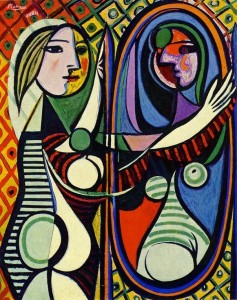 It’s been a few weeks since I first started experimenting with the Play As Being practice, and ventured into Second Life. I continue to appreciate the performative brilliance of utilizing Second Life as a means to study the nature of consciousness, being, and reality. I am starting to imagine a metaphysical syllabus that incorporates virtual world immersion as an instrument for laying bare the everyday assumptions we make about consensual reality.
While I am learning something about myself as I project my identity into my avatar (its almost impossible not to, as veteran SL’ers will attest), I am also learning more about this world, and its seductive attraction. Lots of Second Lifers believe that Second Life is just as real as Real Life (which, for mystics might just mean that both are illusory), but I lean more towards the cautious opinion that Second Life is a mirror, albeit one with a great deal of depth.
Mirrors are quite magical and wonderful (7 years of altered luck, and all that). They can be used to see far and deep – think reflecting telescopes or the michaelson-morely experiments – but they have also trapped a fair share of narcissuses in their alluring reflections. So does SL represent the vanity of vanities? Maybe not, but considering that the energy consumption of a typical SL avatar now exceeds the energy consumption of an average real world brazillian, it is important that folks consider their time in SL well spent.
One upside of my recent journeys is that I now appreciate the research going on in this area much better. Here are two pieces from the Chronicle of Higher Ed reporting on research going on at Stanford’s Virtual Human Interactions Lab:
It’s been a few weeks since I first started experimenting with the Play As Being practice, and ventured into Second Life. I continue to appreciate the performative brilliance of utilizing Second Life as a means to study the nature of consciousness, being, and reality. I am starting to imagine a metaphysical syllabus that incorporates virtual world immersion as an instrument for laying bare the everyday assumptions we make about consensual reality.
While I am learning something about myself as I project my identity into my avatar (its almost impossible not to, as veteran SL’ers will attest), I am also learning more about this world, and its seductive attraction. Lots of Second Lifers believe that Second Life is just as real as Real Life (which, for mystics might just mean that both are illusory), but I lean more towards the cautious opinion that Second Life is a mirror, albeit one with a great deal of depth.
Mirrors are quite magical and wonderful (7 years of altered luck, and all that). They can be used to see far and deep – think reflecting telescopes or the michaelson-morely experiments – but they have also trapped a fair share of narcissuses in their alluring reflections. So does SL represent the vanity of vanities? Maybe not, but considering that the energy consumption of a typical SL avatar now exceeds the energy consumption of an average real world brazillian, it is important that folks consider their time in SL well spent.
One upside of my recent journeys is that I now appreciate the research going on in this area much better. Here are two pieces from the Chronicle of Higher Ed reporting on research going on at Stanford’s Virtual Human Interactions Lab:

 Originally published on theploneblog.org
Open source software as pedagogical scaffolding, and F/OSS ecologies as a dialogical knowledge communities.
This is a fun post recognizing the role of open source software and breaking routines in learning new programming patterns and paradigms.
Originally published on theploneblog.org
Open source software as pedagogical scaffolding, and F/OSS ecologies as a dialogical knowledge communities.
This is a fun post recognizing the role of open source software and breaking routines in learning new programming patterns and paradigms.